J-School student finds new opportunity to report from abroad

On December 8th, graduate student Katie Riordan was recognized for her promise as an international correspondent when she received the Overseas Press Club Foundation Scholar Award. The recognition was accompanied by the chance to spend her summer break doing international reporting, through a fellowship at a foreign bureau.
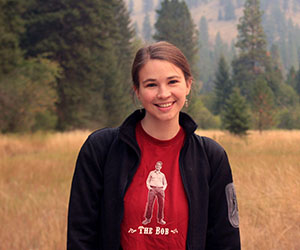
photo of Katie Riordan
Katie Riordan is a graduate student at the University of Montana School of Journalism. Photo by Katy Spence.

Bureaus run by the Associated Press, Reuters, Forbes, the Wall Street Journal or the Global Post are all possibilities for Riordan. Wherever she ends up, it won’t be her first time filing stories from foreign soil.

Riordan completed her undergraduate studies at the University of Colorado Boulder, where she majored in broadcast journalism. Post graduation, she did a few stints at community newspapers in New York City.

In 2012, she left the United States to take a job as an editor at an English language paper in Yemen, which borders Saudi Arabia. Riordan had traveled and lived abroad before, but says the move wasn’t a calculated decision. Her reasons for moving to Yemen reveal a deep wanderlust and interest in other cultures.

“You can read all about it but being there, living there and reporting there is the experience,” Riordan said.

After more than a year at the English language newspaper, Riordan left and began freelancing. Over the course of six months she wrote stories on women’s rights, refugees and migrants and a variety of human interest stories. Her work was published in the Christian Science Monitor, Al Jazeera, the Economist and the Middle East Eye, an online news organization based out of England.

Riordan continues to contribute to the Christian Science Monitor, with an article on Syrian refugees in Somaliland published just days before she received her award.

Freelancing was a challenge at first, but being on the ground in countries of international interest helped her. “It’s hard to build relationships with editors, but once you do and can demonstrate that you can produce work from your location things start to snowball,” she said.

Returning to the U.S., she came to the Environmental Science and Natural Resource Journalism Masters program to hone her reporting skills and develop a specialty in environmental reporting. While Riordan says she misses life abroad, she’s been enjoying her classes and has a story in the upcoming 2016 Montana Journalism Review about tensions between the Department of Defense and reporters in war zones.

Next semester Riordan hopes to supplement her journalism and environmental science coursework with classes in Arabic, in order to build on her language base and improve her eligibility for reporting from the Middle East.

But today, she’s excited at being recognized by the Overseas Press Club, and anticipates a productive summer abroad, wherever in the world it may take her.

“It’s a really prestigious organization, and I’m looking forward to getting back overseas to do some reporting on the ground,” Riordan said.

You can get an advanced read of Riordan’s upcoming story in the Montana Journalism Review here.
Journalism student stretches boundaries, places amongst Hearst Award finalists

Until the 2015 spring semester, senior Kolby Kickingwoman hadn’t written a lot of long form in his time at the School of Journalism. He’d focused on shorter stories, most of them about sports. Six months later his first long form story tied for 17th place in the Feature Writing Competition of the prestigious Hearst Journalism Awards.

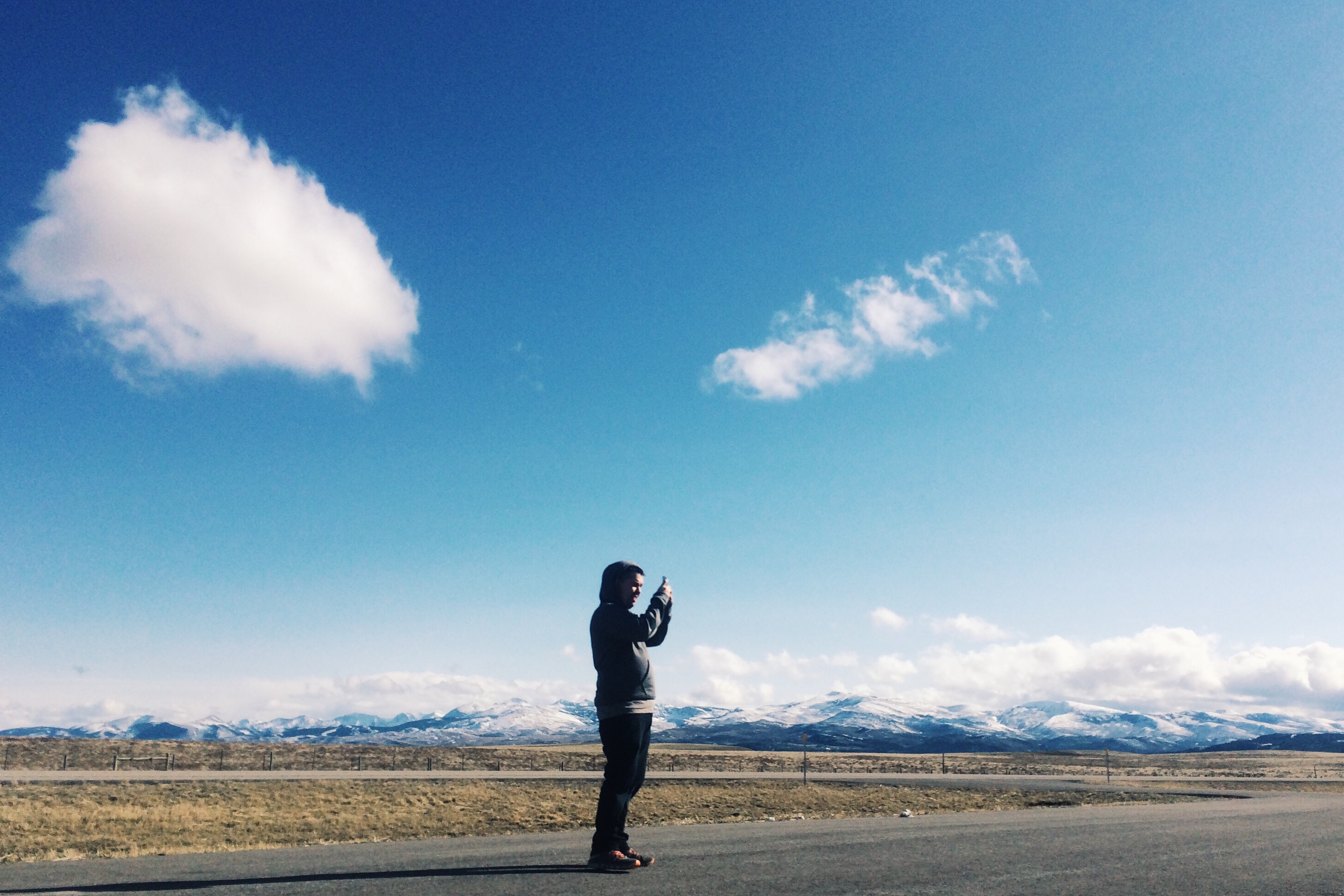
Kolby Kickingwoman stops to capture the view on the Blackfeet Indian Reservation, where he was reporting a story that placed 17th in the Hearst Journalism Awards.
Kolby Kickingwoman stops to capture the view on the Blackfeet Indian Reservation, where he was reporting a story that placed 17th in the Hearst Journalism Awards. Photo by Celia Talbot Tobin.

The Hearst Awards are the most prestigious awards directed specifically towards journalism students. The story Kickingwoman wrote was for the Spring 2015 Native News project, a class that sends teams of journalism students – a writer paired with a photographer – out to each of Montana’s indian reservations.

Reporting from the Blackfeet Indian Reservation, Kickingwoman and his partner, photographer Celia Talbot Tobin, told the stories of tribe members navigating questions of sexual and gender identity. One storyline followed a transgender teen attending her first prom, another a gay man in his twenties.

“I had a lot of fun doing that story,” Kickingwoman said. He is pleased to have won an award for a piece where he found both the subject matter and the length of the writing to be a challenge. “It was kind of outside my comfort zone,” he said.

The story came together quickly. Kickingwoman and Tobin found their teenage subject while already in Browning, a city on the reservation. While spending time with another subject, they learned via Facebook of the transgender teen whose story would play such a big role in their final piece.

Tobin thinks Kickingwoman’s personality helped them get the access and intimacy that allows for good feature stories. She described Kickingwoman as easy going and sensitive to her needs as a photographer.

“He’s a really good people person, which came in handy a lot as I was trying to be invisible and photograph and film people. He is really, really good at being engaging with subjects, being interested in them,” Tobin said.

As a graduate student with a history of freelance photography, Tobin has more experience than most students, and enjoyed watching someone with a background in shorter pieces weave a compelling narrative of this length. “I think it’s a strong story and a really unique one that hasn’t been told before. He pushed himself a lot I think, outside his comfort zone,” Tobin said.

Kickingwoman grew up in Missoula, but his father is from Browning. It was rewarding to place in the Hearst awards, he said, and “to represent the Blackfeet nation and win an award about a story from Browning.

You can read Kickingwoman’s story, view Tobin’s photos and learn more about the Native News project here.

By Andrew Graham

Montana Kaimin staff reflect on a semester of change

Wednesday, December 2nd, the Montana Kaimin put out its last issue for fall 2015. For the all-student staff, it was the culmination of a semester of learning on the job as they guided the newspaper through its recent transition from a daily paper into a weekly print edition with daily online present, all while facing financial issues from years prior.

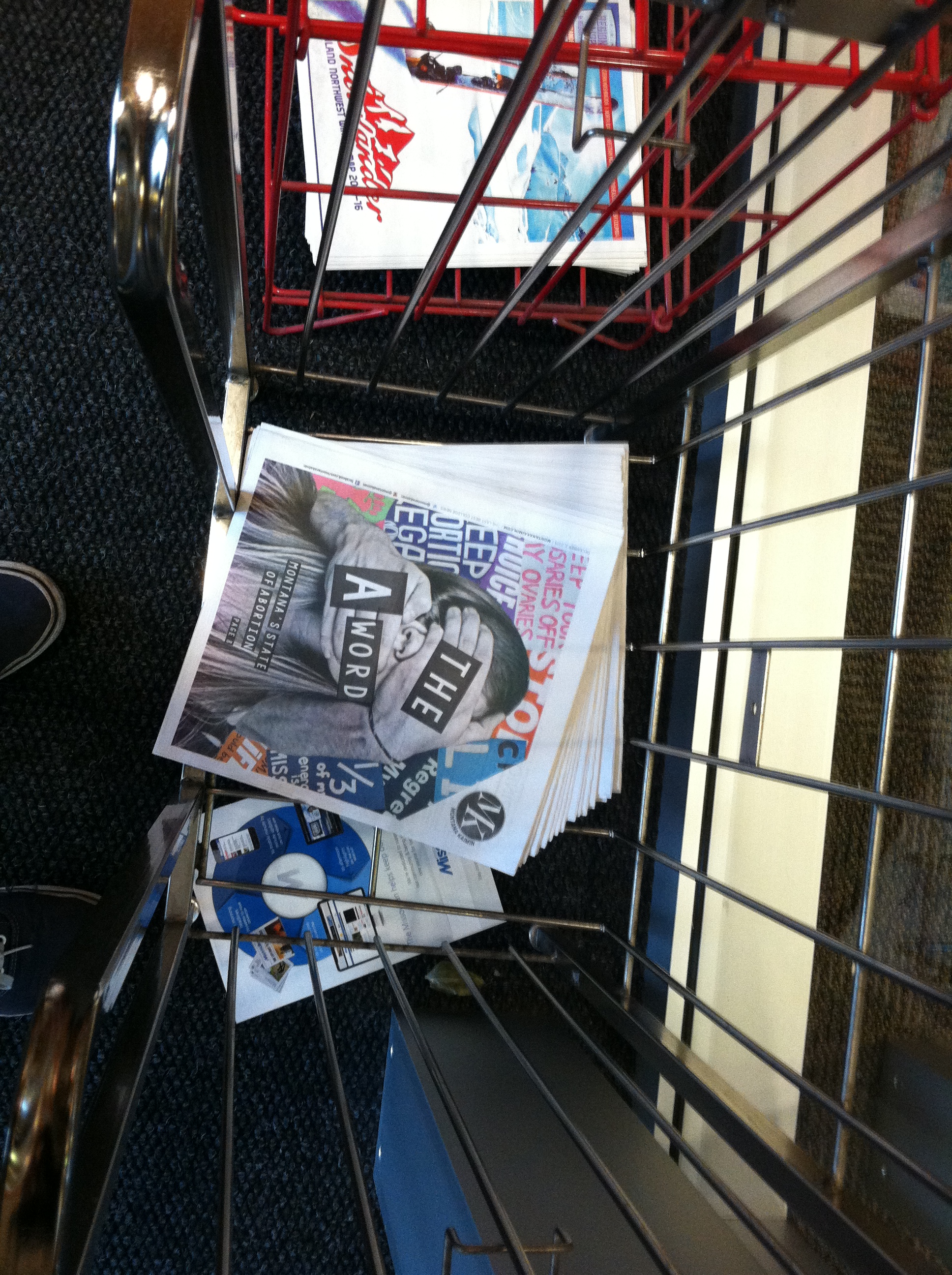
Photo of the last stack of printed Kaimin papers for 2015.
The Montana Kaimin’s last issue for the fall semester went quickly off the rack. Photo by Andrew Graham.

“For drastically restructuring something that was essentially broken I think it went really well,” said editor-in-chief Cavan Williams. He led the paper into its new format, which meant establishing a new workflow from reporters and photographers through editors and the copy team. “The whole thing was just an experiment,” Williams said, and they’ll carry on making adjustments and applying what they’ve learned to production this coming spring. That the fall went well isn’t to be confused with perfect, he noted.

The weekly edition implied more time for reporters to report and write feature length stories. Some of them, Williams said, have really taken to the long form style.

Tess Haas, a 22 year old senior from Bozeman, Montana, has worked as an arts and culture reporter for the last two semesters. She wrote two features that ran as cover stories this fall. The first was about Montana female DJs overcoming sexism in their profession, and the second, which ran in Wednesday’s final issue, was about the dearth of information and clinics for women seeking abortions in Montana.

“For people who are trying to be creative in presenting these important issues it’s really awesome to see them have the space to do it,” she said of the weekly format. Haas revels in the new style, which she says she’s used to expand on the ideas she had last spring, but couldn’t accomplish under tight daily deadlines.

Her latest story was inspired by listening to a friend talk about the difficulties of getting an abortion in Montana. The issue aroused her passion as a young female journalist. “As a young woman in Montana I think it’s extremely relative to me, and that’s what my friends talk about and that’s what I want to write about,” Haas said.

She spent a month working on the story, and says one of the challenges was finding sources that would speak about a sensitive topic. The article centered around the story of an anonymous woman who had an abortion following her first semester at the University of Montana. Having her editors allow her a month to work the story made all the difference.
Haas will rejoin the Kaimin staff for the spring semester, her last at UM, but this time around will work as the Arts and Culture editor.

For Hunter Pauli, 24 and also a senior, producing a paper with features like Haas’ was “difficult but doable.” Pauli is the Kaimin’s Managing Editor, and next semester hopes to improve their new format even further by smoothing out what he calls “anachronisms and holdovers from the daily version”

Pauli writes op-eds for the paper, and the one he is most proud of this semester listed a litany of critiques of University administration under the wry headline ‘Recent scandals this editorial is not about.’ His favorite weekly issue of the semester featured the story ‘Left Behind’ by news editor Erin Loranger, which profiled the Office of Residence Life’s ill fated attempt at establishing a Living Learning Community for veterans.

In general, Pauli is proud of his newspaper’s watchdog role over the University. “We’ve completely led the way on stories for the enrollment and budget crisis,” he said, adding that local newspapers like the Missoulian and the Missoula Independent have often followed Kaimin reporting.

By mid morning on Wednesday the last issue was already down to the bottom of the racks in the School of Journalism, but next semester students across campus can look forward to the return of the Kaimin’s independent and in-depth journalism.

You can read Tess Haas’ feature length story on abortion in Montana here.

Read the editorial Hunter Pauli is most proud of here.

By Andrew Graham