
Graduate student focuses on reservations, natural resources

On a Wednesday, which is Veterans Day and a welcome day off for most students, Nicky Ouellet is reporting on the Flathead Indian Reservation for a story about the Kerr Hydroelectric Dam, now renamed the Se̓liš Ksanka Qĺispe̓ Project and managed by Energy Keepers, a tribally owned corporation of the Confederated Salish and Kootenai Tribes.
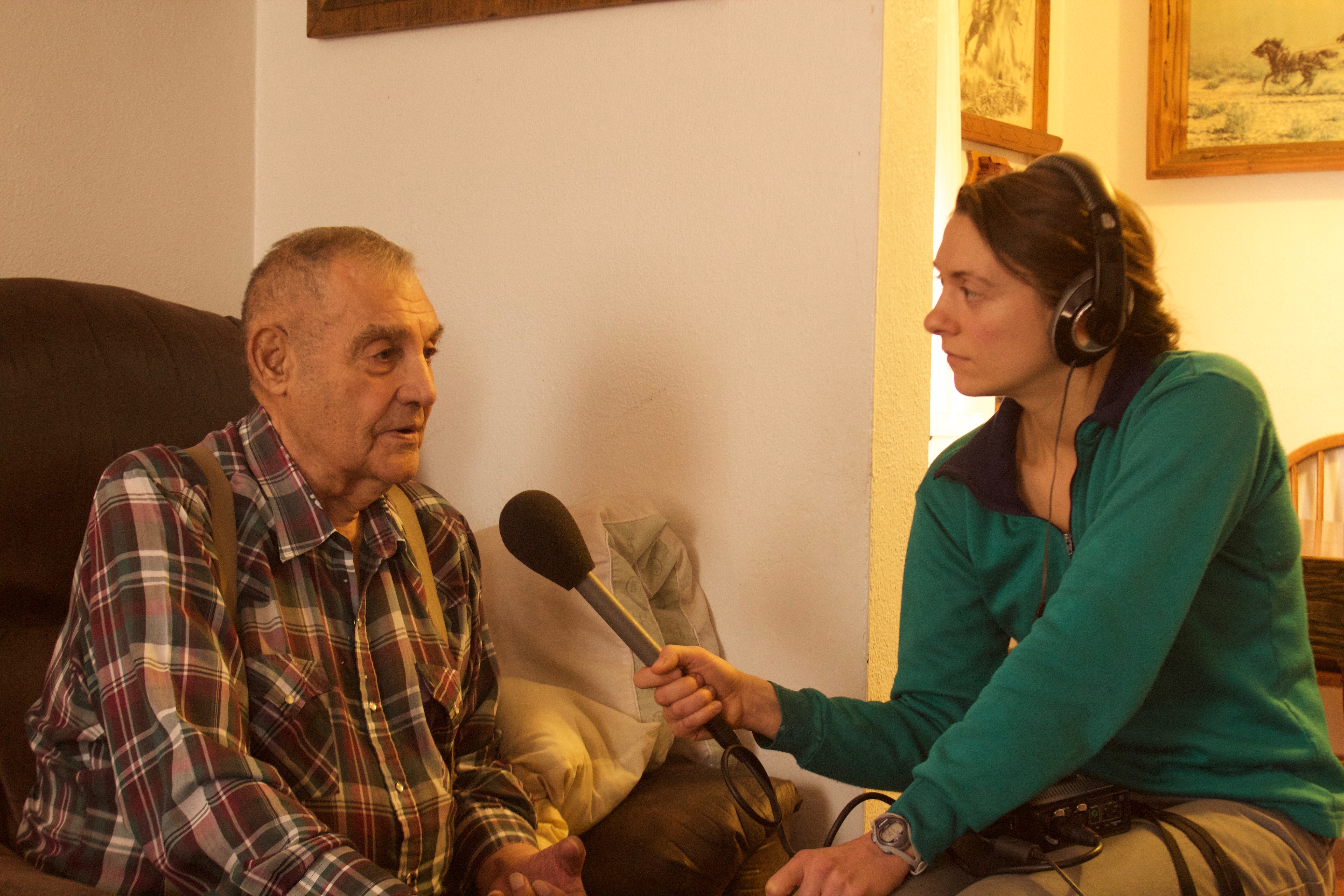
Graduate student Nicky Ouellet interviews Sonny Morigeau, a former tribal council member of the Confederated Salish and Kootenai Tribes.
Graduate student Nicky Ouellet interviews Sonny Morigeau, a former tribal council member of the Confederated Salish and Kootenai Tribes. Photo by Andrew Graham.

Her interview takes place in a house decorated with paintings of Western scenes, in a tiny town called Old Agency on the shores of the Flathead River.

Ouellet is known around the Journalism building as a dogged journalist, but she starts this interview out patiently. Very patiently. Her subject, Sonny Morigeau, is over 80 years old. To reconstruct the process which led to the dam changing hands, Ouellet had to delve into history and interview former tribal council members like Morigeau.

For Ouellet, the structure of government on Indian Reservations, and the modern tensions between Tribes and the Federal Government, is not new territory. From 2010 to 2012 she worked for Teach For America, who assigned her to live on the Pine Ridge Indian Reservation in South Dakota. There she taught creative writing, high school English and Journalism.

Being a part of life on a reservation, and teaching in a school with a high dropout rate helped push her into the Masters Program for Environmental Science and Natural Resource Journalism. Ouellet became conscious of a national dearth of stories from reservations.

Every two weeks Ouellet’s Journalism class filled four pages of the local newspaper. She turned their classroom into a newsroom. “I was teaching myself the whole time too,” she said. When the stories came off the presses, her students were delighted, as was the larger reservation community.

At the University of Montana she has focused much of her own reporting on Native American communities. Leaving teaching was hard for Ouellet, but this kind of reporting feels like another way for her to advocate for her students.

“I wanted to find and tell stories that would shed a light on inequities in our system,” Ouellet said.

Completion of the Masters program involves the choice between producing a single long form story, or creating a portfolio of three shorter projects, each centered around a central them. Ouellet chose the latter, which she said gives her more chances to practice the story making process in its entirety, “from coming up with ideas to following them through to publication.”

This is the first year Masters Candidates will have the choice of a portfolio. “The portfolio option aims to validate the impulse of student who are hungry to explore a broader issue over several semesters, rather than dive deep on a single story, as the professional project does,” said Associate Professor Nadia White, who helps run the Graduate Program.

Ouellet’s first story was about efforts to legalize marijuana on the Northern Cheyenne Indian Reservation in Montana. That piece was a long form written story, which ran in the 2015 Native News Project, a School of Journalism program that sends students out to produce stories from every reservation in Montana.

She is currently working on this story about the dam takeover, and one about the impacts of oil and gas production on the Fort Behold Indian Reservation in North Dakota. This spring she will be finishing up both stories, and again be a part of Native News, this time as an editor.

Back in Old Agency, Ouellet is ready to get what she came for, and begins to gently push her subject towards leading her through the history of the tribal council’s negotiations over the hydroelectric dam. As her questions get more pointed, it’s clear she has done her background work.

“Now, Energy Keepers manages the power and sells the power on behalf of the tribes,” she reminds Morigeau when he gets a little off track. Exploring how Native American tribes manage their natural resources is the theme of her portfolio.

Recalling her time teaching Journalism in Pine Ridge, Ouellet said “they were finding their voices to tell their stories. I found it really empowering for them.”
Three years later, it would appear that she has found hers as well.

By Andrew Graham
Alumnus reflects on circumstance and ethics as “both a bystander and a journalist” in Paris

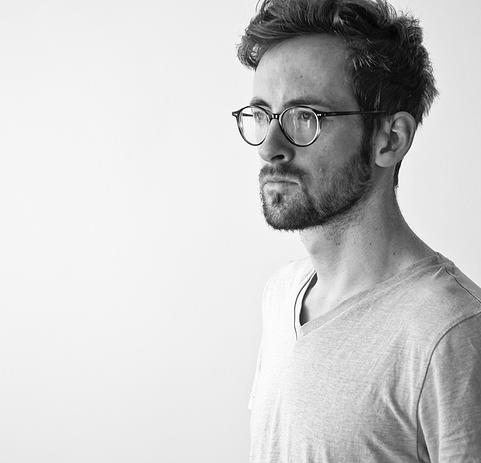
Shane McMillan is a native of western Montana and graduated from the School of Journalism in 2010, at which point he moved to Berlin on a Fulbright scholarship. He interned as a photographer with the Associated Press, and worked as an English translator for German film projects. It was this second gig that helped push him into a career as a freelancer, landing him a spot on the production crew of “Can’t Be Silent,” a documentary film about a group of refugee musicians in Germany.

Since first moving to Berlin McMillan has been working as a freelance photojournalist and filmmaker, with work published in the New York Times, the Guardian and PRI’s The World, among other places.

You can read more about McMillan and see his work on his website.

I asked McMillan if he had advice for any journalism students who might hope to make it as freelancers abroad. “Just, like, make it,” he said laughing. “Just work hard and do good work and keep in touch with people who you’ve done good work for.” McMillan focuses his work on human rights because it’s what he calls the thing he’s most likely to get in a bar fight about. “Try to make things that people want to see or care about,” he counsels.

McMillan says he highly values the many facets of his education at the School of Journalism, he says, believing it was one of the reasons he landed a job in documentary film making. “I could write, I could do TV, I could do radio and I could take photos,” he said.


A WITNESS IN PARIS


Friday, November 13th, McMillan was editing work in an apartment he says practically touched the Bataclan concert hall in Paris as the terrorist attacks began. He was in town for a photography festival, part of his work as studio manager for celebrated fine art photographer Nan Goldin.

As it became clear that they were not hearing fireworks but instead sustained gunfire, Goldin and McMillan tried to figure out what was going on and debated leaving the building. “I really didn’t want to go outside that much,” McMillan said, but eventually he followed Goldin down the stairs.

They walked into a triage center. Police officers had been breaking into courtyards along their block to set up casualty centers for the injured, many of whom were severely hurt. McMillan said he found out the next day that three people died in their courtyard alone.

The two photographers began shooting photos once they got outside, but police forced them to stop. McMillan was sent out into the street, while Goldin was made to return inside.

On the street, McMillan said, his “natural instinct to shoot” as a journalist quickly faded. “People were very opposed to me taking photographs or even having my camera there,” he said.

He decided they were right. McMillan said he didn’t feel like his photography could accurately portray the scene, and didn’t end up taking very many pictures on Friday. “I didn’t feel like photographing that night because I really just wanted to talk to people,” he said.

Instead, he received a text from Anne Bailey at Public Radio International’s The World program. A former adjunct professor and fellow graduate of the School of Journalism, Bailey asked McMillan if he was in Paris. He then started reporting for PRI via phone and text message, describing what he was seeing, which he called a surreal experience.

“Without being inside of that place (the Bataclan) I was about as close as anyone was, or at least any journalist was,” he said. Read McMillan’s and Bailey’s story on the PRI website.

Far from providing a scoop, this proximity tested McMillan’s training as a journalist. He didn’t want to ask the trademark questions a breaking news journalist would, like asking people to describe their experiences and how they were feeling inside and outside the concert hall. “In that moment it was just too much of a violation of their need to process what just happened,” he said.

Instead he helped people. He asked simple questions and talked with those he thought were ready to do so. If someone was ready to talk, he said, you could see it in their face.

“That may or may not be what they would tell you to do in journalism school but I strongly believe that you have to come to situations like this as a person first,” McMillan says.

While answering my questions via video, and remembering Friday night, McMillan was visibly upset. However he said he was strangely calm at the time. Bailey, from PRI, helped a lot by talking him through the reporting via text.

McMillan described a man he spoke with who was looking for his girlfriend. The couple had been separated during the concert, and the man was unsure if she was alive or not. There was blood on the man, and by now, McMillan would like to know if she was all right. At the time, he said, it was very hard to know whether he should share that kind of story or not.

“It was a lot of really intense decisions made in a very quick turnaround,” McMillan says. He did not give the man’s story to media at the time.

“It’s tough to be there when people’s lives are changing in such a fundamental way, and to feel both a responsibility to them and to telling the story,” McMillan said. There’s a tension that he said he feels even more conscious of now after some time to reflect. “I was in this very strange position of being both a journalist and a bystander at the same time.”

At first he was being called by a lot of big media outlets, with whom he has now stopped talking, having tired of giving eyewitness accounts. He answered my questions from a hotel room in Geneva, Switzerland.

In return for what he called “a more personal slice” of his mind, I was asked to treat his story with respect and also to deliver the following message:

“I ask you to credit the University for what I’ve learned. Because I did learn a lot at school and I’ve learned a lot in life following that and I learned a lot this weekend.”

Much of what he does, McMillan said, “is based upon an education from a collection of people who are really amazing journalists and really amazing teachers, who forged me as a professional.”

McMillan will be working with the School of Journalism as their local facilitator and trainer in Berlin for a study abroad trip this summer. Students will be reporting stories from the influx of refugees to Germany and Europe. The documentary McMillan worked on will be showing at 6:30 pm on November 18th in The Payne Family Native American Center.

By Andrew Graham

Photojournalism students learn the reality of freelancing

Journalism school students and others received a crash course in how to run a photography business, when Judy Herrmann, past president of the trade association American Society of Media Photographers (ASMP), spoke to a large crowd Wednesday evening.

Close up of Judy Herrmann speaking to students and faculty
Judy Herrmann spoke to budding photojournalists and told them how to make it in the business. Photo by Katy Spence.

Although with a show of hands the vast majority of the audience identified themselves as aspiring photojournalists, that didn’t stop Herrmann from starting her talk with a dose of industry reality. “As much as all of you that raised your hand for photojournalism are thinking ‘I’m getting a staff job,’ you’re probably not,” she said.

Given the changing nature of the business, with staff jobs disappearing but opportunities for self employment increasing, Herrmann said it’s likely most people in the audience will at some point start their own photography business. She then proceeded to give a highly practical, nuts and bolts seminar on how to do so.

She began at the first step and covered most aspects of running a freelance businesses. Throughout her talk, Herrmann emphasized the benefits of speaking with and hiring professionals for business advice, from accountants to lawyers. “Photographers are not lawyers,” she said, “as much as some of them would like to think they are.”

Judy Herrmann speaks to students and faculty in large lecture hall.
Photo by Katy Spence.

Herrmann, who has won numerous awards for her own business, Herrmann + Starke, brought years of experience to the topic. She is aware of the hidden pitfalls that await freelancers starting out; bad contracts, unforeseen disasters like equipment theft (for which she recommends a careful choice in insurance), and losing control and copyright of your own work.

Erik Petersen, an adjunct photojournalism professor and long time freelancer, weighed in on her advice. “The material she covered,” he said, “is essential to anyone wanting to run a successful freelance photography business.”

At the core of her message was the importance of being a professional. By conveying professionalism at the beginning of a client relationship a freelancer ensures they’ll receive professionalism, and a fair deal, in return, Herrmann said.

By Andrew Graham