Students study Fashion Photography during J-term

When photojournalism professor Keith Graham asked his students what other types of photography they wanted to explore, three distinct themes emerged: the outdoors, travel and fashion. While January in Montana might not be the best time to teach class outside, the three-week winter term is perfect for delving into the world of fashion photography, first offered in January 2011.

Globally, the fashion industry is worth over a trillion dollars. Graham says fashion photography crosses commercial and editorial borders, so it helps stretch opportunities for photojournalists as editors and freelancers.

Photo of woman in dark room in a vibrant red dress
Photo by Kira Vercruyssen, from the collection “Red.”

Kira Vercruyssen, a UM senior from Honolulu, Hawaii, said that the class was a fun break from traditional journalism, since students had the chance to trade their role as a reporter for one of a creator. “It was really fun to make these ideas in your head come to life,” she said.

Students directed their own photo shoots, using friends and co-workers as models. However, for the first project Graham made students step in front of the lens and take their own self-portraits. Vercruyssen said it was good for them to understand what it felt like to be a model, and that it helped her when she had to direct her models and capture strong angles.

Once Graham revealed the theme for each photo shoot, students had no other restrictions “besides time and imagination.” Themes ranged from Coco Chanel’s classic “little black dress” to “red” to “replication,” where students had to find a professional fashion shot and capture the same image with their models. “It might look easy,” Graham said, “but can you try to re-create it?”

Both the “denim” and “futuristic” shoots led to more iconic shots, including Bruce Springsteen’s 1984 Born in the USA album cover and Grant Wood’s portrait of the American Gothic.
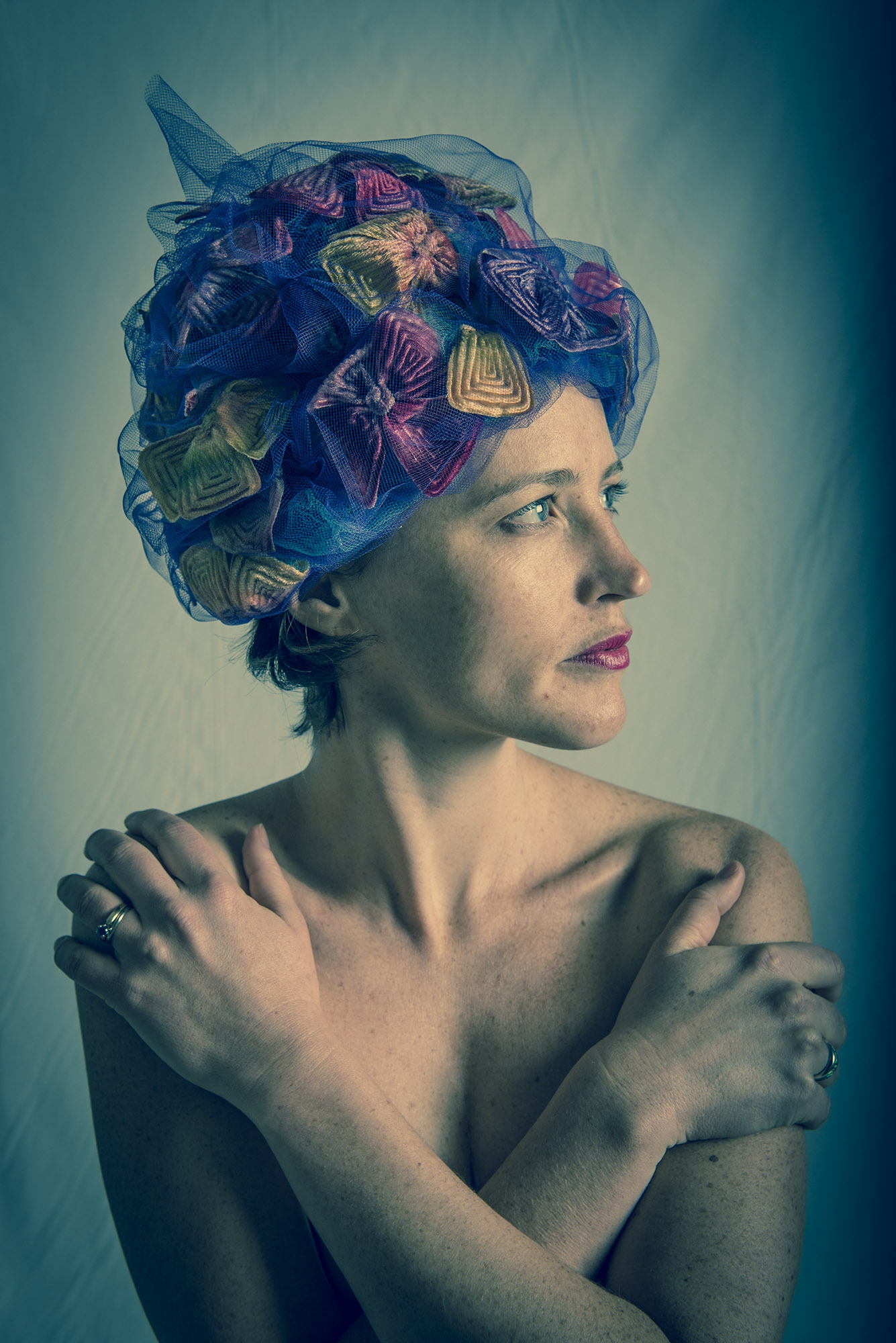
photo of woman wearing multi-colored cap
Photo by Kira Vercruyssen, from the collection “Hats.”

These shoots gave students the freedom to work both in the studio and around town. One of the highlights for Vercruyssen was getting permission to shoot inside the old Mercantile building in downtown Missoula. She also rented a collection of vintage hats from a local theater company for her final free-topic project.

Photo of woman in leather jacket in an empty room with many windows
Photo by Kira Vercruyssen, from the collection “Mercantile.”

Graham challenged the class to create narrative arcs within each campaign and consider what made their images visually and emotionally compelling for an audience. In addition to these spreads, they experimented with diptych photography, where two photographs are placed side by side to make an artistic statement.

With a standard week’s schedule compressed into a single day, all this kept the class busy.

“This kind of immersion is a very useful way to learn,” Graham said. “They produce stronger, better work as a result.”

Vercruyssen chose to attend the University of Montana for its strong journalism program, which is currently ranked 8th in the nation. For her, this class was “like a breath of fresh air” that re-charged her passion for photojournalism as she prepares to graduate this spring.

by Jana Wiegand
MJR publishes its 2016 edition

The new issue of Montana Journalism Review (MJR) is fresh off the press, produced by an all student staff from the University of Montana’s School of Journalism. The magazine is dedicated to holding a mirror to the news media in Montana and other western states, reporting and interpreting trends that affect journalists in this part of the country.

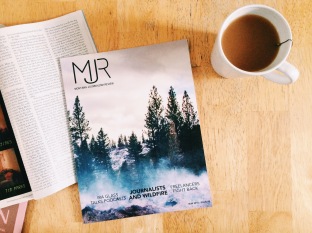
Photo of the printed edition of MJR 2016
Photo by Celia Tobin.

“Everyone who’s interested in journalism in the West must read this issue,” said Associate Professor Henriette Lowisch, who serves as MJR’s editor-in-chief. “It provides a fresh look at questions we media people obsess about, from wildfire coverage to free speech.”

Issue 45 is built around the theme “burn,” with a cover story analyzing what gets lost in often sensationalized coverage of the wildfires that are so much a part of the western landscape. Other features examine how newspapers cover anything from state politics to the new Cannabis beat. Cutting-edge scientists speak out on overlooked stories; freelancers get tips on how to make their work pay, and radio icon Ira Glass offers career advice.

Students on the staff of Montana Journalism Review receive a crash course into the world of producing a high quality magazine.

“Creating MJR is one of the most authentic experiences students can have while still in the classroom,” said Managing Editor Nicky Ouellet, a graduate student. “I’m really proud of what we’ve created, and the immense energy and dedication our staff poured into this issue.”

As other classes ramped up in September, some students of the capstone class that produces MJR were already reporting, writing and photographing on deadline. Others chased down outside contributors, who often had far more years of journalism experience than their newfound editors. For the first time, some of the stories were published on Medium.com, an alternative story platform that specializes in long-form work.

This year’s MJR team worked on improving the fact-checking and copy-editing system for increased accuracy and a more effective workflow. Corrections are now easy to find on the magazine’s newly designed website.

All stories, along with past issues of the magazine, are available online. The print magazine, which is sent to subscribers across the North America and even Europe, can be ordered through the website.

By Andrew Graham

Montana Kaimin staff reflect on a semester of change

Wednesday, December 2nd, the Montana Kaimin put out its last issue for fall 2015. For the all-student staff, it was the culmination of a semester of learning on the job as they guided the newspaper through its recent transition from a daily paper into a weekly print edition with daily online present, all while facing financial issues from years prior.

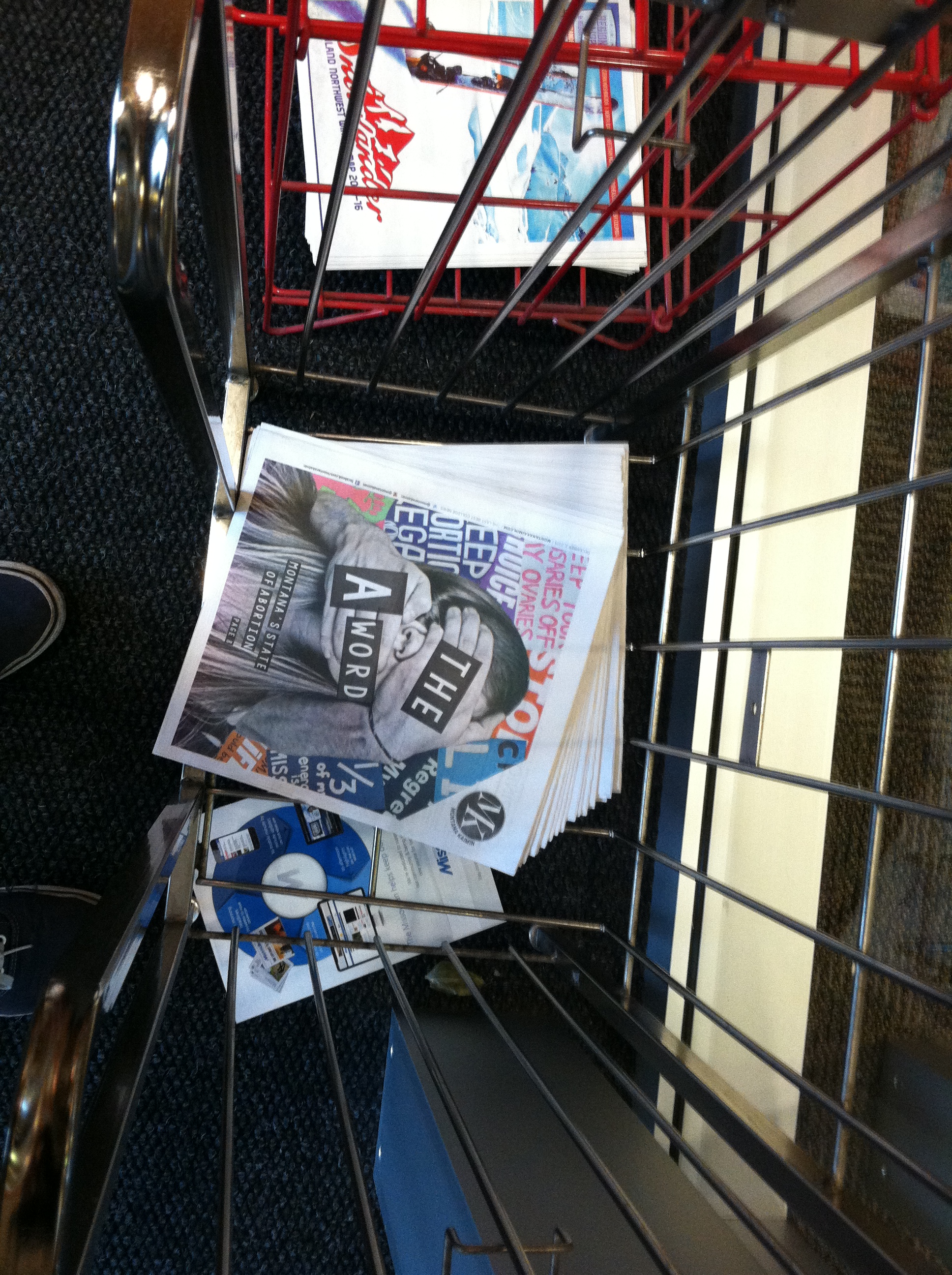
Photo of the last stack of printed Kaimin papers for 2015.
The Montana Kaimin’s last issue for the fall semester went quickly off the rack. Photo by Andrew Graham.

“For drastically restructuring something that was essentially broken I think it went really well,” said editor-in-chief Cavan Williams. He led the paper into its new format, which meant establishing a new workflow from reporters and photographers through editors and the copy team. “The whole thing was just an experiment,” Williams said, and they’ll carry on making adjustments and applying what they’ve learned to production this coming spring. That the fall went well isn’t to be confused with perfect, he noted.

The weekly edition implied more time for reporters to report and write feature length stories. Some of them, Williams said, have really taken to the long form style.

Tess Haas, a 22 year old senior from Bozeman, Montana, has worked as an arts and culture reporter for the last two semesters. She wrote two features that ran as cover stories this fall. The first was about Montana female DJs overcoming sexism in their profession, and the second, which ran in Wednesday’s final issue, was about the dearth of information and clinics for women seeking abortions in Montana.

“For people who are trying to be creative in presenting these important issues it’s really awesome to see them have the space to do it,” she said of the weekly format. Haas revels in the new style, which she says she’s used to expand on the ideas she had last spring, but couldn’t accomplish under tight daily deadlines.

Her latest story was inspired by listening to a friend talk about the difficulties of getting an abortion in Montana. The issue aroused her passion as a young female journalist. “As a young woman in Montana I think it’s extremely relative to me, and that’s what my friends talk about and that’s what I want to write about,” Haas said.

She spent a month working on the story, and says one of the challenges was finding sources that would speak about a sensitive topic. The article centered around the story of an anonymous woman who had an abortion following her first semester at the University of Montana. Having her editors allow her a month to work the story made all the difference.
Haas will rejoin the Kaimin staff for the spring semester, her last at UM, but this time around will work as the Arts and Culture editor.

For Hunter Pauli, 24 and also a senior, producing a paper with features like Haas’ was “difficult but doable.” Pauli is the Kaimin’s Managing Editor, and next semester hopes to improve their new format even further by smoothing out what he calls “anachronisms and holdovers from the daily version”

Pauli writes op-eds for the paper, and the one he is most proud of this semester listed a litany of critiques of University administration under the wry headline ‘Recent scandals this editorial is not about.’ His favorite weekly issue of the semester featured the story ‘Left Behind’ by news editor Erin Loranger, which profiled the Office of Residence Life’s ill fated attempt at establishing a Living Learning Community for veterans.

In general, Pauli is proud of his newspaper’s watchdog role over the University. “We’ve completely led the way on stories for the enrollment and budget crisis,” he said, adding that local newspapers like the Missoulian and the Missoula Independent have often followed Kaimin reporting.

By mid morning on Wednesday the last issue was already down to the bottom of the racks in the School of Journalism, but next semester students across campus can look forward to the return of the Kaimin’s independent and in-depth journalism.

You can read Tess Haas’ feature length story on abortion in Montana here.

Read the editorial Hunter Pauli is most proud of here.

By Andrew Graham