J-School Students Set to Premiere Documentary Examining Autism in Montana

Every Monday morning, adjunct professor John Twiggs started class with a countdown, reminding the students how much time remained for them to finish their documentary. That number started with 15 weeks, but on the first day of finals week, the countdown hit the final 48 hours of production.
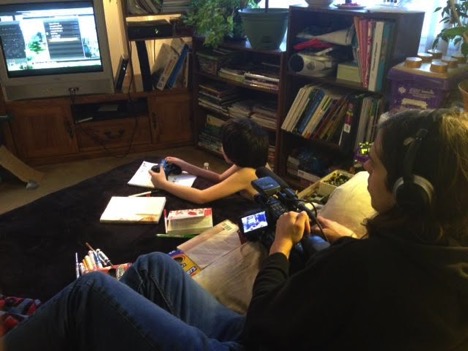
A student films the subjects of the documentary in the behind the scenes photo.
J-School students work closely with their subjects as seen in this behind the scenes pic. Photo by Jana Wiegand.

The documentary, “Aging Out: Autism in Montana,” will premiere at the University Center Theater on Friday, May 13, at 7 p.m. as part of the Senior Showcase. However, the rest of the state will get to see the show on MontanaPBS on Tuesday, May 24, at 8 p.m.

Upper-level journalism students have the option to take the Student Documentary Unit every spring semester. However, this year’s group started researching ideas for the show back in December. A class vote revealed an overwhelming decision to pursue the topic of autism and how it impacts the lives of Montanans.

After more research, the students noticed a significant gap in autism care as individuals with autism spectrum disorder (ASD) transitioned from school-age to adulthood. With the number of individuals being diagnosed with autism on the rise, they realized that the stress placed on the limited number of current care options for adults with ASD was ill-prepared to meet the needs of the incoming wave of adults on the spectrum.

“I want to do something that’s worthwhile, and I feel we have a good group to do it,” said senior Peter Riley, the director of the show. “Everybody knows we have each other’s back as a team, and everyone’s really stepped up and come to the table with some fresh ideas and some talents.”

The students traveled across Montana to follow the lives of four families, each with a child on the autism spectrum. As a class, they chose their main characters to reflect a diversity of ages, abilities, finances and access to care. The class spent quality time at home with their characters, attending therapy sessions and time at the workplace too. Students also interviewed autism specialists to shed insight on autism itself, the diversity care options and relevant legislation in Montana.

Once the group made the transition from shooting to editing, Twiggs told the class, “It’s time to take a hard look at what you do and don’t have. Get everything on the table that shows your best moments.”

Since then, the students have rewritten their scripts and finessed the edited footage to tell a story that speaks to the unique situations of each family, while also capturing the overarching struggles that unites them all.

“It’s definitely the most worthwhile thing I’ve done at the J-school,” said Andy Anderson, the director of photography. “It’s also been the hardest project I’ve worked on, without a doubt, but I think we have a really good pairing of people with skills. We just have killer writers and awesome videographers.”

The majority of the members in Student Doc will graduate the day after the documentary premieres on campus.

“I think Doc is a wonderful experience. We may not get the chance to do this thing for quite a while, if ever again, so let’s step out strong and leave with a product that we can be proud of,” Riley said. “I’m so thankful to be surrounded by a group of individuals that thinks that way too.”

SDU2016

Check out the 30-second and 60-second trailers for the documentary on the Facebook page, “Aging Out: Autism in Montana,” which will also air on MontanaPBS in the days leading up to the television premiere. Students also plan to post behind-the-scenes footage from the making the documentary, providing exclusive insight to their process and the families they followed.

The complete documentary will be available via the MontanaPBS website after the scheduled air date on Tuesday, May 24, at 8 p.m. Past documentaries from the Student Documentary Unit can also be accessed from their website.

By Jana Wiegand
Staying Curious: NPR Host Susan Stamberg on Becoming a Veteran Journalist

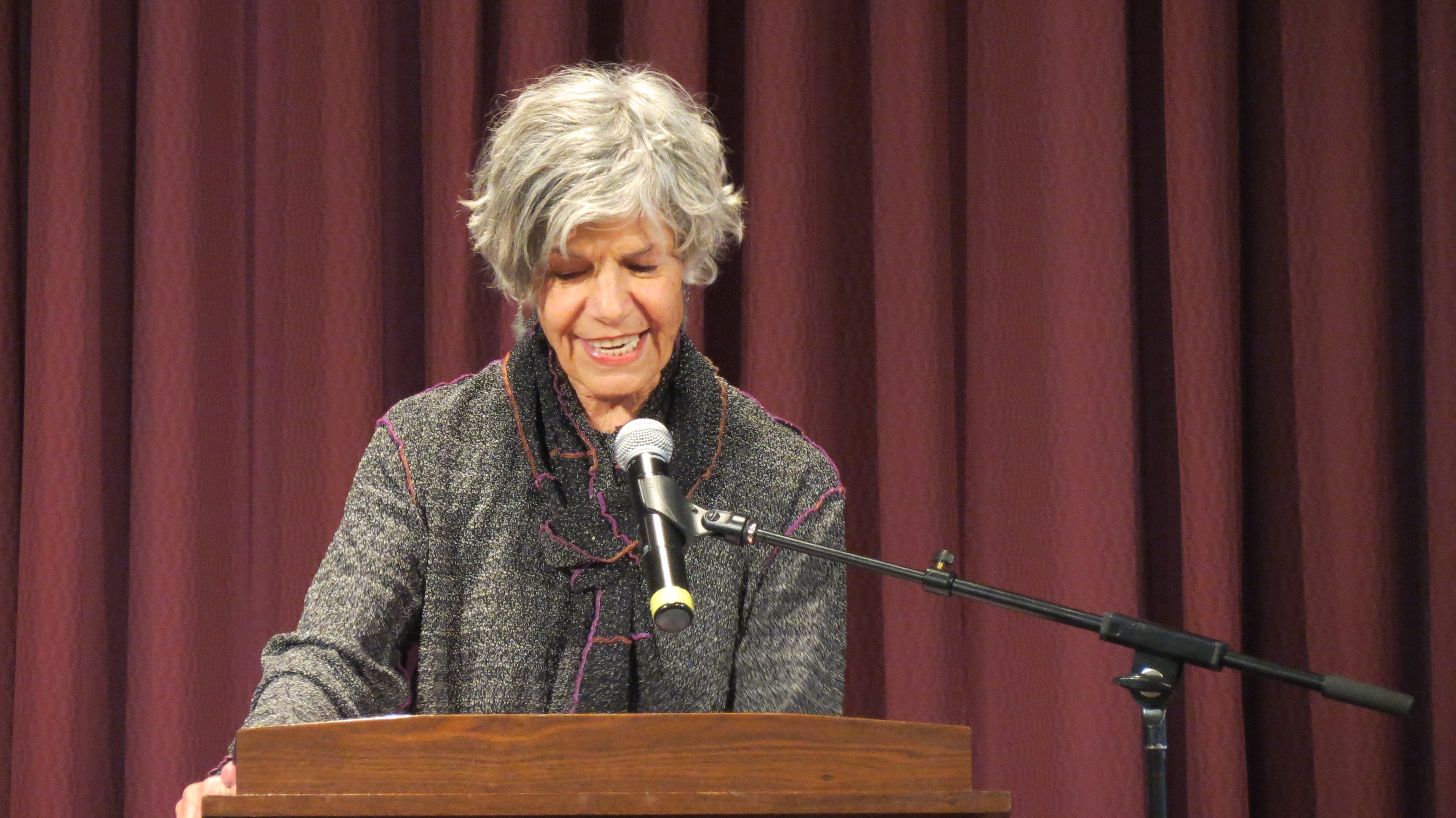
On a Sunday afternoon in Paris, while walking through the Luxembourg Gardens, Susan Stamberg came across a woman holding a sign that said “Hello! Let’s Talk.” Stamberg sat down with her, and when 81-year-old Miss Lily discovered she worked as a radio correspondent for NPR, she asked, “Well, don’t you want to interview me?”

stamberg

“Do lobsters want to fly? Of course,” Stamberg said, relating the tale to the audience at UM, gathered for the School of Journalism’s annual Dean Stone Lecture. Each spring the UM School of Journalism honors its founder, Dean Arthur Stone, and current journalism students with a two-night celebration featuring a guest lecturer followed by an awards banquet.

Miss Lily told Stamberg about a certain loneliness that she saw in people that she hoped to ease by getting more strangers to talk to each other. As a journalist, Stamberg related to Miss Lilly’s mission because she always tried to take her interviews with people to a more intimate level and advised students to do the same.

“Don’t accept ‘fine’ as an answer. Tell me what’s really happening. Go deeper,” Stamberg said. “After talking with Miss Lily I felt like I was walking on joy. It was such a serendipitous experience. I look for her every time I’m back in Paris.”

Stamberg started working at NPR in 1971 as a tape editor, but started hosting All Things Considered the following year. In the US, she became the first woman to anchor a nightly news broadcast fulltime. “It was a time when anything was possible at NPR,” Stamberg said. “We were still inventing ourselves, so we got to do everything.”

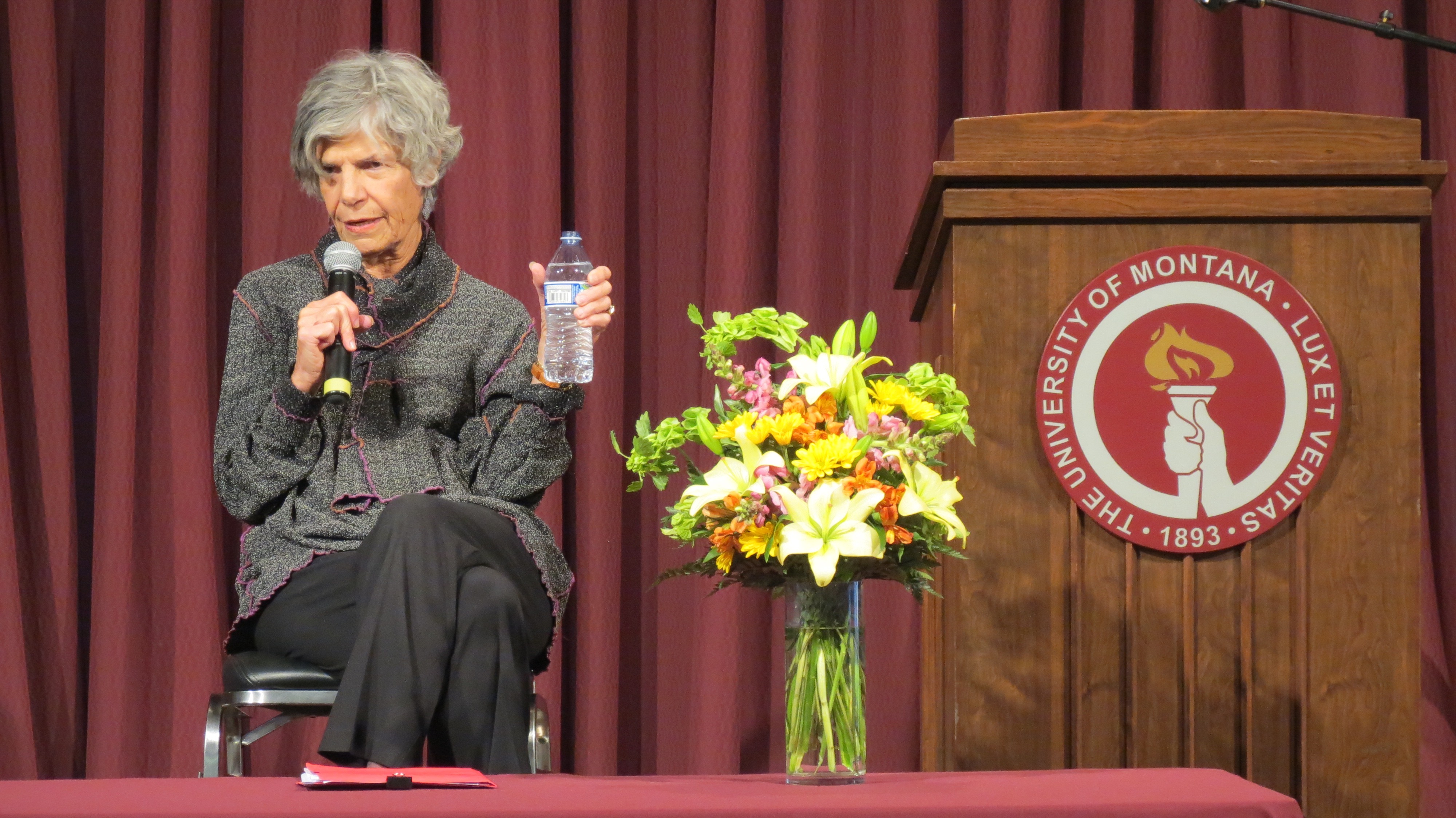
Susan Stamberg took questions from the audience after her talk.
Susan Stamberg took questions from the audience after her talk. Photo by Alyssa Rabil.

Dean of the UM School of Journalism, Larry Abramson, worked with Stamberg at NPR for many years, often sharing a ride to the office together. “Susan, for me, and for her followers, led the pathway out of a stiffer kind of journalism,” he said. “She showed that you can be a good journalist and be passionate, without sacrificing your objectivity.”

Stamberg also shared stories about her work with professor Jule Banville’s Advanced Audio class earlier that day. Her favorite pieces covered individuals’ personal achievement, “especially in the face of vigorous challenges.”

“Students asked her about her curiosity, how she keeps it sharp after all these years of reporting and interviewing,” Banville said. “She told them, ‘it’s not so much about style as it is about curiosity.’ I wrote it on the board because I thought it was so insightful.”

Later, Stamberg joked, “I am getting worse at remembering things, but I guess that’s why God invented Google.”

Yet having now worked at NPR for 45 years, she credited her genuine curiosity to the fact that she’s a life-long learner. After growing up as an only child, Stamberg also maintained her desire to reach out to new people, understand and befriend them.

“Susan’s an extremely diligent listener,” Larry Abramson said. “She can show the students how important it is in broadcast, and in journalism in general, to be a good listener.”

Stamberg took the time to listen to parts of Banville’s class’s brand new podcast series, Rest Stop Radio, offering feedback and sharing in their excitement.

“I’d always heard about how lovely and gracious she was, and now I know that’s the truth,” Banville said. “She made a huge impression on my students and on me, too. We were so lucky to get to know her.”

By Jana Wiegand

Dogged Reporter, Peregrine Frissell Wins Hearst Award For Athletic Investigation

Montana Kaimin web editor and reporter, Peregrine Frissell, had never written a sports story before when he started investigating UM’s controversial compliance efforts with NCAA regulations this past October. After being published in the Kaimin on November 4th, 2015, his story, “Unsportsmanlike Conduct,” won 7th in the Hearst Awards competition for Sports Reporting.

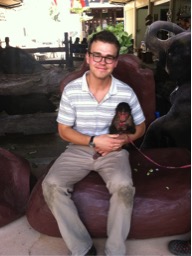
photo of Peregrine Frissell holding a small monkey.
Frissell takes a moment to pose for a photo while reporting abroad in Nepal. Photo by Peregrine Frissell.

“Peregrine did a great job of looking at athletics on the UM campus beyond just the scoreboard,” said Nadia White, faculty advisor to the Kaimin. “His story looked at NCAA rules and regulations and examined what those mean for student athletes.”

Frissell’s research involved digging into those regulations and interviewing UM athletic officials and the NCAA representatives to whom they report any infringements. Violations included anything from coaches recruiting high school athletes too aggressively to convictions of current athletes who commit off-the-field incidents. Frissell said talking to public representatives of those departments was challenging because they wanted to keep control of the information they told him during interviews.

Kevin Van Valkenburg, the fall 2015 Pollner professor and advisor to the Kaimin, said, that a lot of journalists would have dropped the story when they heard officials use the term ‘minor infractions’. “Don’t let the administration convince you it’s no big deal. Ask the right questions,” he said. “UM mis-reported and mis-understood the facts, but Peregrine understood the bigger picture here, and he pursued that to explain it in context.”

“I needed every minute I got,” Frissell said, since he only had two weeks to get the story to print. “I’m really thankful to get recognized.”

Yet Frissell has plenty of reporting experience, both in Montana and abroad. He’s been a Global Leadership Initiative fellow at UM and completed studies in the UK and Thailand, as well as working as a reporting intern for the Nepali Times. “I arrived a month after the earthquake and spent much of my time outside of Katmandu, covering earthquake recovery,” he said. “The earthquake was tragic, but I enjoyed my experience there.”

Back on the UM campus, Frissell has worked with the Montana Journalism Review (MJR) as both an editor and a reporter, and he’s now pursing political stories on the Crow Indian Reservation in Montana as part of the class Native News.

“Peregrine is a dogged reporter. He’s critical and curious, and his instincts are spot on,” Nicky Ouellet said. As a graduate student, she’s overseen his work at MJR and now for Native News. “He’s the type of reporter an editor hopes for—capable of following a tip to create a deeply reported and contextualized story. I’ve enjoyed working with him and can’t wait to see what he pops out in the future.”

Scheduled to complete his journalism degree in May, Frissell said he wants to report in the US for a couple of years and then go back abroad. “I’m still waiting to hear back about potential jobs and internships,” he said.

However, Van Valkenburg has high hopes for Frissell’s future. “He reads a lot and is interested in things of public interest and importance,” he said. “Peregrine will make a great investigative reporter.”

Catch the latest news updates with Peregrine Frissell via Twitter.

By Jana Wiegand