Just do it.

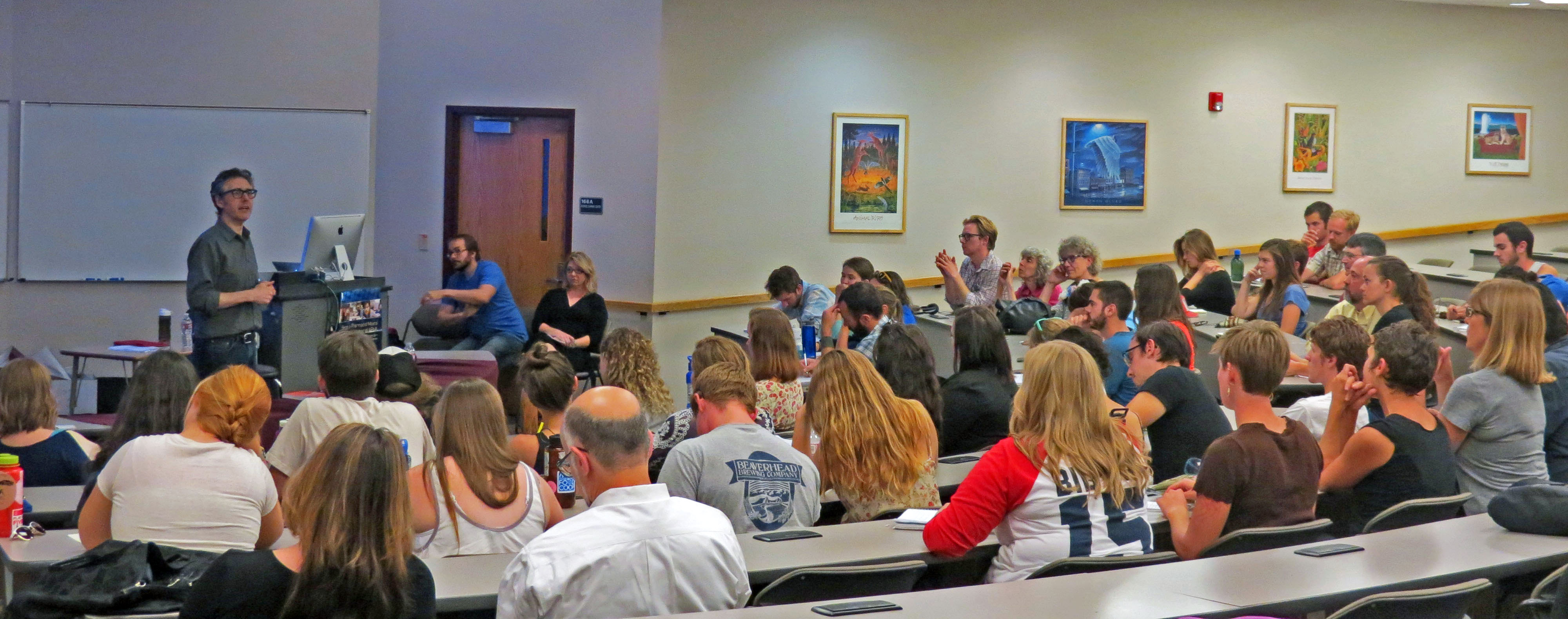
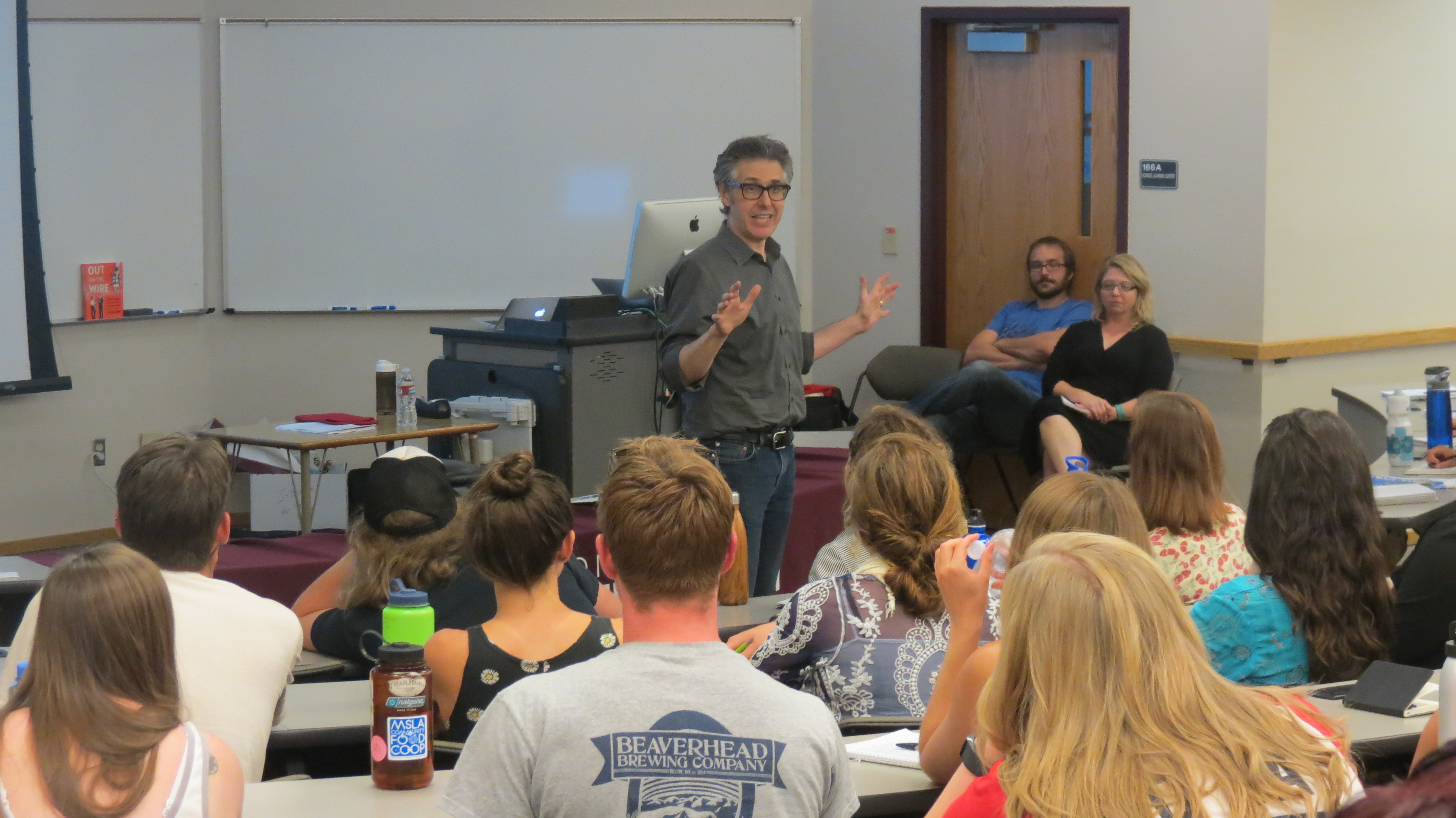
Ira Glass speaks to students and professors from the UM J-School

Radio demigod Ira Glass came to Missoula last week to entertain the public radio faithful, and to speak to J School students. Of the many lessons he imparted, one stuck with me: don’t wait, he said, before starting to create the journalism you have in your head. This is good advice for many reasons.

Ira confessed it took him decades to get good at radio. He stressed that the only way to get good at journalism is to do it. If you could buy journalism training at the drug store, the directions would read: write, edit, repeat. Learning about the history of journalism is a noble pursuit, so is trying to analyze trends in coverage. But the only way to become a great writer is to write. Great photogs need to shoot, radio folks need to gather sound, and of course we all need to post and tweet.

Part of Ira’s point is that there’s no need to wait until some employer gives you permission to do a story. Reporters—and students—today can develop their own news products, and can publish without a big backer. The podcast explosion has opened up new possibilities for many creative minds, and has turned out to be a great source of revenue for Ira’s show, This American Life. The barriers to entry are dropping. Your audience will be small at first, but you will be learning, and you may come up with something that will impress a prospective employer. So why are you wasting time with this blog? Go start your own.

By Larry Abramson

Ira Glass Teaches J-School Students About Radio

This American Life’s Ira Glass shared words of reporting wisdom with UM students last Saturday.

Glass began his career in public radio in 1978. He began as an intern for NPR and has a wealth of broadcasting experience. Glass has held every production job from tape-cutter to newscast editor before finally settling in as the host and executive producer of This American Life.

Ira Glass shares his broadcast experience with J-School students

 Saturday, Sept. 12, Glass taught a master class for University of Montana School of Journalism students. He began his lecture by saying he was there to “serve” the students and answer any questions they had about the business.

Glass shared clips from his early career when he was at NPR, and admitted some of his own insecurities about being on the air.

“I didn’t like the way I sounded,” Glass said. He explained how he would cut his narration out of his first broadcasts, letting the interviewee tell the story.

Glass used his old clips to illustrate the importance of narration in a radio broadcast. He explained that the script could potentially make or break a show. He also emphasized the importance of good quotes, adding these add intrigue and keep a listener engaged.

Ira Glass speaks to a room full of students and professors.

Students had the opportunity to ask a plethora of questions and Glass was happy to answer all of them. He told students the key to a great show is plot and narrative. He said the key is to keep listeners asking “What’s going to happen next?”

He ended the class by encouraging students to read “Out on the Wire” and offered to buy the book for anyone who was interested. The book is an illustrated guide to making radio shows. Glass collaborated on it, as did many of today’s top radio producers.

By Alyssa Rabil

Environmental Journalism Students Kick Start Program

By Andrew Graham


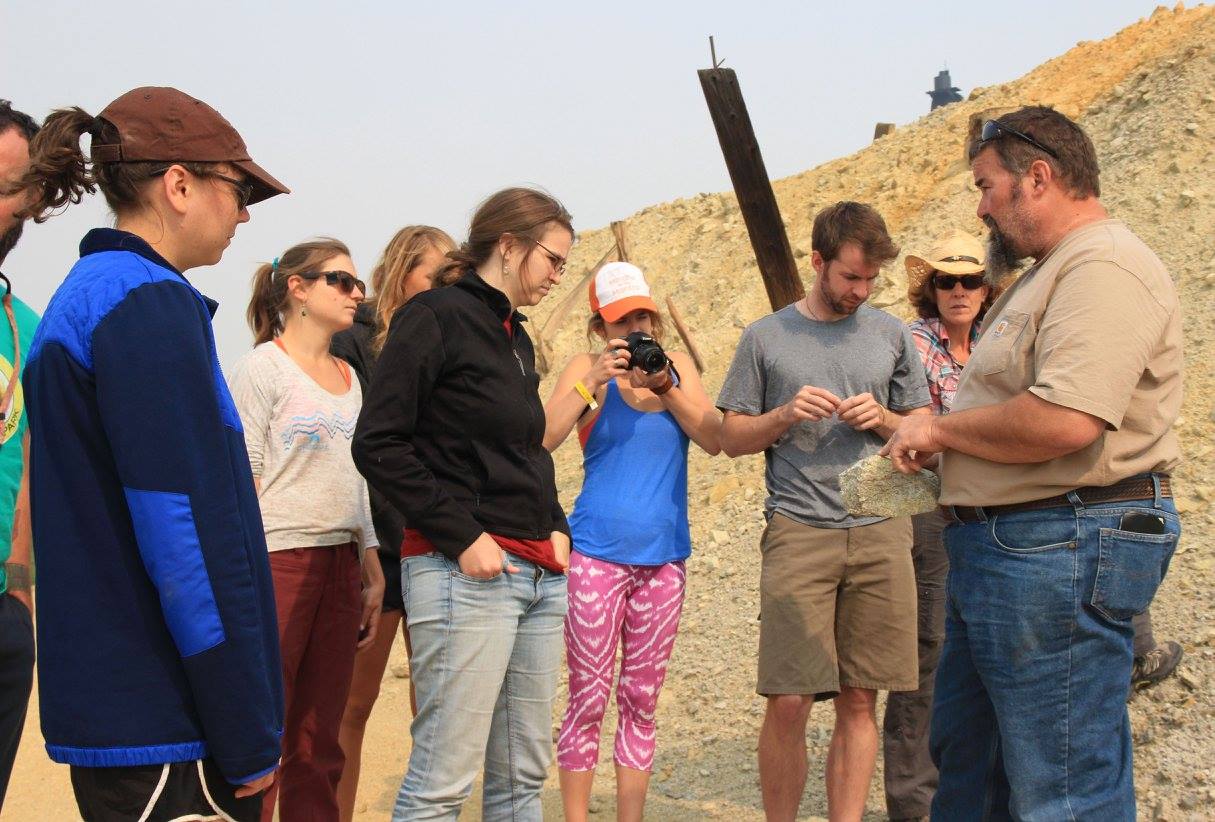
For new graduate students at the J-School, there’s no better place than Butte and the Clark Fork river to experience the contrast between Montana’s natural beauty and the toll of natural resource extraction. The new group took a day to explore the Butte Silverbow Superfund Site. Led by Professor Nadia White, the trip began with a look at the former open air mine the Berkeley Pit, and then followed a story of mining degradation and subsequent environmental restoration all the way back to Missoula.

“The whole point of this tour is that all over Montana the landscape has remarkable stories to tell,” Professor Nadia White, the trip’s author, said. “The Butte-Silverbow Superfund site happens to wear them close to the surface.” Deemed the largest complex of environmental clean-up sites in the U.S., the site is a massive effort to restore health to the Clark Fork River.

group photo of UM J-School grad students
Photo by Katy Spence

For these students, entering the Environmental Science and Natural Resource Journalism Masters Program, it’s a chance to learn about a home that is new to many of them. For the next two years, they’ll cross almost daily over the Clark Fork River, which runs through the heart of Missoula.

For Madison Dapcevich, 25, the tour was a chance to learn something new about Montana. She was largely unfamiliar with the story, and it left her with a question valuable to any budding journalist: “To what extent do people know about this?” Dapcevich came to the program most recently from Washington, D.C., where she worked for the media advocacy non-profit Internews, while also interning on Capitol Hill.

After Butte, the group stopped in Anaconda to view the old smelter tower; at a ranch where they saw restoration of the river’s flood plain in action, and at the Milltown Overlook, where a dam built in 1906 and removed in 2008 once held back the Clark Fork and the mine waste it carried.

As with any good story, White provided characters as well as settings. Students met restoration engineer Tom Molloy, a Butte resident and reclamation engineer, and Maggie Schmidt, a University of Montana graduate and manager of the Dry Cottonwood Creek Ranch.

Benjamin Polley, 37, has been living, working and writing in Montana for a long time. His latest job was as a field assistant on a ranch dedicated to conservation. He particularly enjoyed their time with Molloy. “That guy’s just an awesome story teller,” Polley said. The experience left him with new questions about the state and about ecological restoration, he said.