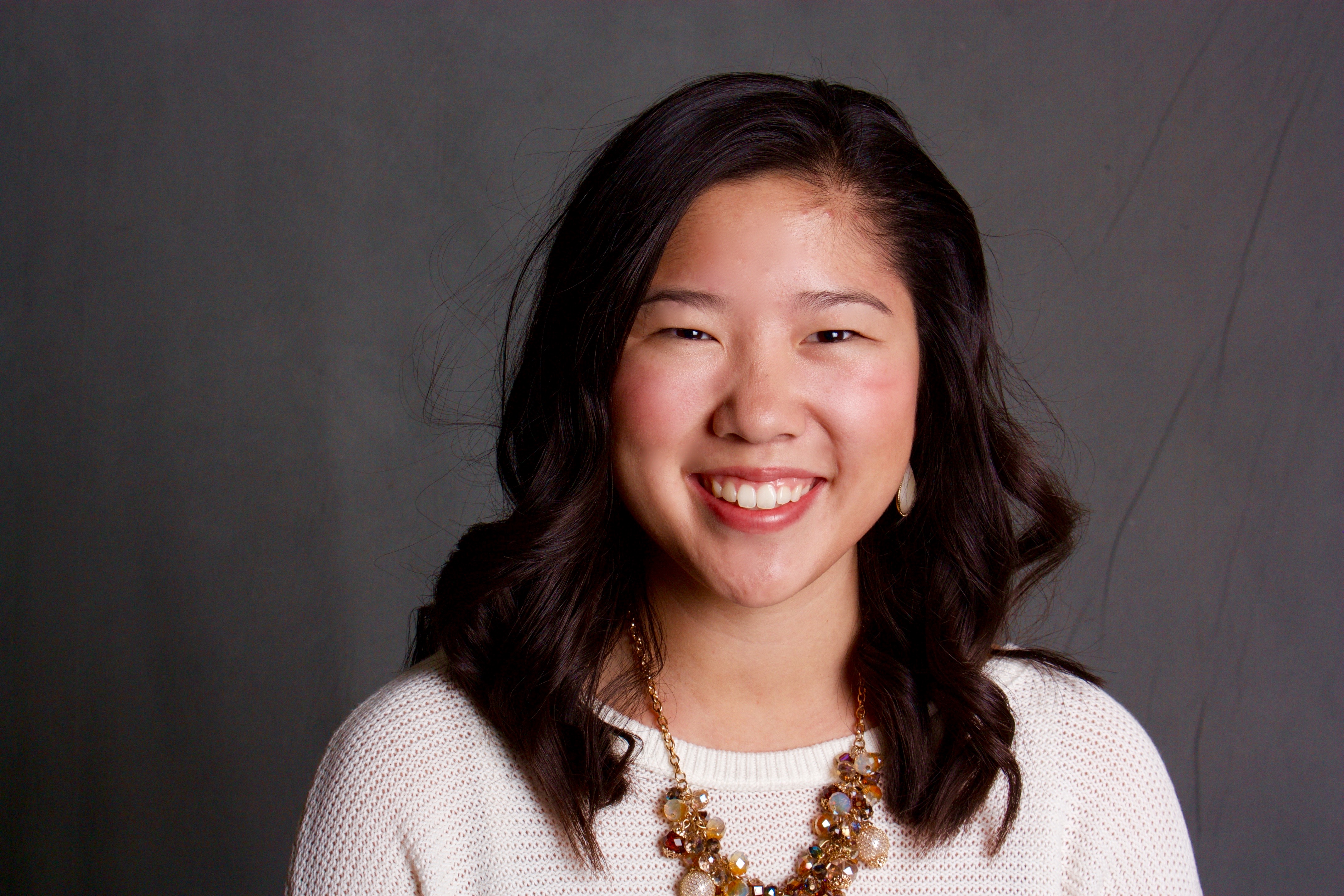
For Sojin Josephson, a 21 year old senior broadcast and print major from Big Timber, population roughly 1,600, New York City has always been something of a fascination. She’s visited before with her mother, she said, and is always fascinated by the city’s energy. December 2nd, she’ll return to New York, this time alone and to attend a two day workshop hosted by the International Radio and Television Society.
Pictured above: Sojin Josephson.
“I’ve really wanted a good opportunity to go to a place I love,” Josephson said, noting that she’s looking forward to a chance to spend some time alone in a city that interests her.
Called the Multicultural Career Workshop, the two days include seminars in digital media, creative production, advertising, research, sales and marketing. There will be panels of media professionals taking questions, and then a full day career fair where Josephson will have the chance to make contacts with major media companies.
Josephson said she applied on a bit of a whim, after Ray Ekness, Professor & Director of Student Success, suggested that she take a shot at the workshop. As a sports reporter for the student newspaper the Montana Kaimin, and a reporter, anchor and producer with UM News, a weekly news segment staffed by senior broadcast students, Josephson has been taking advantage of the opportunities for hands on production by students at the School of Journalism.
While her multifaceted abilities are an asset in today’s job market for journalists, Josephson said she struggles between the two career tracks as she finds both rewarding. For the spring semester, she hopes to do a broadcast internship around Missoula, and get a taste for how that feels.
For now, she’s looking forward to the chance to make some contacts in New York, hand out her resume and immerse herself once more in the energy of the Big Apple.
You can read a remarkable profile by Josephson that recently ran in the Montana Kaimin here.
On November 17th, University of Montana President Royce Engstrom named the School of Journalism as one of the programs essential to the University’s “mission and identity” but targeted for budgeting cuts given a campus wide drop in enrollment.
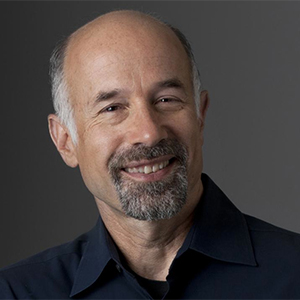
J-School Dean Larry Abramson
“The journalism school is a part of this campus and the campus is hurting financially, so we’re going to take a hit,” Journalism Dean Larry Abramson said, in an interview two days later.
While some departments will be able to escape adjustments, the School of Journalism was one of those that have seen what Engstrom called a substantial enrollment reduction. However, Abramson pointed out that Journalism is the smallest school on campus, which means smaller changes in the numbers of enrolled students manifests itself as a bigger percentage drop. A 13.9 percent drop between 2014 and 2015 means 44 less students in the School of Journalism.
Abramson said that while it is still unclear what form an adjustment would take, he and the rest of the faculty are marshaling arguments to avoid a harmful budget cut and maintain the School of Journalism’s high rank, at 9th in the nation.
“As much as we want to be good citizens of the University and help solve this problem, we also want to protect our program,” Abramson said. The biggest challenge, he said, will be to avoid losing a faculty position in order to keep the school as a competitive destination for those who want to pursue careers in digital journalism.
Capstone journalism classes, such as the Native News Project and the Montana Journalism Review, are student produced publications that run to wide exposure each year. Native News runs as a special edition in several Montana newspapers and the Montana Journalism Review is distributed widely to media professionals across the region, as well as nationally and internationally. Both publications have begun to push more effectively into digital productions to match their print editions. Abramson pointed out that Assistant Professor Jule Banville is pushing increased attention to audio podcasts as well.
“It’s not just about enrollment numbers, and I think the President and the Provost are open to that,” Abramson said. “Reputation and role in society is important and I think we have a really outsized role in comparison to many of the other departments on campus.”
Abramson said that while he wished he could say more specifically what may happen, at the moment he remains in the fact finding phase. Being open with students and faculty is important to him, and Abramson said he will share any information he feels the school needs to know.
Meanwhile, he remains committed to innovating in the journalism school, streamlining programs and pushing the school towards the digital age skills that are defining today’s market. “Our people are placed in newsrooms and startups and in their own entrepreneurial efforts all over the world,” Abramson said.
He believes that tradition, and a high ranking among the nation’s journalism schools, is well worth protecting. “It’s taken a hundred and one years to build that reputation, and we don’t want to see it eaten away at by more cuts.”
In 1959 over a hundred thousand Tibetans left behind a homeland occupied by the Chinese military. After countless twists and turns some of them ended up in Montana. Now, years later, a few are sharing their stories with graduate student Matt Roberts.
The interviews Roberts is conducting are part of a project by the School of Journalism’s Advanced Photojournalism and Multimedia Storytelling. Roberts is producing a video piece along with fellow graduate student Jayme Dittmar, and they’ve interviewed families in both Missoula and Butte.
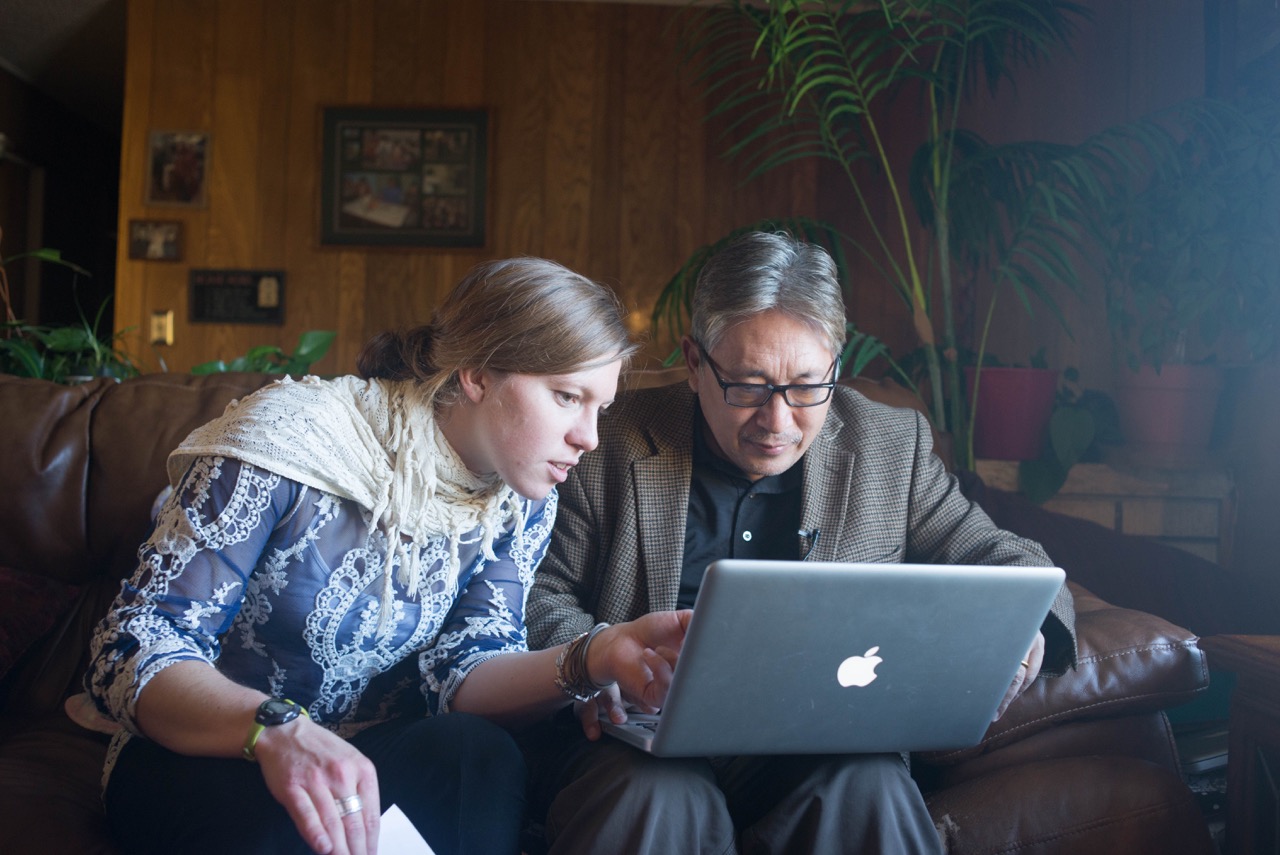
Graduate student Jayme Dittmar looks at old photos with Karma Tensum, Executive Director of the Tibetan Children’s Education Foundation. Photo by Matthew Roberts.
The subjects Roberts and Dittmar are focusing on for their story were either young or not born yet when they left Tibet, but today, they still keep their culture alive. “You go in their houses and you would know it’s a Tibetan house,” Roberts said. He’s visited a family in Missoula and one in Butte.
The Tibetans are just one part of a multifaceted project that has sent journalism students, in pairs or on their own, out to find and interview refugees and immigrants from Cuba, Belarus, Iraq and Palestine, as well as countries in Africa and Southeast Asia.
Jeremy Lurgio, an associate professor at the School of Journalism, may teach the class, but it was his students who designed and continue to shape the project’s theme. Last year’s class did a multimedia project on Montana centenarians – those residents of the state who were still alive at age 100. Portraits from that project ran in the Montana Quarterly; an award-winning magazine out of Livingston.
“I like making my class all real-world if I can,” Lurgio said, noting that he’d enjoyed watching his students be challenged tracking down centenarians, and had hoped to push this fall’s class equally.
For 2015 his students decided to try and find a Montana based project that could reflect the global story of refugee crises in Europe and beyond.
As Lurgio notes however, Montana is not New York City, and is in fact one of the states with the least number of refugees in the country. As opposed to running out of time while trying to find recent refugees, the class decided instead to apply a wider lens. They’re examining the idea of Montana as a refuge, and exploring global diversity in the state. With the semester well into its second half students are now compiling the material they need for a compelling project. “There’s a rich diversity of stories you may find,” Lurgio said, even if they’re not as close to the surface in Montana as in areas more renowned for their cosmopolitanism.
For Roberts, tracking down and contacting those who treat Montana as a refuge was a challenge. Even once they did so, Roberts said they had to proceed slowly with their subjects, being aware that for some refugees the story of leaving their own country and arriving in Montana, as well as the obstacles they faced in assimilating here, is a sensitive one. Lurgio named this challenge as one reflective of the difficulties of reporting his students will face throughout their careers.
Roberts said that for their first interview they chose to show up without cameras or a microphone, and focus instead on getting to know their subjects and raising their comfort level.
“Once you get the ball rolling they have really interesting stories to share,” he said.
Bekah Welch, age 24, is another student in the class. As an undergraduate she double majors in journalism and Russian, and for her portion of the project decided to seek out a member of Missoula’s Belorussian population.
Belarus is an Eastern European country that shares aspects of language and culture with Russia, and was once a part of the Soviet Union. During the 1990s large numbers of Belorussians emigrated to the United States, and Missoula developed what Welch called a surprising subculture.
For her story, Welch has been spending time with the 20-year-old daughter of parents who fled Belarus to escape religious persecution. Finding her subject was also a challenge, Welch said, and she ended up spending a lot of time in the University’s Russian department, spreading her contact information around and looking for someone who could plug her in to the Belarus culture. Since then her reporting has brought her to a traditional Russian wedding, where she put her double major to work reporting and speaking Russian.
“Getting to exercise both of my interests and learning more about their culture was interesting,” Welch said. She takes inspiration from her subject’s parents’ long and often trying road to Missoula.
For both Welch and Roberts finding and getting to know their subjects, their respective cultures and stories was just the beginning. They still have more interviews to conduct and material to gather, and the long road of multimedia editing and production looming ahead of them.
For all members of the class, Lurgio noted, the end of the semester will be a busy time. But, he said, that’s also kind of the point: “Long form projects are really hard to do well, and it takes a lot of reporting.”

 Montana Journalism