Student Spotlight: David Detrick, Journalist & Entrepreneur

Ten years ago, if you asked UM Senior David Detrick what he would be doing today, he might have still pictured himself writing, but with his words grounded in music rather than in the news. He played with bands in Los Angeles, California before moving back home to Seattle, Washington. Detrick founded his own band in Seattle called Saving Arcadia, and he wrote all of the lyrics to the Green Day and NOFX style songs.

Detrick got his first taste of journalism at the South Puget Sound Community College (SPSCC) in Olympia, WA. He had been majoring in Political Science when he started working at the school’s paper The Sounds as a reporter and writer. The more he learned about the political system, the more he realized that wasn’t his dream career. “I don’t want to work for these people,” he said. “I want to expose these people.”
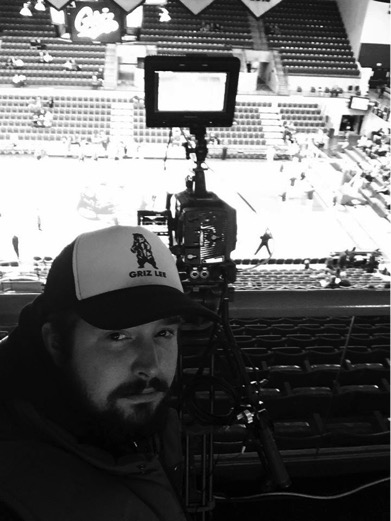
Detrick sports a Griz Lee hat and gets ready for a Griz basketball game on December 22nd, 2015, as part of Griz Vision.

With his newfound passion for journalism, Detrick had his eyes set on the School of Journalism at the University of Montana. His acceptance to the program also came with a Western Undergraduate Exchange Scholarship, based on his academic success at SPSCC.

The outdoor photography and sports journalism opportunities, ever popular in Montana media, aligned perfectly with Detrick’s interests. On February 11th, 2015, the Montana Kaimin published a feature-length piece that he wrote about a UM alumni football player who got signed to the Seattle Seahawks.

This past year Detrick photographed Griz football games and also filmed Griz and Lady Griz basketball games as part of a program called Griz Vision, which gives students professional experience with broadcasting sports live.

“It’s a lot of fun,” Detrick said. “I like being behind the camera.”

Outside of academics, Detrick started his own business in 2015 called Griz Lee, which he called “a Montana inspired clothing line with an attitude for anyone with a sense of humor to enjoy.” Around campus, most students are familiar with the Griz Lee logo, featuring Bruce Lee’s head on top of the body of a grizzly bear doing Kung Fu. Detrick gets a real sense of pride when he sees Griz Lee stickers slapped onto water bottles or laptops.

“Ever since I was a kid, I’d come up with T-shirt ideas, crazy ideas,” Detrick said, “But I never did anything about them.”

Yet he was determined to follow through this time around. Detrick pitched his product to the University Center Bookstore, and now says Griz Lee items sell out faster than they get re-ordered. Detrick has also spread his business around Missoula, thanks to social media platforms like Instagram and Facebook, as well as word-of-mouth. Now he’s answering orders from people as far away as Tennessee, which he suspects has to do with the Memphis Grizzlies, a professional basketball team.

In April 2015, Detrick won the Dean’s Award for his outstanding performance in Journalism. As a senior this year, he’s only been taking Journalism classes, and he knows that more doors open as he continues to gain experience—not just for him, but also his nearly four-year-old son.

“The sky’s the limit now,” Detrick said.

By Jana Wiegand

J-School Alum Wins Hearst Journalism Award

February 10th, the Hearst Journalism Awards Program released its top ten winners in the Multimedia One/Features category, ranking Kaci Felstet’s piece “Late Start” 6th in the nation. Felstet produced the multimedia piece last spring as part of the class Native News, co-taught by Assistant Professor Jason Begay and Associate Professor Jeremy Lurgio.

“Late Start” tackles attendance issues at Rocky Boy Elementary School located in the center of the Rocky Boy Reservation in north-central Montana. Originally, Felstet and her reporting partner Courtney Anderson had been researching teacher retention rates, but they realized that the story’s core remained with the students.

Photo shows a darkly shadowed mug of tea sitting on a railing with a bright orange sunset in the distance
Taken during a photo-a-week challenge. By Kaci Felstet.

“Kids weren’t getting the education that they needed,” Felstet said. “And that was something really close to our hearts.”

Begay and Lurgio chose the theme “Relationships” for Native News in spring 2015. They challenged students to find unique, personal bonds that explored “how people on reservations connect with each other,” Begay said.

“It left a lot of room for us to branch out and find our own stories,” Felstet said.

She and Anderson traveled to the Rocky Boy reservation during spring break and spent several days following their characters and gathering classroom footage at the elementary school. Felstet said the kindergarten kids needed some time to get used to the cameras and stop making funny faces at them, but that their patience paid off in the end.

“The hardest thing is that you can’t go back,” Felstet said. “You have to get everything you need in three or four days.”

That was where working as a team came in handy. Despite extensive background research and planning, Felstet and Anderson knew that they need to stay both flexible and focused while in the field, so that they could find the true story even if it was different from the one they had envisioned. Lurgio said, “Kaci was very organized. She knew what she needed and she got enough to be able to adapt.”

Felstet’s first exposure to video came from a summer internship with KRTV in her hometown of Great Falls, Montana, but she considers herself more of a photojournalist these days. She’s currently pursuing a master’s in Economics here at UM, which will not only diversify her education but also open up new doors to her as a journalist, especially regarding business and finance beats, “which not everyone wants to cover,” she laughed.

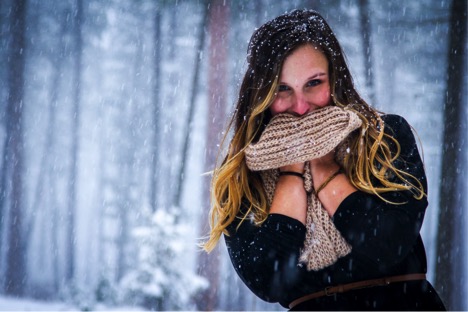
A self portrait of Felstet clutching a scarf to her face while standing in the snow
Felstet’s self-portrait from her photo-a-week challenge. By Kaci Felstet.

To stay familiar with her camera, Felstet decided to create a photo-a-week challenge for herself to keep her creativity fresh. The recent recognition of “Late Start” serves as another boost from the journalism world.

“Kaci has a great eye for shooting and producing multimedia packages,” Lurgio said. “She works extremely hard, and she was very dedicated to producing a professional caliber story. And that’s just what she did.”

Kaci Felstet and Courtney Anderson’s collaborative piece can be found on the Native News website, which features more stories from reservations in Montana.

By Jana Wiegand

UM J-school Prof. Lee Banville Writes Encyclopedia About Media and Politics

Back in July 2014, Associate Professor Lee Banville mapped out all of the best coffee shops in Missoula after signing the contract for his next book. His romantic vision as a writer disappeared when he realized that his 10,000 word-per-week quota could only be met from the basement of the Maureen and Mike Mansfield Library at the University.

“Sometimes, as a treat, I’d sit on the third floor,” Banville said. “There are windows there, and I could look outside.”

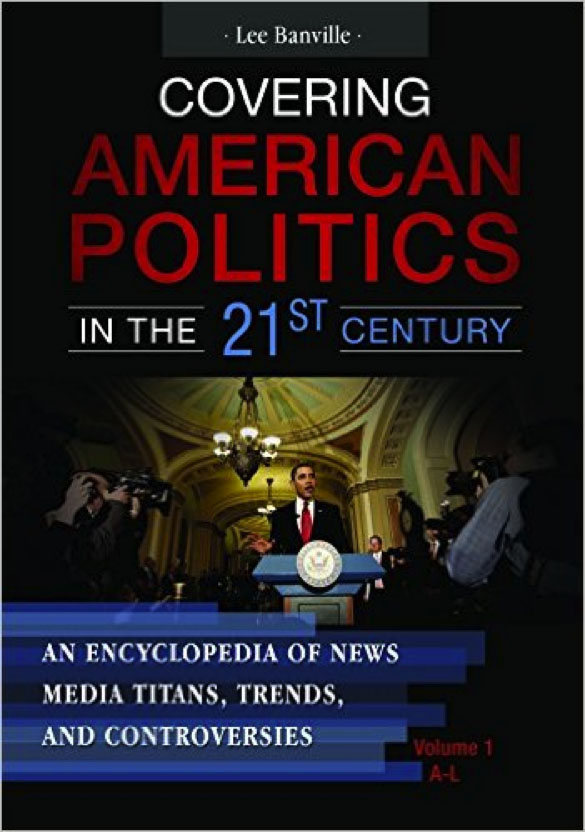
Now, 788 pages later, Banville’s work is in the hands of Praeger Press, who will release the two-volume encyclopedia in October 2016. Titled Covering American Politics in the 21st Century: An Encyclopedia of News Media Titans, Trends, and Controversies, the book tackles topics like the role of money in elections, how social media has increased the personalization of the Internet and the roles of female reporters on the campaign trail.

banville-book

Banville witnessed the digital revolution first hand, between the 1996 National Convention in San Diego, covered with “traditional media by the nth-degree,” and the 2008 elections, when he was at Grant Park in Chicago and saw President Obama give his victory speech.

“By the end of that, information was treated differently,” Banville said. “I wanted to dig into all of these things I was affected by and was seeing, but hadn’t spent much time thinking about.”

While he said technology and society have shaped politics and the media, Banville continued, “It’s part of a larger story that’s not changing as fast as we think.”

Banville started working in the newsroom when he was 22 and living in Washington, D.C. He spent 14 years with PBS NewsHour as an online editor, but realized he missed working with people who were still “pretty green to journalism” and could adapt more quickly to evolving technologies. The constant bustle of Washington, D.C. also made Banville wistful for the mountains, so when a teaching position opened up at the University of Montana in 2008, he seized the opportunity, joining the School of Journalism the following year. Banville said the move definitely paid off.

“I still get a twinge during election season,” Banville said. “But it’s nice not to have to wait up for the final results anymore.”

However, he still finds himself awake at midnight, watching the polls and eating frosted animal cookies during the primaries. This election season Banville will be serving as an on-air political analyst for ABC FOX Montana to keep audiences informed about the issues at stake and their historical context.

“There’s a spectacle to politics, like nerd sports. It’s fun to report on,” Banville said. “There’s competition, winners and losers, bizarre personalities and civic good.”

Stay up to date with Lee Banville on Twitter: @banville

UM School of Journalism Assistant Professors Jule Banville and Jason Begay, as well as alumni Michael Wright, helped contribute to Covering American Politics in the 21st Century: an Encyclopedia of News Media Titans, Trends, and Controversies.

Lee Banville is also the author of Debating Our Destiny: Presidential Debate Moments that Shaped History.

By Jana Wiegand