J-School Professor speaks about science journalism

A University of Montana Journalism professor said the Environmental Science Journalism graduate program is a unique part of the Roundtable on the Crown of the Continent.
Logo for the Crown of the Continent Reporting Project
The Crown Reporting Project sponsors students at the University of Montana to produce stories about the environment in the Crown of the Continent region. Learn more about it on the website.

The round table is an annual conference which serves to encourage a dialogue about environmental science in the mountainous north west region of North America. The area known as the Crown of the Continent includes all of Glacier National Park and the Bob Marshall Wilderness Complex. It is one of the wildest places on the continent.

September 17th, Professor Nadia White gave a talk about the specifics of the UM J-School’s environmental science graduate program. “We do emphasize the science end of things,” White said, before going on to explain one of the program’s most unique features, a semester long seminar called Story Lab.

In Story Lab, graduate students in the journalism program are paired with their counterparts in the sciences. The science journalists-to-be embed in research labs, where they spend the semester producing stories in all different mediums about the science and the scientists they get to know.

The motivation behind the class is to address a problematic culture gap between science and journalism. Scientists often “worry about letting someone else control the narrative of their science,” White said. Meanwhile, deadline driven journalists are often frustrated at scientists’ reluctance to give definitive responses before the completion of the excruciating peer review process so necessary to science’s function. This program allows both sides to get to know each other, and two distinct cultures.

In addition to Story Lab, White discussed the new Crown Reporting Fund, which supports journalism students as they pursue stories in the Glacier National Park area of Montana and Canada.

This year, two graduate students have been paired with accomplished professional journalists as mentors. Celia Tobin teamed up with Ted Alvarez, editor of the environmental news website Grist to pursue a story on border crossing contamination from mine waste. Ken Rand is paired with Christopher Joyce, a science correspondent at National Public Radio, to write about invasive fish species in the Flathead Valley.

“Our whole program is based on the idea that we’re in a terrific place to learn to tell stories about the landscape,” said White.

By Andrew Graham
Just do it.

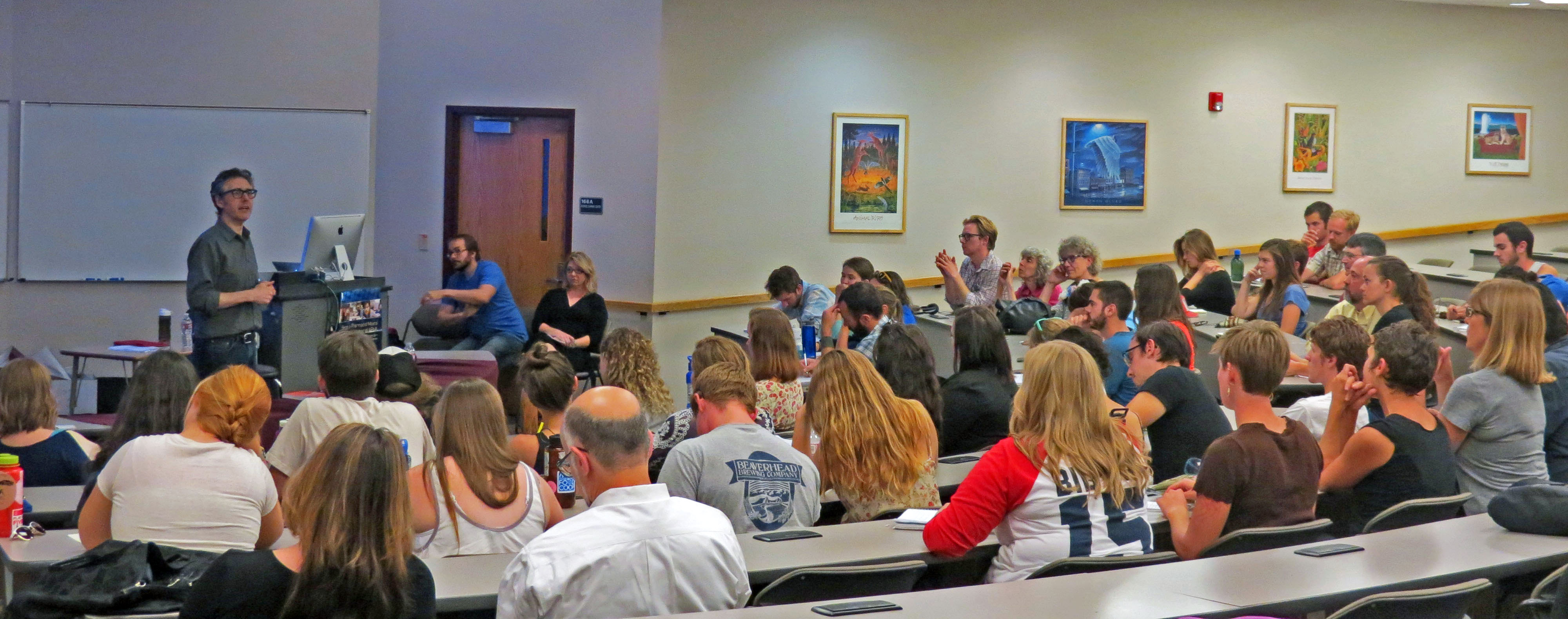
Ira Glass speaks to students and professors from the UM J-School

Radio demigod Ira Glass came to Missoula last week to entertain the public radio faithful, and to speak to J School students. Of the many lessons he imparted, one stuck with me: don’t wait, he said, before starting to create the journalism you have in your head. This is good advice for many reasons.

Ira confessed it took him decades to get good at radio. He stressed that the only way to get good at journalism is to do it. If you could buy journalism training at the drug store, the directions would read: write, edit, repeat. Learning about the history of journalism is a noble pursuit, so is trying to analyze trends in coverage. But the only way to become a great writer is to write. Great photogs need to shoot, radio folks need to gather sound, and of course we all need to post and tweet.

Part of Ira’s point is that there’s no need to wait until some employer gives you permission to do a story. Reporters—and students—today can develop their own news products, and can publish without a big backer. The podcast explosion has opened up new possibilities for many creative minds, and has turned out to be a great source of revenue for Ira’s show, This American Life. The barriers to entry are dropping. Your audience will be small at first, but you will be learning, and you may come up with something that will impress a prospective employer. So why are you wasting time with this blog? Go start your own.

By Larry Abramson

Ira Glass Teaches J-School Students About Radio

This American Life’s Ira Glass shared words of reporting wisdom with UM students last Saturday.

Glass began his career in public radio in 1978. He began as an intern for NPR and has a wealth of broadcasting experience. Glass has held every production job from tape-cutter to newscast editor before finally settling in as the host and executive producer of This American Life.

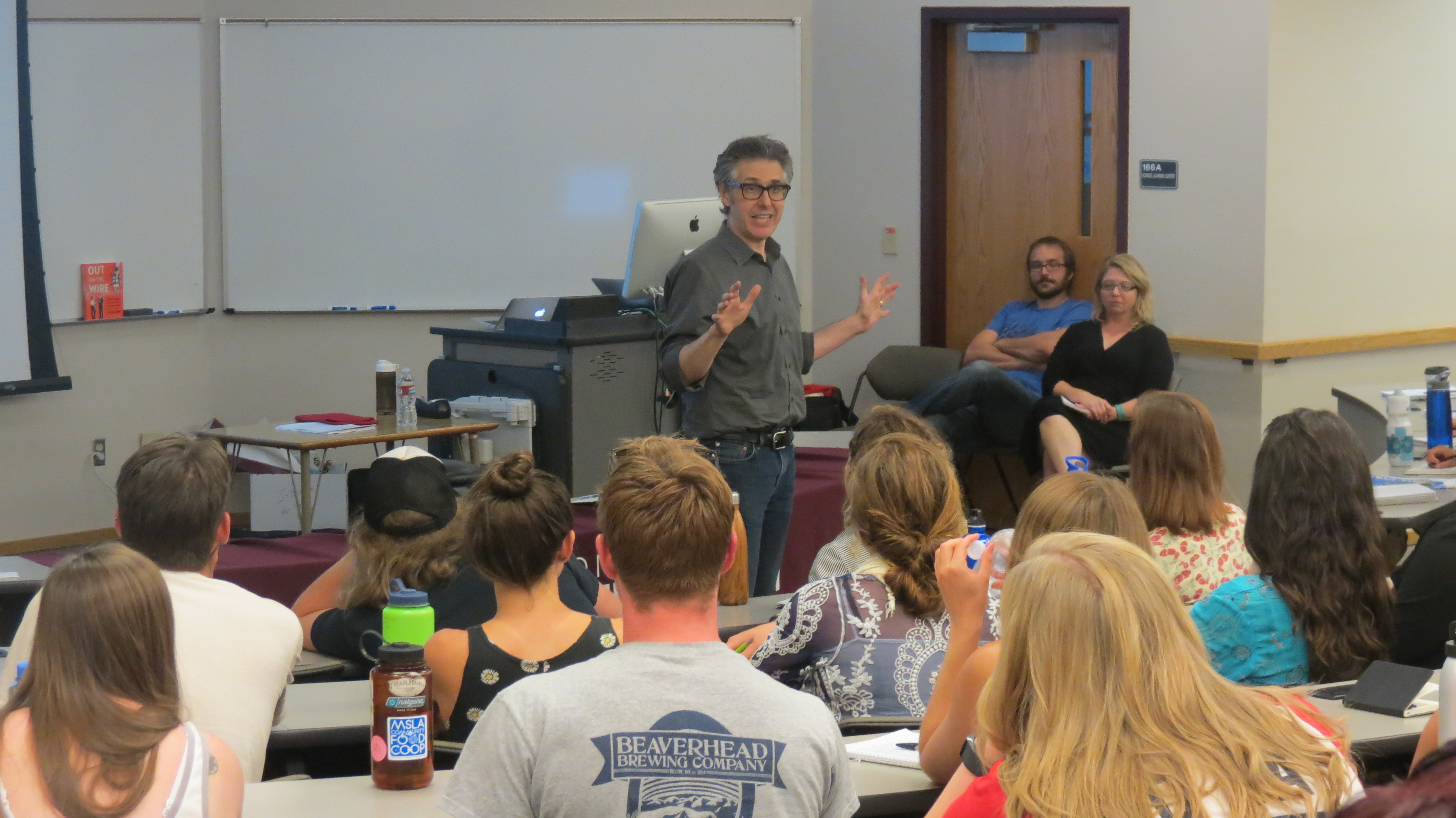
Ira Glass shares his broadcast experience with J-School students

 Saturday, Sept. 12, Glass taught a master class for University of Montana School of Journalism students. He began his lecture by saying he was there to “serve” the students and answer any questions they had about the business.

Glass shared clips from his early career when he was at NPR, and admitted some of his own insecurities about being on the air.

“I didn’t like the way I sounded,” Glass said. He explained how he would cut his narration out of his first broadcasts, letting the interviewee tell the story.

Glass used his old clips to illustrate the importance of narration in a radio broadcast. He explained that the script could potentially make or break a show. He also emphasized the importance of good quotes, adding these add intrigue and keep a listener engaged.

Ira Glass speaks to a room full of students and professors.

Students had the opportunity to ask a plethora of questions and Glass was happy to answer all of them. He told students the key to a great show is plot and narrative. He said the key is to keep listeners asking “What’s going to happen next?”

He ended the class by encouraging students to read “Out on the Wire” and offered to buy the book for anyone who was interested. The book is an illustrated guide to making radio shows. Glass collaborated on it, as did many of today’s top radio producers.

By Alyssa Rabil