
From hunting stories to hunting fossils

Montana Hodges just brought a suitcase full of fossils back from Alaska and wears Tyrannosaurus Rex shaped earrings. This month she is the lead author of a paper in a geology journal about approximately 200 million year old coral reefs. Believe it or not it was journalism, a career singularly obsessed with the here and now, that brought her here.
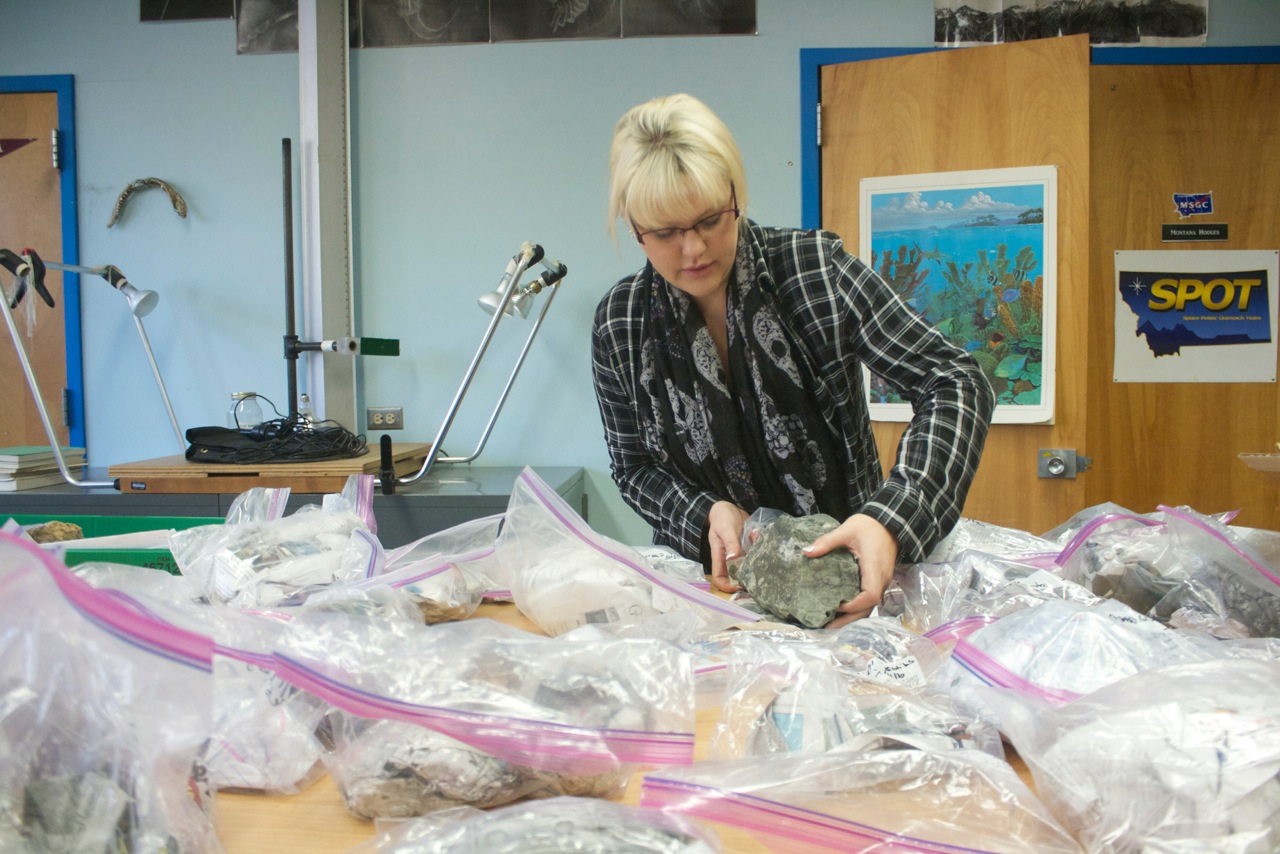
Montana Hodges unpacks coral reef fossils after a recent trip to Alaska.
Montana Hodges unpacks coral reef fossils after a recent trip to Alaska. Photo by Andrew Graham

Now, she’s pursing a degree in the University of Montana’s Individualized Interdisciplinary Doctoral Program (I.I.P.). As an undergraduate student at Sacramento State she double majored in journalism and geology. Afterwards Hodges entered the graduate program in Environmental Science and Natural Resource Journalism at the University of Montana. Right from the beginning, she knew she wanted to write about fossils for her Masters Project.

Her story, ‘Dinosaur Wars,’ would run on the cover of the August 19, 2013 issue of High Country News, a prestigious environmental news magazine out of Colorado. It described the conflict between for-profit fossil hunters and academic paleontologists. Hodges explored whether this conflict existed to the detriment of the science.

Hodges was nowhere near finished with fossils after receiving her Masters degree however, and decided to pursue an I.I.P. The article didn’t make her the most popular newcomer to the field. “There’s a lot of people in the paleontology community that don’t accept me,” she said.

She’s now studying mass extinctions; points in the Earth’s history where half or more of all living species have been wiped out. Her focus is on an extinction event which occurred around 2 million years ago, probably as a result of global climate change.

In particular, she is studying the massive die off, and eventual recovery, of coral reefs. Her new paper describes coral reef fossils found in Nevada, which was underwater 2 million years ago. They’re the earliest examples of coral’s recovery after the extinction.

Journalism has helped her with her new work Hodges thinks, particularly in her ability to write clear and succinct scientific papers. Though the writing is more technical, she says the foundation remains the same. Her reporting career has also helped. “I think journalists are trained to do excellent research,” she said.

Hodges hopes her current work with coral will eventually lead to a better understanding of the perils coral reefs face today. According to the United Nation’s Intergovernmental Panel on Climate Change, coral reefs face near extinction as a result of warming temperatures.  There is a story of recovery too, says Hodges, and even though it’s a story predicting far into the future, it’s one she’s particularly well equipped to tell.

By Andrew Graham
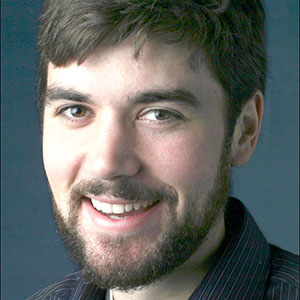
Eli Saslow returns to J-School

Students in the Pollner Seminar, along with faculty and other students, were treated to a visit from Pullitzer prize winning journalist Eli Saslow.

Monday, September 21st, For an hour and a half Saslow, who taught at the Journalism School as the T. Anthony Pollner Distinguished Professor in 2010, spoke on reporting and structuring long form narrative stories.

Photo of Eli Saslow
“I think that my best reporting comes when I’m the same version of myself in both places,” said Saslow.

Saslow, who writes for The Washington Post and ESPN the Magazine, described his work as an attempt to humanize the national issues of the day by telling the stories of people at their center. His stories have connected his readers with people for whom complex issues such as food insecurity or deportation are hard realities. To prepare for his visit, students in Kevin Van Valkenberg’s Pollner Seminar read Saslow’s article “After Newtown shooting, mourning parents enter into the lonely quiet,” in which he profiled the Bardens, a family who lost a son in the Sandy Hook Elementary School shootings.

To capture the powerful emotions in the story, Saslow spent two weeks with the Bardens. Dedicated that kind of time to the subjects of his story is something he said is central to his reporting. Saslow repeatedly emphasized the importance of making subjects feel comfortable with a reporters presence, even during interviews. “Ask a question five minutes into the conversation, then ask the same question 50 minutes in and you get very different answers,” Saslow said.

Many of the students’ questions dealt with the emotional toils of Saslow’s reporting, along with the ethical questions he faces spending time with people in difficult situations. Saslow emphasized for students the importance of finding stories you can care about as a journalist, and of keeping an eye on the big picture and the impact well reported stories can carry. He also described the value in being as observant, and as much as possible unobtrusive, reporter.

“I’ve interviewed Obama in the oval office and I’ve interviewed other people who have never talked to a reporter,” Saslow said, “I think that my best reporting comes when I’m the same version of myself in both places.”

By Andrew Graham

Senior ESPN Writer comes home

Each semester, the T. Anthony Pollner Distinguished Professorship endowment brings exceptional talent from the working world of journalism to teach a seminar class. This fall semester, ESPN the magazine and ESPN.com Senior Writer Kevin Van Valkenburg is carrying on the tradition; except that he is the first Pollner professor to be returning home, and the first to have known the endowment’s namesake.

Photo of Kevin Van Valkenburg
Kevin Van Valkenburg is a 2000 graduate of the UM School of Journalism.

The program began in 2001, when Anthony Pollner, a graduate and former staff member on the Montana Kaimin, died in a motorcycle accident. Van Valkenburg and Pollner were friends and co-workers at the Kaimin during their shared time at the University.

“Anthony was someone who inspired a lot of us,” Van Valkenburg said.

In addition to being back at the University, town and state that he calls home, Van Valkenburg is excited to pass along his enthusiasm for story telling in all its forms, and inspire the kind of ambitious work he knew Anthony loved.

Professor Henriette Lowisch, who first came to the University as a Pollner Professor, sees Van Valkenburg as a natural continuation to a great tradition. “The idea of the Pollner professorship is to inject the reality of the industry into the J-school,” she said.

Van Valkenburg’s experience with a wide variety of media – radio, website and magazine writing, makes him a real asset to students. “That’s such a unique experience he brings,” she said.

Students in Van Valkenburg’s class are learning the nuances of writing great non-fiction and embracing the challenge inherent in a Pollner Seminar. “Sometimes, from really awful things, can come wonderful things,” said Van Valkenburg.

By Andrew Graham