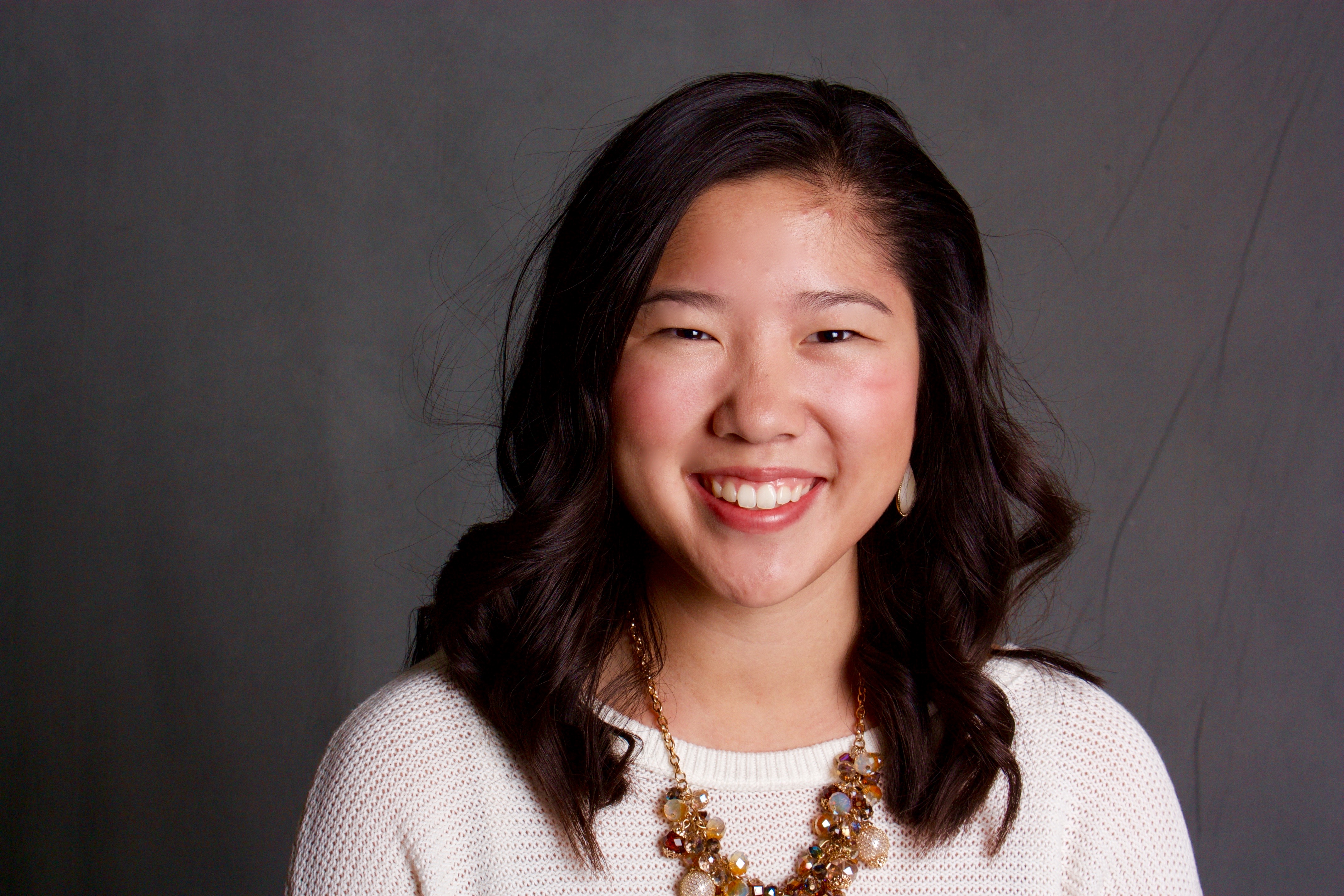
For Sojin Josephson, a 21 year old senior broadcast and print major from Big Timber, population roughly 1,600, New York City has always been something of a fascination. She’s visited before with her mother, she said, and is always fascinated by the city’s energy. December 2nd, she’ll return to New York, this time alone and to attend a two day workshop hosted by the International Radio and Television Society.
Pictured above: Sojin Josephson.
“I’ve really wanted a good opportunity to go to a place I love,” Josephson said, noting that she’s looking forward to a chance to spend some time alone in a city that interests her.
Called the Multicultural Career Workshop, the two days include seminars in digital media, creative production, advertising, research, sales and marketing. There will be panels of media professionals taking questions, and then a full day career fair where Josephson will have the chance to make contacts with major media companies.
Josephson said she applied on a bit of a whim, after Ray Ekness, Professor & Director of Student Success, suggested that she take a shot at the workshop. As a sports reporter for the student newspaper the Montana Kaimin, and a reporter, anchor and producer with UM News, a weekly news segment staffed by senior broadcast students, Josephson has been taking advantage of the opportunities for hands on production by students at the School of Journalism.
While her multifaceted abilities are an asset in today’s job market for journalists, Josephson said she struggles between the two career tracks as she finds both rewarding. For the spring semester, she hopes to do a broadcast internship around Missoula, and get a taste for how that feels.
For now, she’s looking forward to the chance to make some contacts in New York, hand out her resume and immerse herself once more in the energy of the Big Apple.
You can read a remarkable profile by Josephson that recently ran in the Montana Kaimin here.
On November 17th, University of Montana President Royce Engstrom named the School of Journalism as one of the programs essential to the University’s “mission and identity” but targeted for budgeting cuts given a campus wide drop in enrollment.
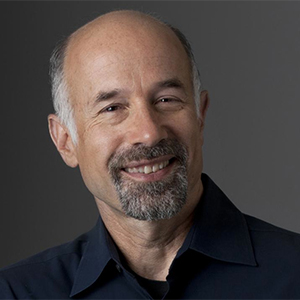
J-School Dean Larry Abramson
“The journalism school is a part of this campus and the campus is hurting financially, so we’re going to take a hit,” Journalism Dean Larry Abramson said, in an interview two days later.
While some departments will be able to escape adjustments, the School of Journalism was one of those that have seen what Engstrom called a substantial enrollment reduction. However, Abramson pointed out that Journalism is the smallest school on campus, which means smaller changes in the numbers of enrolled students manifests itself as a bigger percentage drop. A 13.9 percent drop between 2014 and 2015 means 44 less students in the School of Journalism.
Abramson said that while it is still unclear what form an adjustment would take, he and the rest of the faculty are marshaling arguments to avoid a harmful budget cut and maintain the School of Journalism’s high rank, at 9th in the nation.
“As much as we want to be good citizens of the University and help solve this problem, we also want to protect our program,” Abramson said. The biggest challenge, he said, will be to avoid losing a faculty position in order to keep the school as a competitive destination for those who want to pursue careers in digital journalism.
Capstone journalism classes, such as the Native News Project and the Montana Journalism Review, are student produced publications that run to wide exposure each year. Native News runs as a special edition in several Montana newspapers and the Montana Journalism Review is distributed widely to media professionals across the region, as well as nationally and internationally. Both publications have begun to push more effectively into digital productions to match their print editions. Abramson pointed out that Assistant Professor Jule Banville is pushing increased attention to audio podcasts as well.
“It’s not just about enrollment numbers, and I think the President and the Provost are open to that,” Abramson said. “Reputation and role in society is important and I think we have a really outsized role in comparison to many of the other departments on campus.”
Abramson said that while he wished he could say more specifically what may happen, at the moment he remains in the fact finding phase. Being open with students and faculty is important to him, and Abramson said he will share any information he feels the school needs to know.
Meanwhile, he remains committed to innovating in the journalism school, streamlining programs and pushing the school towards the digital age skills that are defining today’s market. “Our people are placed in newsrooms and startups and in their own entrepreneurial efforts all over the world,” Abramson said.
He believes that tradition, and a high ranking among the nation’s journalism schools, is well worth protecting. “It’s taken a hundred and one years to build that reputation, and we don’t want to see it eaten away at by more cuts.”
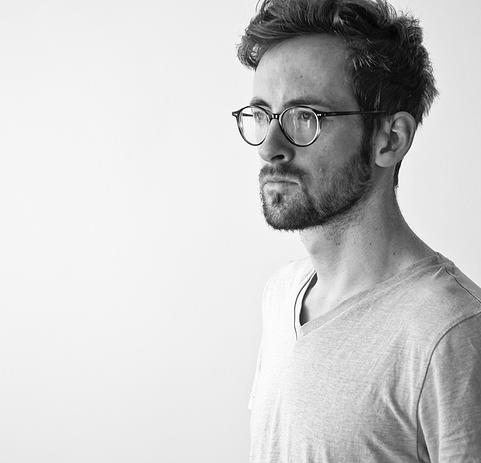
Shane McMillan is a native of western Montana and graduated from the School of Journalism in 2010, at which point he moved to Berlin on a Fulbright scholarship. He interned as a photographer with the Associated Press, and worked as an English translator for German film projects. It was this second gig that helped push him into a career as a freelancer, landing him a spot on the production crew of “Can’t Be Silent,” a documentary film about a group of refugee musicians in Germany.
Since first moving to Berlin McMillan has been working as a freelance photojournalist and filmmaker, with work published in the New York Times, the Guardian and PRI’s The World, among other places.
I asked McMillan if he had advice for any journalism students who might hope to make it as freelancers abroad. “Just, like, make it,” he said laughing. “Just work hard and do good work and keep in touch with people who you’ve done good work for.” McMillan focuses his work on human rights because it’s what he calls the thing he’s most likely to get in a bar fight about. “Try to make things that people want to see or care about,” he counsels.
McMillan says he highly values the many facets of his education at the School of Journalism, he says, believing it was one of the reasons he landed a job in documentary film making. “I could write, I could do TV, I could do radio and I could take photos,” he said.
A WITNESS IN PARIS
Friday, November 13th, McMillan was editing work in an apartment he says practically touched the Bataclan concert hall in Paris as the terrorist attacks began. He was in town for a photography festival, part of his work as studio manager for celebrated fine art photographer Nan Goldin.
As it became clear that they were not hearing fireworks but instead sustained gunfire, Goldin and McMillan tried to figure out what was going on and debated leaving the building. “I really didn’t want to go outside that much,” McMillan said, but eventually he followed Goldin down the stairs.
They walked into a triage center. Police officers had been breaking into courtyards along their block to set up casualty centers for the injured, many of whom were severely hurt. McMillan said he found out the next day that three people died in their courtyard alone.
The two photographers began shooting photos once they got outside, but police forced them to stop. McMillan was sent out into the street, while Goldin was made to return inside.
On the street, McMillan said, his “natural instinct to shoot” as a journalist quickly faded. “People were very opposed to me taking photographs or even having my camera there,” he said.
He decided they were right. McMillan said he didn’t feel like his photography could accurately portray the scene, and didn’t end up taking very many pictures on Friday. “I didn’t feel like photographing that night because I really just wanted to talk to people,” he said.
Instead, he received a text from Anne Bailey at Public Radio International’s The World program. A former adjunct professor and fellow graduate of the School of Journalism, Bailey asked McMillan if he was in Paris. He then started reporting for PRI via phone and text message, describing what he was seeing, which he called a surreal experience.
Far from providing a scoop, this proximity tested McMillan’s training as a journalist. He didn’t want to ask the trademark questions a breaking news journalist would, like asking people to describe their experiences and how they were feeling inside and outside the concert hall. “In that moment it was just too much of a violation of their need to process what just happened,” he said.
Instead he helped people. He asked simple questions and talked with those he thought were ready to do so. If someone was ready to talk, he said, you could see it in their face.
“That may or may not be what they would tell you to do in journalism school but I strongly believe that you have to come to situations like this as a person first,” McMillan says.
While answering my questions via video, and remembering Friday night, McMillan was visibly upset. However he said he was strangely calm at the time. Bailey, from PRI, helped a lot by talking him through the reporting via text.
McMillan described a man he spoke with who was looking for his girlfriend. The couple had been separated during the concert, and the man was unsure if she was alive or not. There was blood on the man, and by now, McMillan would like to know if she was all right. At the time, he said, it was very hard to know whether he should share that kind of story or not.
“It was a lot of really intense decisions made in a very quick turnaround,” McMillan says. He did not give the man’s story to media at the time.
“It’s tough to be there when people’s lives are changing in such a fundamental way, and to feel both a responsibility to them and to telling the story,” McMillan said. There’s a tension that he said he feels even more conscious of now after some time to reflect. “I was in this very strange position of being both a journalist and a bystander at the same time.”
At first he was being called by a lot of big media outlets, with whom he has now stopped talking, having tired of giving eyewitness accounts. He answered my questions from a hotel room in Geneva, Switzerland.
In return for what he called “a more personal slice” of his mind, I was asked to treat his story with respect and also to deliver the following message:
“I ask you to credit the University for what I’ve learned. Because I did learn a lot at school and I’ve learned a lot in life following that and I learned a lot this weekend.”
Much of what he does, McMillan said, “is based upon an education from a collection of people who are really amazing journalists and really amazing teachers, who forged me as a professional.”
McMillan will be working with the School of Journalism as their local facilitator and trainer in Berlin for a study abroad trip this summer. Students will be reporting stories from the influx of refugees to Germany and Europe. The documentary McMillan worked on will be showing at 6:30 pm on November 18th in The Payne Family Native American Center.

 Montana Journalism