Montana Kaimin staff reflect on a semester of change

Wednesday, December 2nd, the Montana Kaimin put out its last issue for fall 2015. For the all-student staff, it was the culmination of a semester of learning on the job as they guided the newspaper through its recent transition from a daily paper into a weekly print edition with daily online present, all while facing financial issues from years prior.
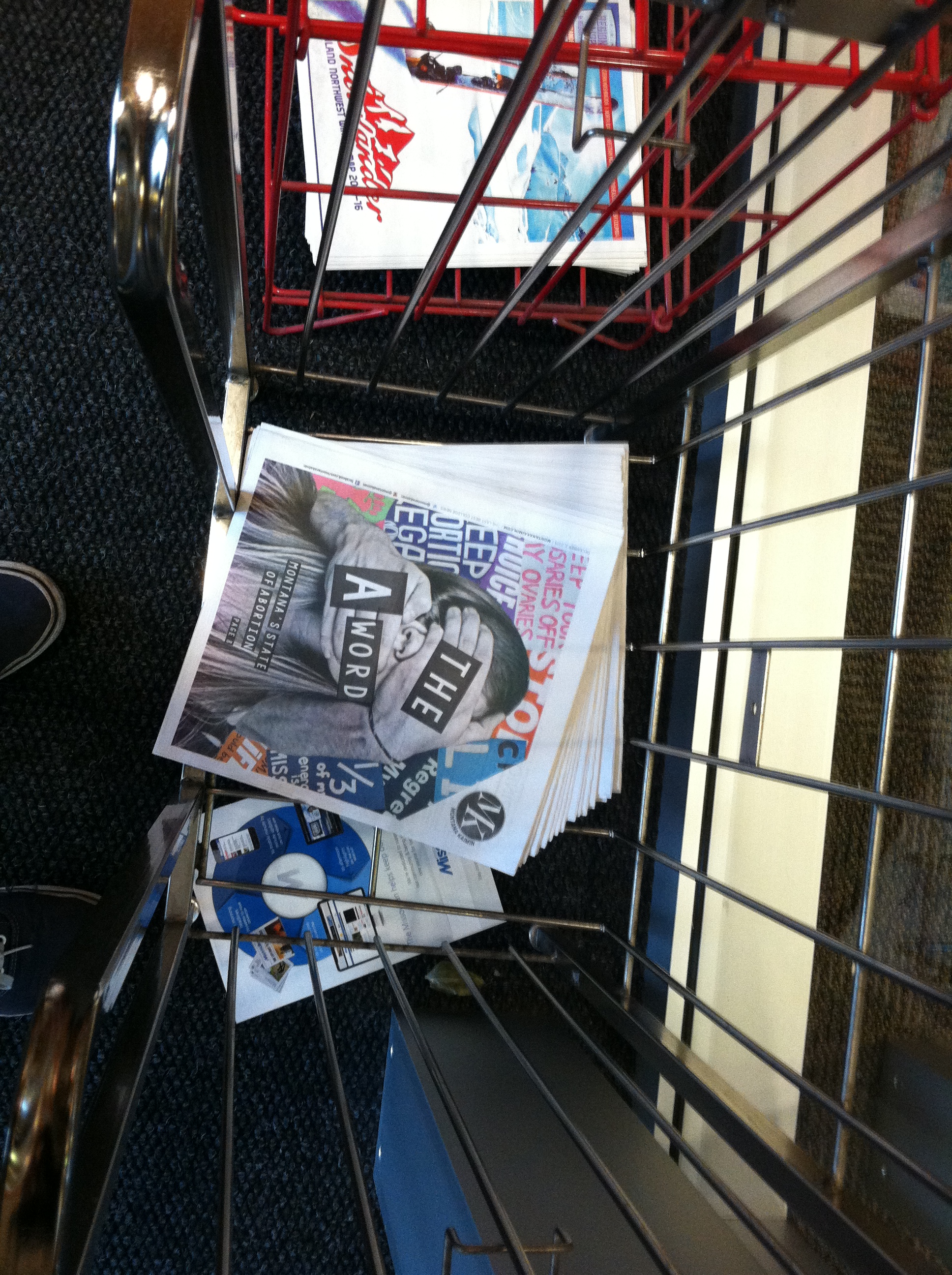
Photo of the last stack of printed Kaimin papers for 2015.
The Montana Kaimin’s last issue for the fall semester went quickly off the rack. Photo by Andrew Graham.

“For drastically restructuring something that was essentially broken I think it went really well,” said editor-in-chief Cavan Williams. He led the paper into its new format, which meant establishing a new workflow from reporters and photographers through editors and the copy team. “The whole thing was just an experiment,” Williams said, and they’ll carry on making adjustments and applying what they’ve learned to production this coming spring. That the fall went well isn’t to be confused with perfect, he noted.

The weekly edition implied more time for reporters to report and write feature length stories. Some of them, Williams said, have really taken to the long form style.

Tess Haas, a 22 year old senior from Bozeman, Montana, has worked as an arts and culture reporter for the last two semesters. She wrote two features that ran as cover stories this fall. The first was about Montana female DJs overcoming sexism in their profession, and the second, which ran in Wednesday’s final issue, was about the dearth of information and clinics for women seeking abortions in Montana.

“For people who are trying to be creative in presenting these important issues it’s really awesome to see them have the space to do it,” she said of the weekly format. Haas revels in the new style, which she says she’s used to expand on the ideas she had last spring, but couldn’t accomplish under tight daily deadlines.

Her latest story was inspired by listening to a friend talk about the difficulties of getting an abortion in Montana. The issue aroused her passion as a young female journalist. “As a young woman in Montana I think it’s extremely relative to me, and that’s what my friends talk about and that’s what I want to write about,” Haas said.

She spent a month working on the story, and says one of the challenges was finding sources that would speak about a sensitive topic. The article centered around the story of an anonymous woman who had an abortion following her first semester at the University of Montana. Having her editors allow her a month to work the story made all the difference.
Haas will rejoin the Kaimin staff for the spring semester, her last at UM, but this time around will work as the Arts and Culture editor.

For Hunter Pauli, 24 and also a senior, producing a paper with features like Haas’ was “difficult but doable.” Pauli is the Kaimin’s Managing Editor, and next semester hopes to improve their new format even further by smoothing out what he calls “anachronisms and holdovers from the daily version”

Pauli writes op-eds for the paper, and the one he is most proud of this semester listed a litany of critiques of University administration under the wry headline ‘Recent scandals this editorial is not about.’ His favorite weekly issue of the semester featured the story ‘Left Behind’ by news editor Erin Loranger, which profiled the Office of Residence Life’s ill fated attempt at establishing a Living Learning Community for veterans.

In general, Pauli is proud of his newspaper’s watchdog role over the University. “We’ve completely led the way on stories for the enrollment and budget crisis,” he said, adding that local newspapers like the Missoulian and the Missoula Independent have often followed Kaimin reporting.

By mid morning on Wednesday the last issue was already down to the bottom of the racks in the School of Journalism, but next semester students across campus can look forward to the return of the Kaimin’s independent and in-depth journalism.

You can read Tess Haas’ feature length story on abortion in Montana here.

Read the editorial Hunter Pauli is most proud of here.

By Andrew Graham
Graduate student focuses on reservations, natural resources

On a Wednesday, which is Veterans Day and a welcome day off for most students, Nicky Ouellet is reporting on the Flathead Indian Reservation for a story about the Kerr Hydroelectric Dam, now renamed the Se̓liš Ksanka Qĺispe̓ Project and managed by Energy Keepers, a tribally owned corporation of the Confederated Salish and Kootenai Tribes.

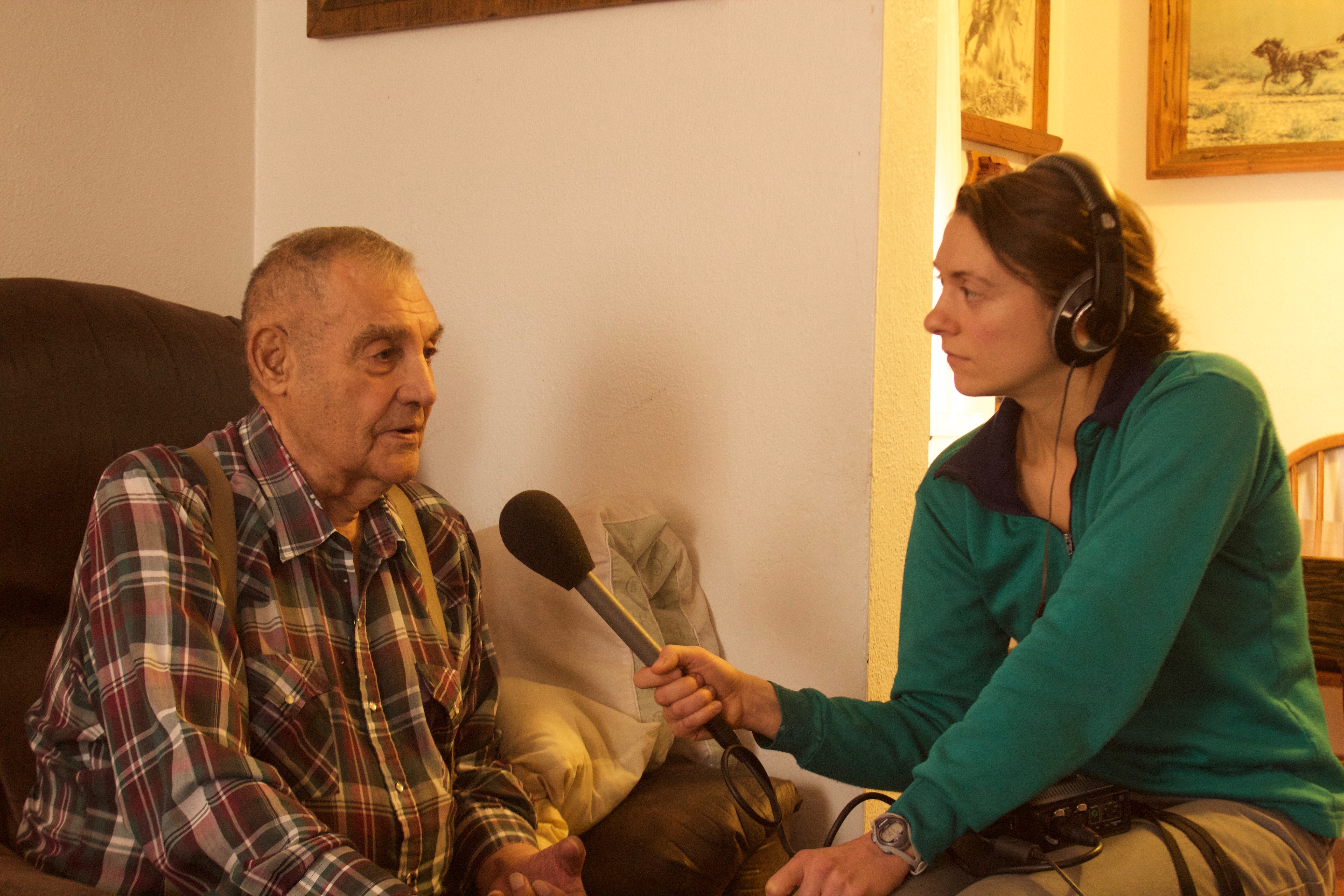
Graduate student Nicky Ouellet interviews Sonny Morigeau, a former tribal council member of the Confederated Salish and Kootenai Tribes.
Graduate student Nicky Ouellet interviews Sonny Morigeau, a former tribal council member of the Confederated Salish and Kootenai Tribes. Photo by Andrew Graham.

Her interview takes place in a house decorated with paintings of Western scenes, in a tiny town called Old Agency on the shores of the Flathead River.

Ouellet is known around the Journalism building as a dogged journalist, but she starts this interview out patiently. Very patiently. Her subject, Sonny Morigeau, is over 80 years old. To reconstruct the process which led to the dam changing hands, Ouellet had to delve into history and interview former tribal council members like Morigeau.

For Ouellet, the structure of government on Indian Reservations, and the modern tensions between Tribes and the Federal Government, is not new territory. From 2010 to 2012 she worked for Teach For America, who assigned her to live on the Pine Ridge Indian Reservation in South Dakota. There she taught creative writing, high school English and Journalism.

Being a part of life on a reservation, and teaching in a school with a high dropout rate helped push her into the Masters Program for Environmental Science and Natural Resource Journalism. Ouellet became conscious of a national dearth of stories from reservations.

Every two weeks Ouellet’s Journalism class filled four pages of the local newspaper. She turned their classroom into a newsroom. “I was teaching myself the whole time too,” she said. When the stories came off the presses, her students were delighted, as was the larger reservation community.

At the University of Montana she has focused much of her own reporting on Native American communities. Leaving teaching was hard for Ouellet, but this kind of reporting feels like another way for her to advocate for her students.

“I wanted to find and tell stories that would shed a light on inequities in our system,” Ouellet said.

Completion of the Masters program involves the choice between producing a single long form story, or creating a portfolio of three shorter projects, each centered around a central them. Ouellet chose the latter, which she said gives her more chances to practice the story making process in its entirety, “from coming up with ideas to following them through to publication.”

This is the first year Masters Candidates will have the choice of a portfolio. “The portfolio option aims to validate the impulse of student who are hungry to explore a broader issue over several semesters, rather than dive deep on a single story, as the professional project does,” said Associate Professor Nadia White, who helps run the Graduate Program.

Ouellet’s first story was about efforts to legalize marijuana on the Northern Cheyenne Indian Reservation in Montana. That piece was a long form written story, which ran in the 2015 Native News Project, a School of Journalism program that sends students out to produce stories from every reservation in Montana.

She is currently working on this story about the dam takeover, and one about the impacts of oil and gas production on the Fort Behold Indian Reservation in North Dakota. This spring she will be finishing up both stories, and again be a part of Native News, this time as an editor.

Back in Old Agency, Ouellet is ready to get what she came for, and begins to gently push her subject towards leading her through the history of the tribal council’s negotiations over the hydroelectric dam. As her questions get more pointed, it’s clear she has done her background work.

“Now, Energy Keepers manages the power and sells the power on behalf of the tribes,” she reminds Morigeau when he gets a little off track. Exploring how Native American tribes manage their natural resources is the theme of her portfolio.

Recalling her time teaching Journalism in Pine Ridge, Ouellet said “they were finding their voices to tell their stories. I found it really empowering for them.”
Three years later, it would appear that she has found hers as well.

By Andrew Graham

Creative Inspiration for Thanksgiving Break

Pollner Professor Kevin Van Valkenburg sent his students off on Thanksgiving break with a hard deadline for a reported long form story on the first Monday back, but also with a piece of inspirational reading to help them cross the finish line.

Van Valkenburg, a staff writer for ESPN the magazine, has been showing his students the glories and pit falls of long form writing and deep reporting. His class has read several stories by Esquire writer and National Magazine Award-winner Chris Jones. For Thanksgiving break, Van Valkenburg sent his students Jones’ speech on his “Nine Rules for Creative Work.”

It’s application to journalism students struck me as wide enough, and its content compelling enough, to be worth sharing here. As students, it can often feel that classes outside of Journalism, along with the other pressures of University life, can get in the way of finding the time to do the excellent journalism we all aspire to.

Read Chris Jones’ speech: http://niemanstoryboard.org/stories/chris-jones-nine-rules-for-creative-work/

This speech, which Jones gave at the Power of Storytelling international conference in Bucharest this past October, reinvigorated me at this difficult point in the semester, with deadlines and due dates piling up. He speaks on the value of hard work to any creative enterprise, including the craft of journalism.

Hopefully some readers of this blog will also find time to take in Jones’ advice over the next few days. And hopefully Professor Van Valkenburg will forgive me for sharing the secrets of his class with the greater online community.

If you have time for some longer reads, look for his work in Esquire’s archive. In Van Valkenburg’s class we read the incredulously well reported: “The Things That Carried Him”

By Andrew Graham