
J-School Professor speaks about science journalism

A University of Montana Journalism professor said the Environmental Science Journalism graduate program is a unique part of the Roundtable on the Crown of the Continent.
Logo for the Crown of the Continent Reporting Project
The Crown Reporting Project sponsors students at the University of Montana to produce stories about the environment in the Crown of the Continent region. Learn more about it on the website.

The round table is an annual conference which serves to encourage a dialogue about environmental science in the mountainous north west region of North America. The area known as the Crown of the Continent includes all of Glacier National Park and the Bob Marshall Wilderness Complex. It is one of the wildest places on the continent.

September 17th, Professor Nadia White gave a talk about the specifics of the UM J-School’s environmental science graduate program. “We do emphasize the science end of things,” White said, before going on to explain one of the program’s most unique features, a semester long seminar called Story Lab.

In Story Lab, graduate students in the journalism program are paired with their counterparts in the sciences. The science journalists-to-be embed in research labs, where they spend the semester producing stories in all different mediums about the science and the scientists they get to know.

The motivation behind the class is to address a problematic culture gap between science and journalism. Scientists often “worry about letting someone else control the narrative of their science,” White said. Meanwhile, deadline driven journalists are often frustrated at scientists’ reluctance to give definitive responses before the completion of the excruciating peer review process so necessary to science’s function. This program allows both sides to get to know each other, and two distinct cultures.

In addition to Story Lab, White discussed the new Crown Reporting Fund, which supports journalism students as they pursue stories in the Glacier National Park area of Montana and Canada.

This year, two graduate students have been paired with accomplished professional journalists as mentors. Celia Tobin teamed up with Ted Alvarez, editor of the environmental news website Grist to pursue a story on border crossing contamination from mine waste. Ken Rand is paired with Christopher Joyce, a science correspondent at National Public Radio, to write about invasive fish species in the Flathead Valley.

“Our whole program is based on the idea that we’re in a terrific place to learn to tell stories about the landscape,” said White.

By Andrew Graham
Environmental Journalism Students Kick Start Program

By Andrew Graham


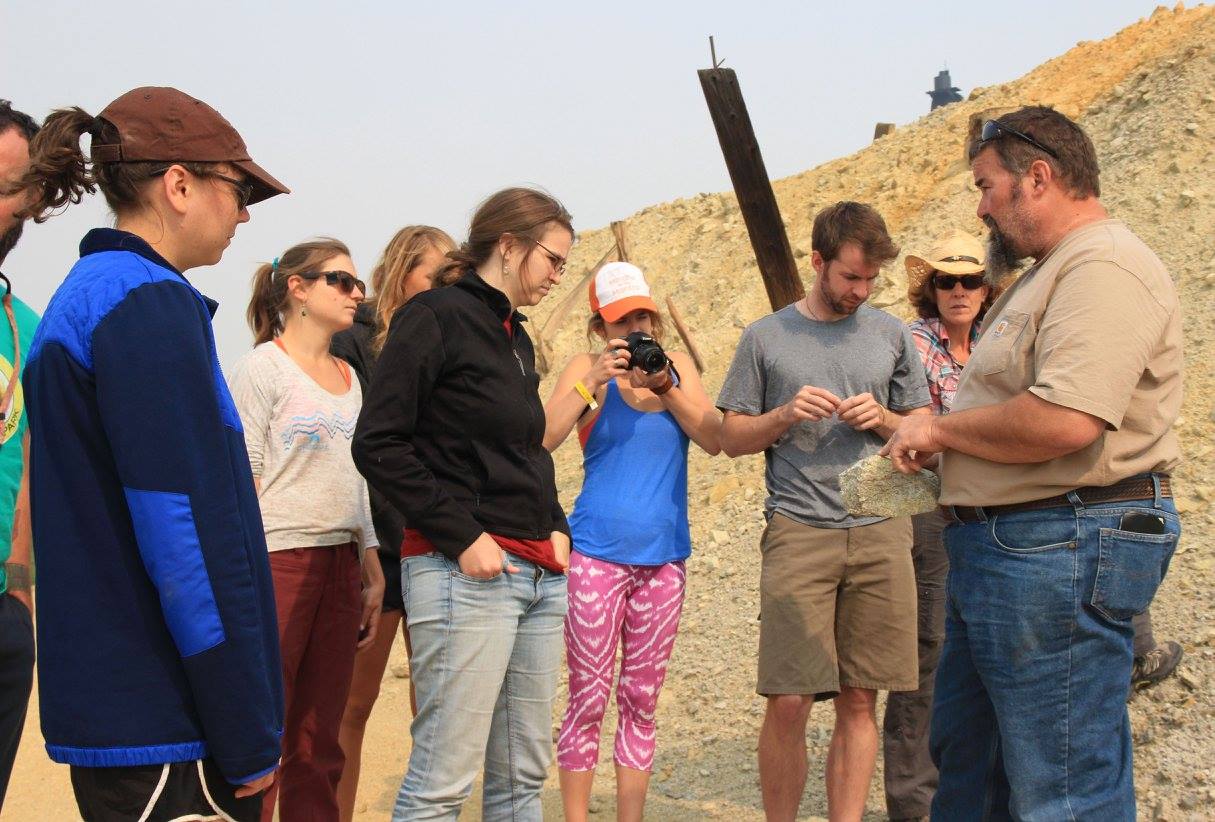
For new graduate students at the J-School, there’s no better place than Butte and the Clark Fork river to experience the contrast between Montana’s natural beauty and the toll of natural resource extraction. The new group took a day to explore the Butte Silverbow Superfund Site. Led by Professor Nadia White, the trip began with a look at the former open air mine the Berkeley Pit, and then followed a story of mining degradation and subsequent environmental restoration all the way back to Missoula.

“The whole point of this tour is that all over Montana the landscape has remarkable stories to tell,” Professor Nadia White, the trip’s author, said. “The Butte-Silverbow Superfund site happens to wear them close to the surface.” Deemed the largest complex of environmental clean-up sites in the U.S., the site is a massive effort to restore health to the Clark Fork River.

group photo of UM J-School grad students
Photo by Katy Spence

For these students, entering the Environmental Science and Natural Resource Journalism Masters Program, it’s a chance to learn about a home that is new to many of them. For the next two years, they’ll cross almost daily over the Clark Fork River, which runs through the heart of Missoula.

For Madison Dapcevich, 25, the tour was a chance to learn something new about Montana. She was largely unfamiliar with the story, and it left her with a question valuable to any budding journalist: “To what extent do people know about this?” Dapcevich came to the program most recently from Washington, D.C., where she worked for the media advocacy non-profit Internews, while also interning on Capitol Hill.

After Butte, the group stopped in Anaconda to view the old smelter tower; at a ranch where they saw restoration of the river’s flood plain in action, and at the Milltown Overlook, where a dam built in 1906 and removed in 2008 once held back the Clark Fork and the mine waste it carried.

As with any good story, White provided characters as well as settings. Students met restoration engineer Tom Molloy, a Butte resident and reclamation engineer, and Maggie Schmidt, a University of Montana graduate and manager of the Dry Cottonwood Creek Ranch.

Benjamin Polley, 37, has been living, working and writing in Montana for a long time. His latest job was as a field assistant on a ranch dedicated to conservation. He particularly enjoyed their time with Molloy. “That guy’s just an awesome story teller,” Polley said. The experience left him with new questions about the state and about ecological restoration, he said.