Graduate student focuses on reservations, natural resources

On a Wednesday, which is Veterans Day and a welcome day off for most students, Nicky Ouellet is reporting on the Flathead Indian Reservation for a story about the Kerr Hydroelectric Dam, now renamed the Se̓liš Ksanka Qĺispe̓ Project and managed by Energy Keepers, a tribally owned corporation of the Confederated Salish and Kootenai Tribes.
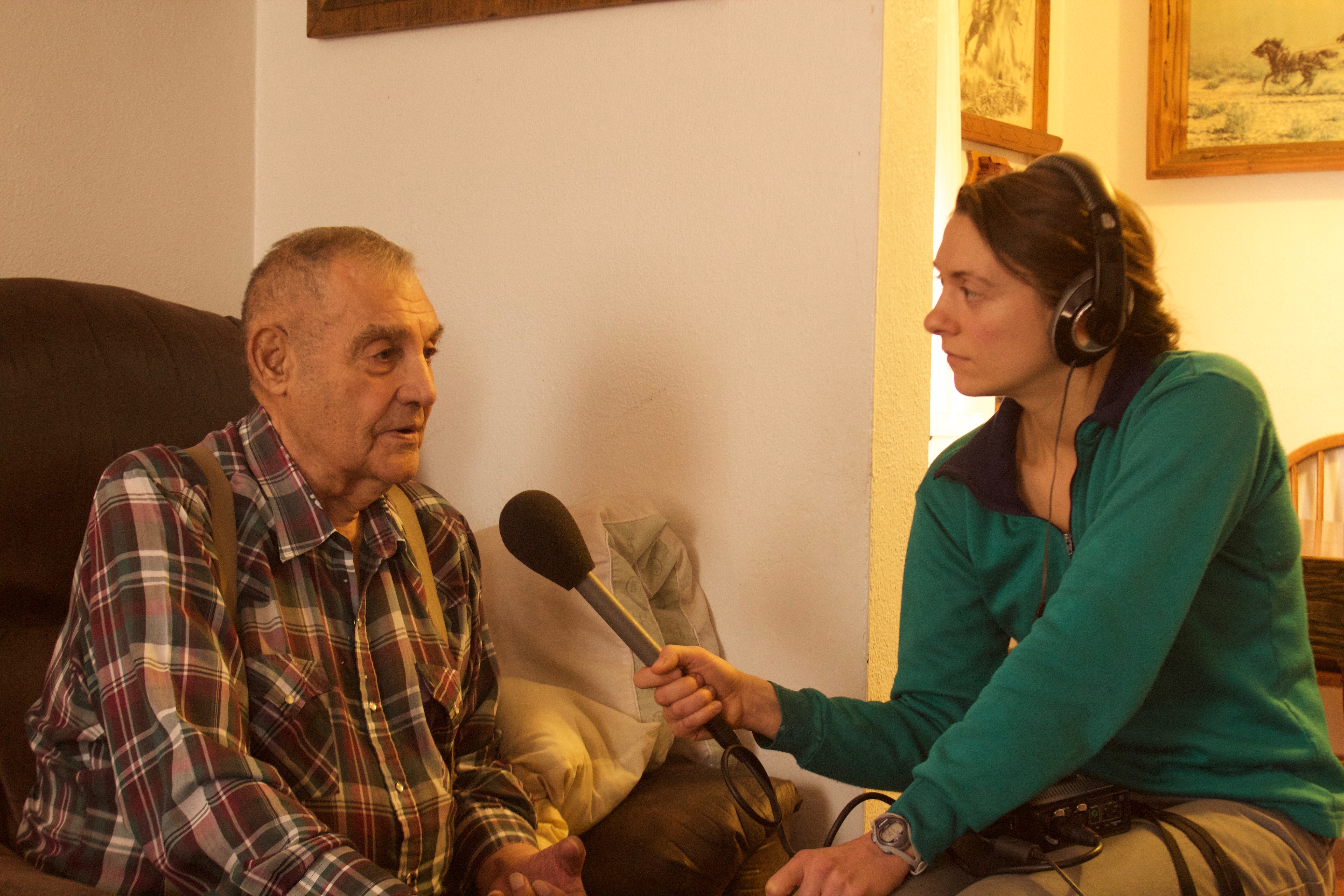
Graduate student Nicky Ouellet interviews Sonny Morigeau, a former tribal council member of the Confederated Salish and Kootenai Tribes.
Graduate student Nicky Ouellet interviews Sonny Morigeau, a former tribal council member of the Confederated Salish and Kootenai Tribes. Photo by Andrew Graham.

Her interview takes place in a house decorated with paintings of Western scenes, in a tiny town called Old Agency on the shores of the Flathead River.

Ouellet is known around the Journalism building as a dogged journalist, but she starts this interview out patiently. Very patiently. Her subject, Sonny Morigeau, is over 80 years old. To reconstruct the process which led to the dam changing hands, Ouellet had to delve into history and interview former tribal council members like Morigeau.

For Ouellet, the structure of government on Indian Reservations, and the modern tensions between Tribes and the Federal Government, is not new territory. From 2010 to 2012 she worked for Teach For America, who assigned her to live on the Pine Ridge Indian Reservation in South Dakota. There she taught creative writing, high school English and Journalism.

Being a part of life on a reservation, and teaching in a school with a high dropout rate helped push her into the Masters Program for Environmental Science and Natural Resource Journalism. Ouellet became conscious of a national dearth of stories from reservations.

Every two weeks Ouellet’s Journalism class filled four pages of the local newspaper. She turned their classroom into a newsroom. “I was teaching myself the whole time too,” she said. When the stories came off the presses, her students were delighted, as was the larger reservation community.

At the University of Montana she has focused much of her own reporting on Native American communities. Leaving teaching was hard for Ouellet, but this kind of reporting feels like another way for her to advocate for her students.

“I wanted to find and tell stories that would shed a light on inequities in our system,” Ouellet said.

Completion of the Masters program involves the choice between producing a single long form story, or creating a portfolio of three shorter projects, each centered around a central them. Ouellet chose the latter, which she said gives her more chances to practice the story making process in its entirety, “from coming up with ideas to following them through to publication.”

This is the first year Masters Candidates will have the choice of a portfolio. “The portfolio option aims to validate the impulse of student who are hungry to explore a broader issue over several semesters, rather than dive deep on a single story, as the professional project does,” said Associate Professor Nadia White, who helps run the Graduate Program.

Ouellet’s first story was about efforts to legalize marijuana on the Northern Cheyenne Indian Reservation in Montana. That piece was a long form written story, which ran in the 2015 Native News Project, a School of Journalism program that sends students out to produce stories from every reservation in Montana.

She is currently working on this story about the dam takeover, and one about the impacts of oil and gas production on the Fort Behold Indian Reservation in North Dakota. This spring she will be finishing up both stories, and again be a part of Native News, this time as an editor.

Back in Old Agency, Ouellet is ready to get what she came for, and begins to gently push her subject towards leading her through the history of the tribal council’s negotiations over the hydroelectric dam. As her questions get more pointed, it’s clear she has done her background work.

“Now, Energy Keepers manages the power and sells the power on behalf of the tribes,” she reminds Morigeau when he gets a little off track. Exploring how Native American tribes manage their natural resources is the theme of her portfolio.

Recalling her time teaching Journalism in Pine Ridge, Ouellet said “they were finding their voices to tell their stories. I found it really empowering for them.”
Three years later, it would appear that she has found hers as well.

By Andrew Graham
Radio enthusiasts tune in to Missoula’s first podcast festival

While the crowd gathered for a sold out event at The Roxy Theater turned their eyes towards the big screen, it was their ears that did the work. This was the first Missoula Podcast Festival, and those in attendance were partaking in the unique experience of group listening as a full theater absorbed Montana centric radio stories.

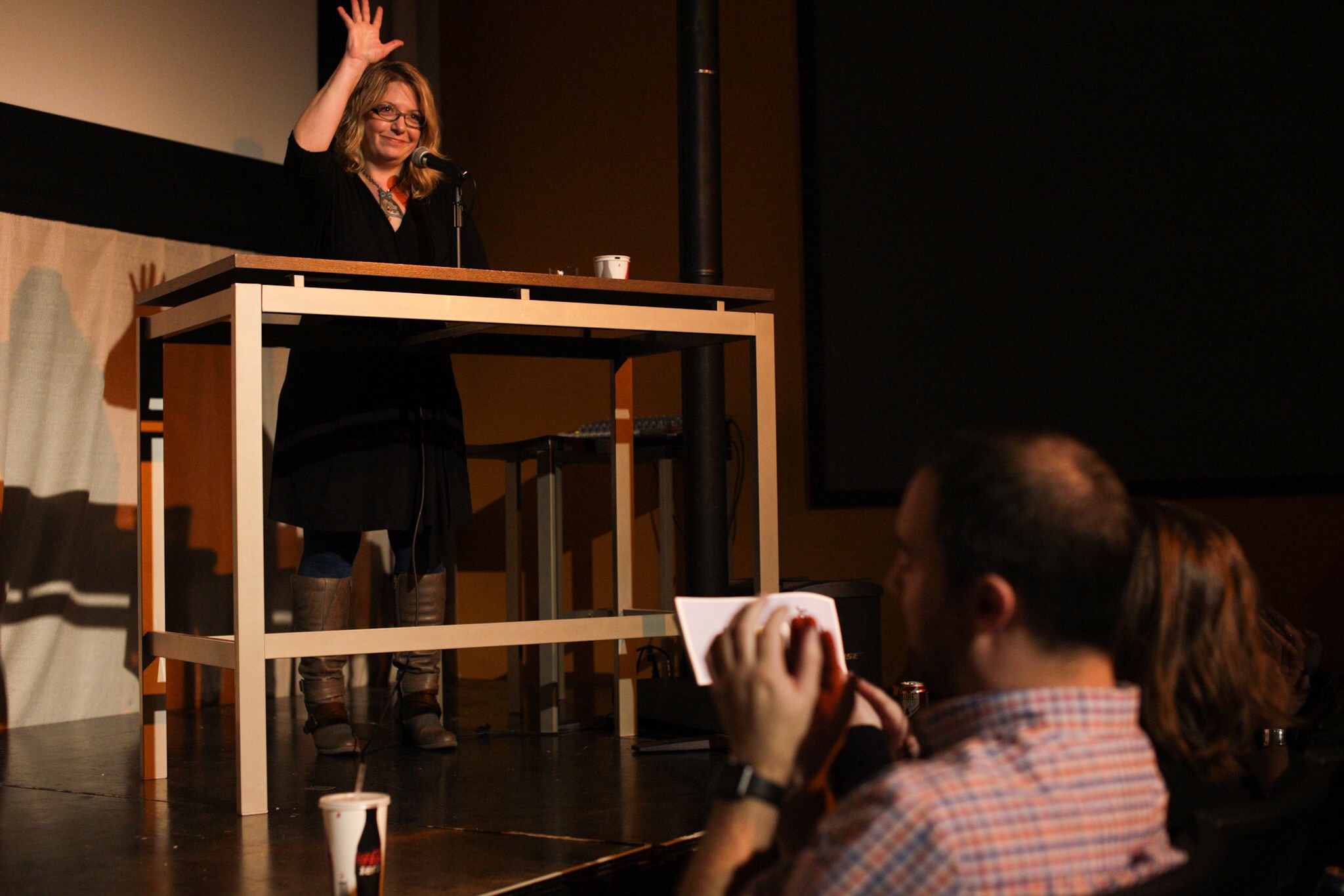
Jule Banivlle stands on stage at the festival and sets up the next group of stories.
Jule Banville introduces the next set of stories to the audience. Photo by Evan Frost.

The podcasts, which ranged in length and subject matter, were independently produced by authors with connections to Missoula and curated by Jule Banville, an assistant professor at the School of Journalism.

“I’m excited that we’re podcasting, and about where this is going,” Banville said to open the show. Many of the stories were produced by past and present students of Banville, who teaches audio reporting and feature writing. Banville said she first conceived the idea of the podcast festival as a showcase for student work, but later expanded it to include other producers.

“It’s about the stories,” she said. “There are too few places for people who are doing cool radio stories.” Banville also hosts a podcast of her own online called Last Best Stories, where she posts both her own work and others.

The stories she chose ran from the heartbreaking, like the story of an avid outdoorsman who lost the use of his legs, to the lighthearted, like a piece about a small town 80s cover band with very big dreams. The voices of every day and unique Montanans were well represented, as were issues of race, sexuality, and environmental change.

Creative visuals danced across a large screen, changing color and design with each story.
Creative visuals danced across a large screen, changing color and design with each story. Photo by Evan Frost.

In the theater on Thursday, an audio visualizer played on the big screen in ever changing colors. Between the story blocks producers talked about the art of creating podcasts. That was it for visuals however. The crowd mostly listened in silence, except when they gasped, laughed or sighed.

By Andrew Graham

ESPN’s Kevin Van Valkenburg speaks on the importance of storytelling

For Kevin Van Valkenburg, Senior Writer at ESPN the Magazine, stories are “a time machine that can heal the world.”

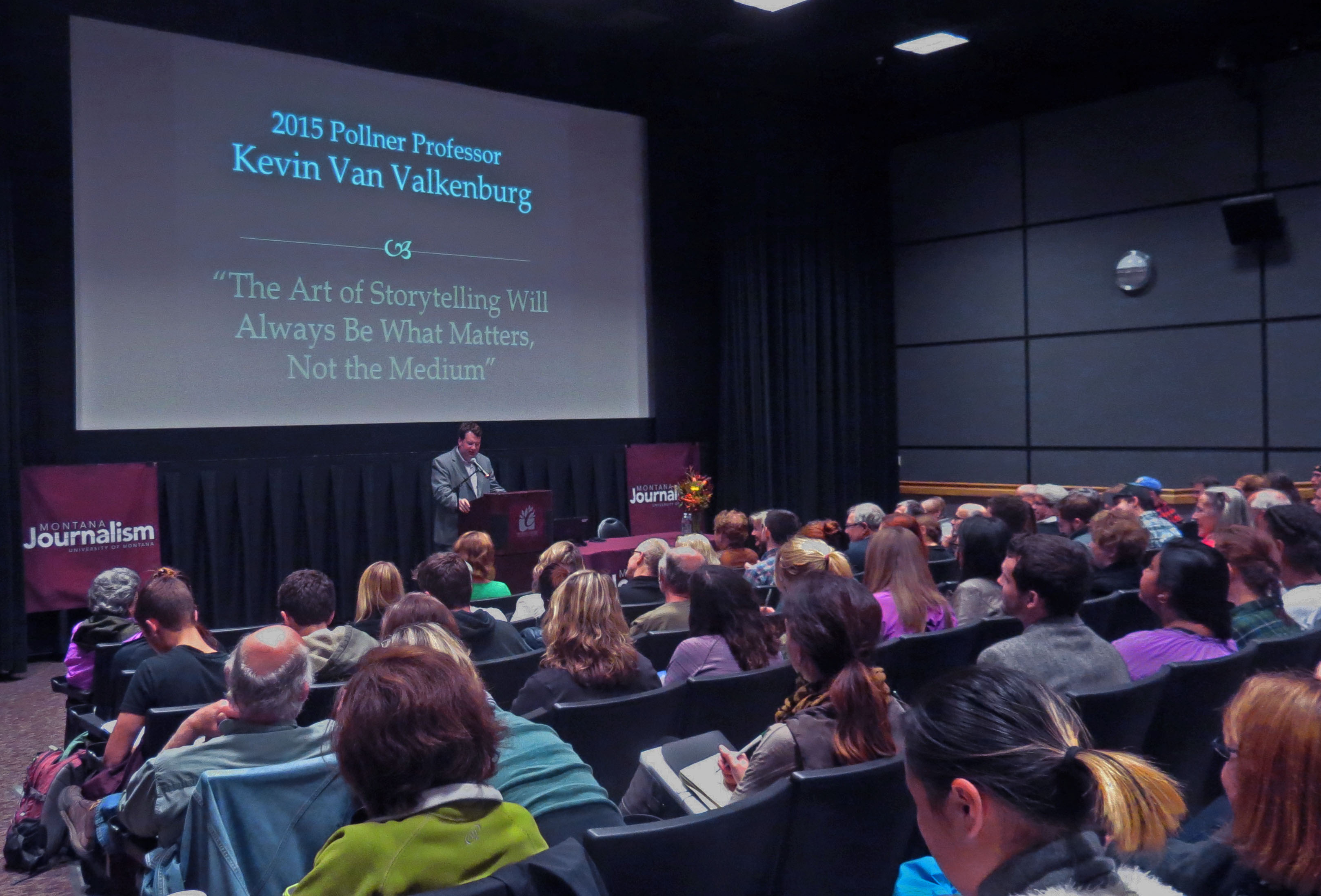
Kevin Van Valkenburg speaks to a crowded theater
ESPN’s Kevin Van Valkenburg attracted a large crowd for the J-School’s annual Pollner Lecture. Photo by Alyssa Rabil

Van Valkenburg, who graduated from the UM School of Journalism in 2000 and has come back as this semester’s T. Anthony Pollner Distinguished Professor. He spoke to an audience that filled both the seats and the stairwells on Monday night. His speech focused on the continued value of good storytelling, in an evolving landscape for media.

“It doesn’t matter the format you tell it in, as long as you tell it true and you tell it well,” Van Valkenburg said, advising students to reject the negative outlook some are pinning to written journalism, which he called “a cynical narrative.” Van Valkenburg said changes have come not to storytelling itself but to the economic model that supports it. Despite the distractions of modern life, he said, people remain hungry for heart-felt stories.

Speaking with clear reverence for the power of good narrative writing to explain, humanize and heal the challenges of the day, he extolled students to think about why stories are told and search hard to find them. “There are no stories to be told in life’s safe harbors,” he said.

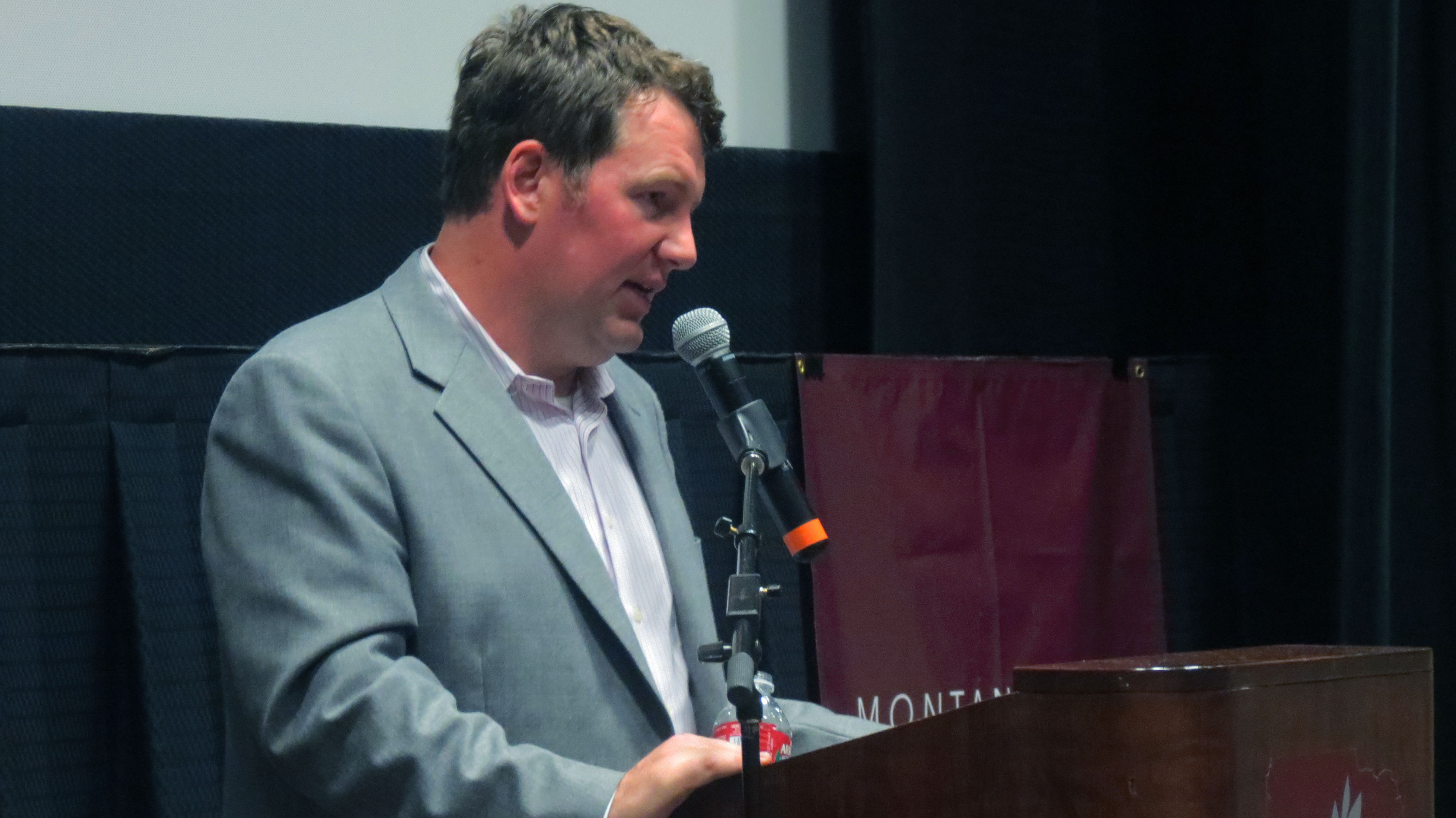
Kevin Van Valkenburg speaking from the podium
Photo by Alyssa Rabil

A native of Missoula, Van Valkenburg is the first alumnus of the school to hold a Pollner Professorship, a program which brings talented journalism professionals to the J-School for a semester. The program began in 2001, when Anthony Pollner, a graduate and former staff member on the Montana Kaimin, died in a motorcycle accident.

Van Valkenburg and Pollner were friends and co-workers at the Montana Kaimin during their shared time at the University. At several points in his speech Van Valkenburg referenced the spirit Pollner had brought to his journalism studies, and how it had inspired Van Valkenburg in his own career.

Recounting some of the more memorable stories of his career, first with the Baltimore Sun and then with ESPN the Magazine and ESPN.com, Van Valkenburg spoke about learning lessons on what stories can do for their subjects, as well as their readers. He recounted an early story he wrote about a girl’s suicide, and how her mother had thanked him, saying she could now explain her daughter’s life and death to friends by sending them Van Valkenburg’s article.

It’s a two way street however, Van Valkenburg noted. In response to a question from the audience, he said that whether to use sensitive information given by a source can depend on both its content and impact. If there are larger societal questions at stake, Van Valkenburg said, “I’m going to upset the source and I’m going to reach for the truth because that’s more important.”

Van Valkenburg concluded his speech by speaking directly to Anthony Pollner’s friends and family, who sat amongst the first rows of seats. He shared stories and memories of Pollner from their university days, which he said his return to campus has helped to bring back.

“Few things in my life have ever seemed less fair,” Van Valkenburg said, speaking on the passing of his friend, “but by telling those stories I keep a piece of him alive forever.”

The full text of the speech can be found here.

By Andrew Graham