Ira Glass Teaches J-School Students About Radio

This American Life’s Ira Glass shared words of reporting wisdom with UM students last Saturday.

Glass began his career in public radio in 1978. He began as an intern for NPR and has a wealth of broadcasting experience. Glass has held every production job from tape-cutter to newscast editor before finally settling in as the host and executive producer of This American Life.

Ira Glass shares his broadcast experience with J-School students

 Saturday, Sept. 12, Glass taught a master class for University of Montana School of Journalism students. He began his lecture by saying he was there to “serve” the students and answer any questions they had about the business.

Glass shared clips from his early career when he was at NPR, and admitted some of his own insecurities about being on the air.

“I didn’t like the way I sounded,” Glass said. He explained how he would cut his narration out of his first broadcasts, letting the interviewee tell the story.

Glass used his old clips to illustrate the importance of narration in a radio broadcast. He explained that the script could potentially make or break a show. He also emphasized the importance of good quotes, adding these add intrigue and keep a listener engaged.
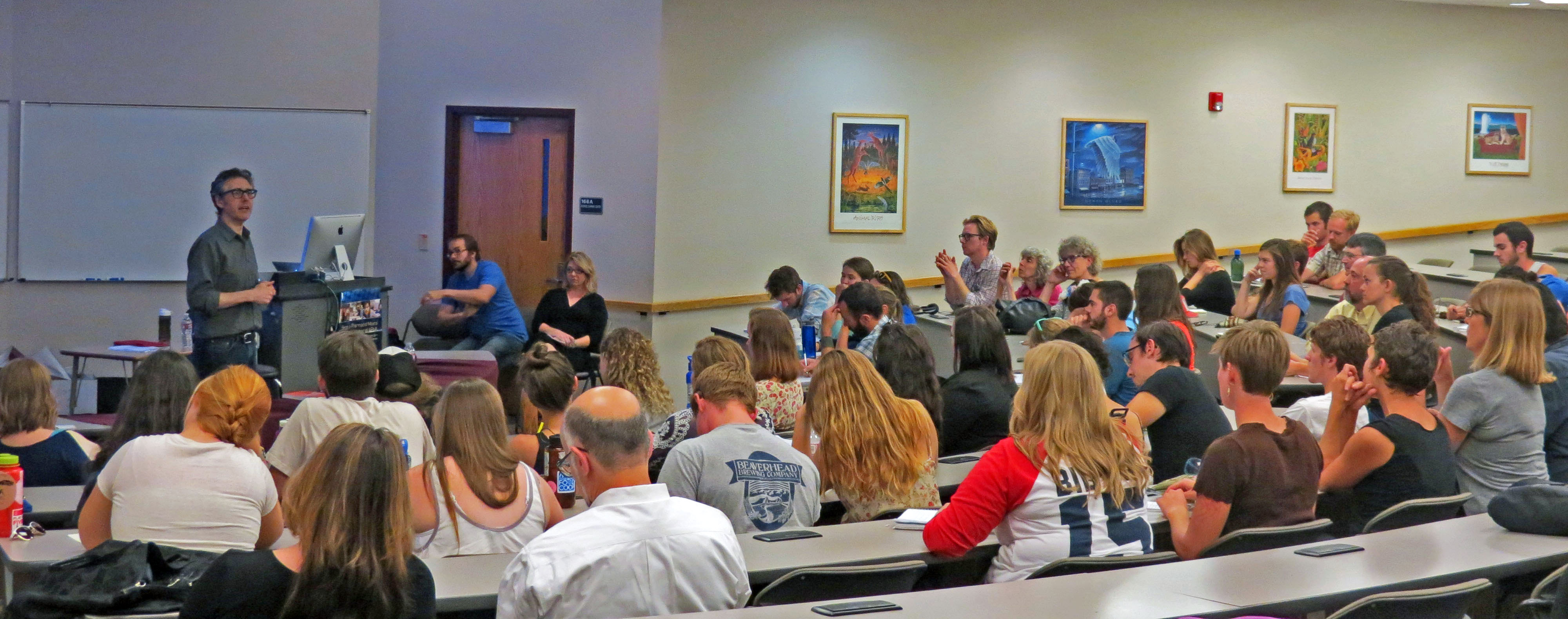
Ira Glass speaks to a room full of students and professors.

Students had the opportunity to ask a plethora of questions and Glass was happy to answer all of them. He told students the key to a great show is plot and narrative. He said the key is to keep listeners asking “What’s going to happen next?”

He ended the class by encouraging students to read “Out on the Wire” and offered to buy the book for anyone who was interested. The book is an illustrated guide to making radio shows. Glass collaborated on it, as did many of today’s top radio producers.

By Alyssa Rabil
J-School Graduate is Living the Dream

Monday, Leslie Hittmeier heads to Chile for ten days to write and photograph a story on a ski guide and avalanche training advocate.

“We’re going to just get pretty gritty and camp,” Hittmeier says, “it’s cool because anything that happens there’s still going to be a story that comes from it.”

23 years old, one year out of the University of Montana School of Journalism and working as Associate Digital Editor at Skiing Magazine, it’s safe to say Hittmeier’s living her dream.

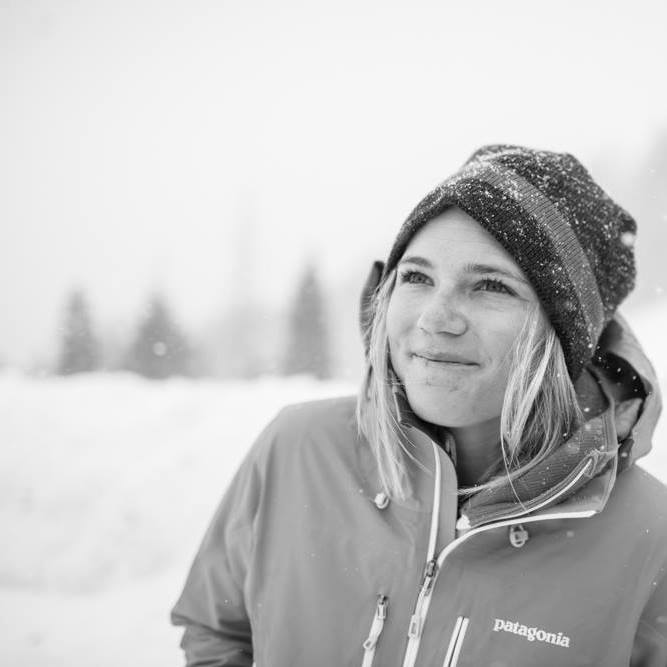
Leslie Hittmeier stands on Teton Pass in Wyoming during winter.
Leslie Hittmeier in Teton Pass, Wyoming. Photo by Ben Hoiness

Jeremy Lurgio, Associate Professor of photojournalism, isn’t surprised Hittmeier has gotten to where she wanted to be so quickly. “She had a vision of what she wanted to do when she came to the J school,” Lurgio says. He adds she was willing to work hard and sacrifice to get there.

To get to her current job, Hittmeier credits a few good breaks, determination and the storytelling skills she learned in school. After finishing classes in the spring of 2014, she looked for internships and got one at Climbing Magazine. They kept her mostly in the studio, photographing “oatmeal and other lame stuff,” as Hittmeier puts it, but she was still writing and shooting and meeting great climbers and athletes.

After Climbing Magazine, it was on to another internship; this one with Teton Gravity Research (TGR). There, she had far more freedom to develop editorial content. “They let me write about whatever I wanted to write about,” Hittmeier says. As always, she wanted to write about climbing and skiing. At TGR, her work helped inspire a new column called “Women in the mountains.”

After a brief move back to Missoula, she saw an opening at Skiing Magazine. She applied and got the job. Her internship at Climbing Magazine helped her application, as both publications are owned by the same parent company, Active Interest Media.

Hittmeier knew from the beginning she wanted to photograph and write about skiing and climbing. Her advice to incoming students reflects that path; “figure out what your goal is, and then intern.” She emphasized developing multiple skill sets to stick out from the crowd. “If you’re a photographer, become a writer too,” she says, adding students also need to be active and able on social media.

Lurgio cites the back to back internships Hittmeier did as evidence of what it takes to get ahead in journalism; hard work, good connections, and an early willingness to forego higher wages in exchange for increased opportunities.

At the Journalism school, she credits photo classes with Lurgio for teaching her to broaden photography into story telling.

“I remember Lurgio was always kind of like ‘Leslie there’s no story here you just take pictures of climbing,” she recalled. Hittmeier also said she still keeps her notes from Jule Banville’s feature class.

Lurgio also remembers pushing Hittmeier to improve on her already talented photography skills when she was a junior in the photojournalism program. “The trick was getting her to think beyond how to make a pretty picture,” he said.

Hittmeier almost didn’t take the job at Skiing Magazine because she was terrified of being stuck at a desk, but she’s glad she did. “It’s crazy how worth it it is,” she says.

By Andrew Graham

Environmental Journalism Students Kick Start Program

By Andrew Graham


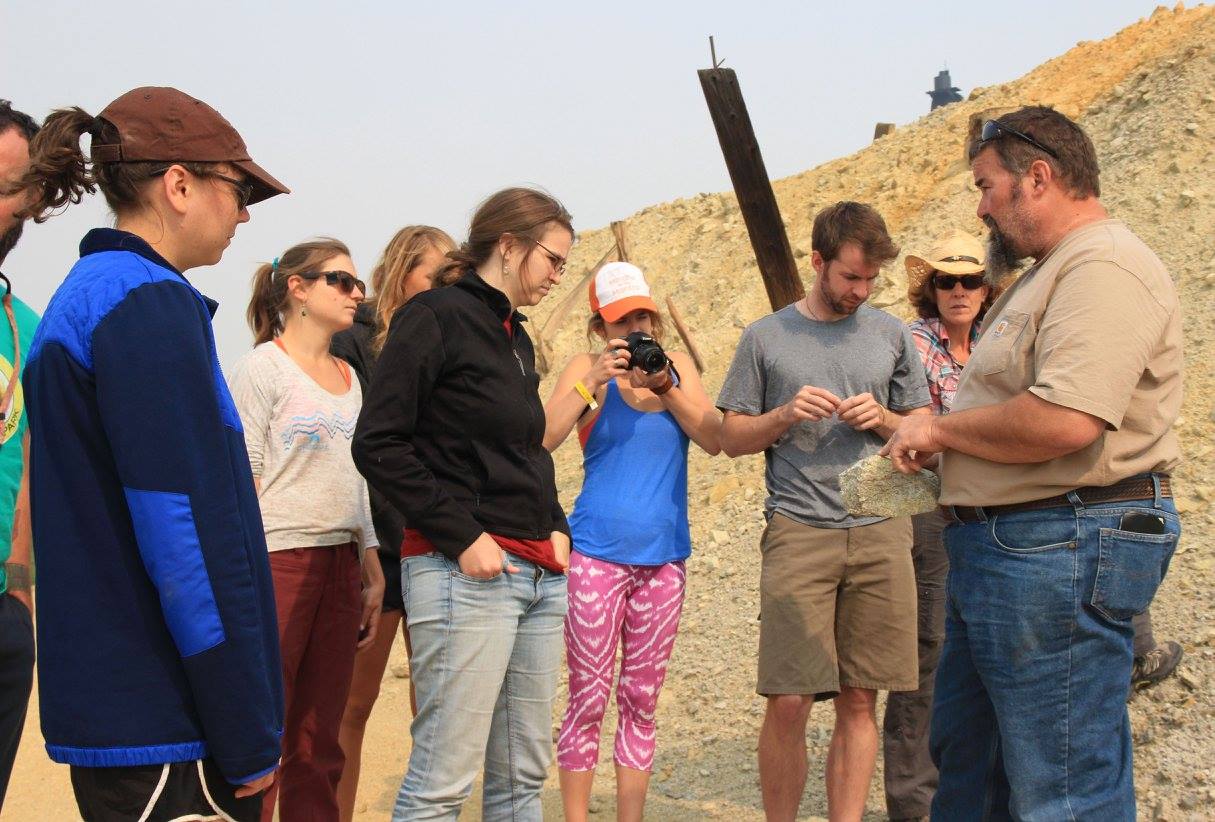
For new graduate students at the J-School, there’s no better place than Butte and the Clark Fork river to experience the contrast between Montana’s natural beauty and the toll of natural resource extraction. The new group took a day to explore the Butte Silverbow Superfund Site. Led by Professor Nadia White, the trip began with a look at the former open air mine the Berkeley Pit, and then followed a story of mining degradation and subsequent environmental restoration all the way back to Missoula.

“The whole point of this tour is that all over Montana the landscape has remarkable stories to tell,” Professor Nadia White, the trip’s author, said. “The Butte-Silverbow Superfund site happens to wear them close to the surface.” Deemed the largest complex of environmental clean-up sites in the U.S., the site is a massive effort to restore health to the Clark Fork River.

group photo of UM J-School grad students
Photo by Katy Spence

For these students, entering the Environmental Science and Natural Resource Journalism Masters Program, it’s a chance to learn about a home that is new to many of them. For the next two years, they’ll cross almost daily over the Clark Fork River, which runs through the heart of Missoula.

For Madison Dapcevich, 25, the tour was a chance to learn something new about Montana. She was largely unfamiliar with the story, and it left her with a question valuable to any budding journalist: “To what extent do people know about this?” Dapcevich came to the program most recently from Washington, D.C., where she worked for the media advocacy non-profit Internews, while also interning on Capitol Hill.

After Butte, the group stopped in Anaconda to view the old smelter tower; at a ranch where they saw restoration of the river’s flood plain in action, and at the Milltown Overlook, where a dam built in 1906 and removed in 2008 once held back the Clark Fork and the mine waste it carried.

As with any good story, White provided characters as well as settings. Students met restoration engineer Tom Molloy, a Butte resident and reclamation engineer, and Maggie Schmidt, a University of Montana graduate and manager of the Dry Cottonwood Creek Ranch.

Benjamin Polley, 37, has been living, working and writing in Montana for a long time. His latest job was as a field assistant on a ranch dedicated to conservation. He particularly enjoyed their time with Molloy. “That guy’s just an awesome story teller,” Polley said. The experience left him with new questions about the state and about ecological restoration, he said.