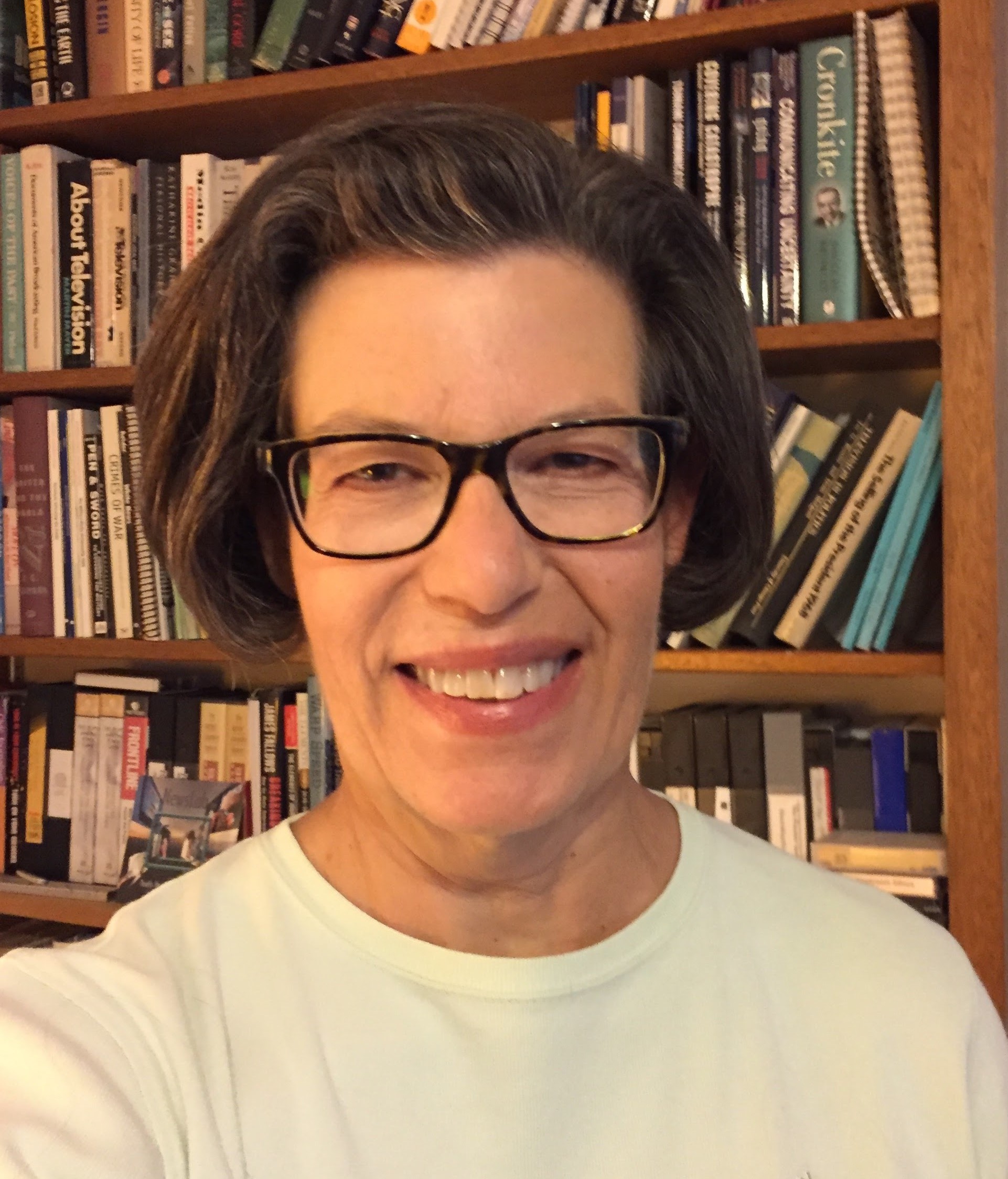
Alumni Spotlight: KREM 2 News’ Leilah Langley

Graduates of the University of Montana School of Journalism go on to do great things, in journalism and beyond. They direct newsrooms, report on international issues, photograph history, inform the public on air, start their own businesses, influence public policy, publish books and become leaders in their communities. Here, we spotlight some of our alumni who showcase just how powerful, and versatile, a journalism degree from UM can be. (If you are a graduate who would like to share your experience or know of someone we should spotlight, email Courtney Cowgill.)

This installment spotlights Leilah Langley, 2002, the assistant news director for KREM 2 News in Spokane, Wash.

(This Q&A has been edited slightly.)

Question: Was this the type of work you thought you’d be doing when you went to school?

Answer: I joined the program thinking I would be a reporter and/or anchor. I went through most of the program thinking that. However I started to notice I was a better fit for producing when I took a producing class taught by Denise Dowling my last semester. Then I took a producing internship at KREM. I’m very detail oriented. I like to be in control and quite frankly, I’m shy. So a career in producing and then management was much better fit than being on the air.

Can you describe an average day on the job?

I manage the day-to-day operations in the newsroom. I help assign the content for daily shows and digital platforms. I help the staff brainstorm new and innovative storytelling techniques to help make the audience experience at KREM memorable. I approve and critique scripts and articles. I react quickly with staffing and content decisions in breaking news and severe weather situations. I plan big stories and even coverage.

What experiences at the J-School were notable in preparing you for your work?

I had all the basics and a working knowledge of how to get newscasts on the air, which helped me transition easily into an intense producing training internship. I also had a realistic expectation of what to expect. I knew the workload would be big, I knew the hours would be bad, and I knew the pay wouldn’t be high. That all sounds rather negative, but as a news manager now I’m shocked at how many people come out of college not getting any advice about what the “real world” will be like.

What are the skills you learned in J-School that you use on a daily basis? In your work? In your life?

Broadcast writing skills. I learned a lot of good grammar basics my sophomore and junior years.

What do you think makes the J-School special? 

My fondest memories are of the old 730 Eddy house. Sure, I’m a little jealous of the new building, but there was something about that cute little basement newsroom. We left the Journalism School with character, and that comes in handy in the scrappy news business.


What advice would you give a student just starting out in journalism school? Or, what advice would you give to someone considering journalism school?

You have to have a passion for learning and you have to be naturally curious. If those things don’t come naturally to you it may not be a good fit. It’s also a difficult political climate to be a journalist. Don’t let that scare you. I believe in keeping my head held high and working for the people of my community. Don’t engage the haters, just do your job.

Where do you see yourself career-wise in the future?

I see myself helping to transform local news into a more fun to watch and engaging product for the audience. I’m proud to be part of a generation that gets to rewrite the way we do things. No one wants to watch a newscast straight out of 1995. We are changing and it’s fun to be part of it.
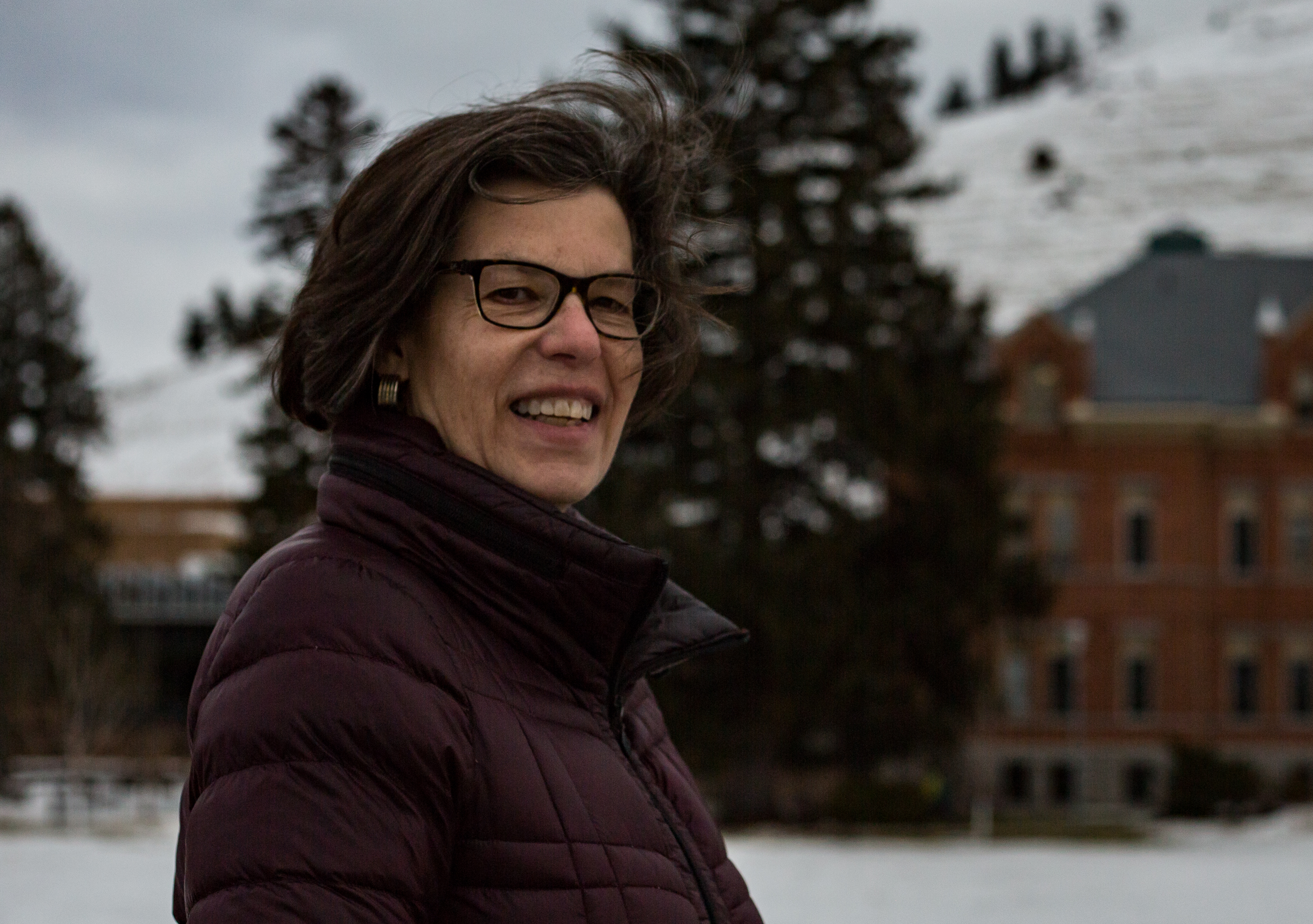
 

Spring Pollner Professor Deborah Potter Teaches Students About Journalism and Trust

Spring 2018 Pollner professor Deborah Potter. Photo by Tate Samata.

Deborah Potter is sure of one thing: Public trust in journalism is disintegrating rapidly, and journalists cannot simply sit back and wait for something to change.

“There’s a quote by journalist Carl Bernstein that says something similar to: ‘All we have to do is our best work.’ I disagree,” said Potter, the 2018 spring T. Anthony Pollner Distinguished Professor. “In the world we’re currently living in, it’s not enough to simply put your head down and do good work as a journalist. We have to be deliberate, proactive. We have to do more to share a message that we deserve trust.”

Potter aims to confront this topic in her spring course “Journalism & Public Trust.” Students will explore the “fake news” phenomenon and the news media’s place in a democratic society. They will also investigate newsroom strategies and learn fact-checking techniques.  Potter hopes all of this will help students explore answers to a fundamental question: “How do we maintain trust, and frankly, regain public trust?”

Potter had wanted to be a writer since high school. But as she watched a contentious national presidential election unfold during her first year of college at University of North Carolina-Chapel Hill, Potter was drawn to broadcast and TV journalism.

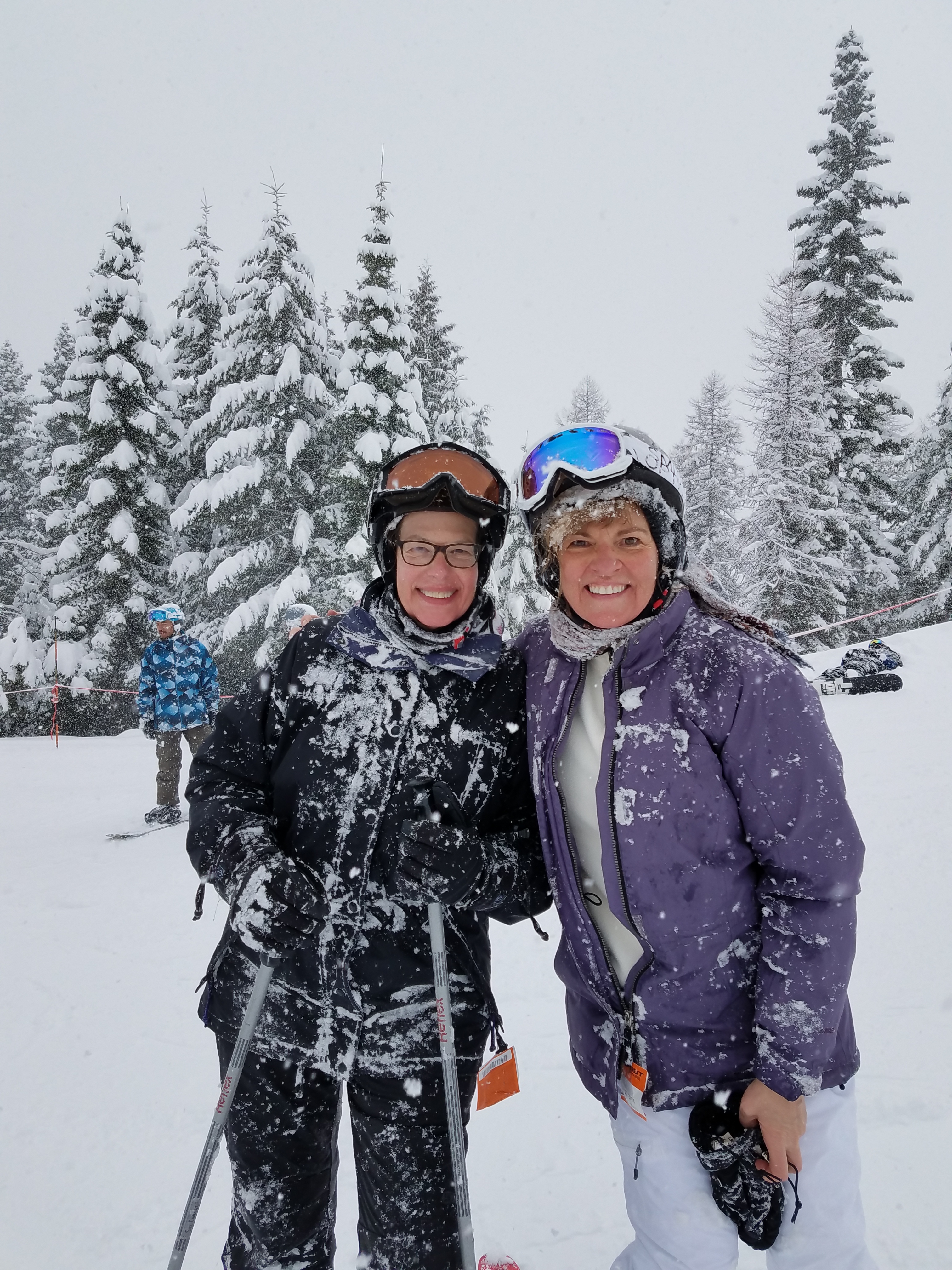
When she isn’t teaching, odds are you can find her downhill skiing. Here, Potter is at Lookout Pass with professor Denise Dowling after their first week of spring semester.

“Watching stories happen in real-time gave a completely different sense of a story than reading it in print,” Potter said. “I was drawn to the fluidity.”

Potter spent more than a decade as American Journalism Review’s broadcast news columnist, served as CBS’s White House, State Department and Congressional Correspondent for 13 years, and reported on environmental issues and national politics as a network correspondent for CNN. She has led journalism workshops in the U.S. and around the world, co-authored a journalism textbook, and founded NewsLab, a non-profit journalism resource center in 1998.

Potter sees her professorship at UM as an opportunity to  continue what she refers to as “the second major chunk” of her journalism career, in which she focuses on providing journalism-related education. Previously, Potter was a distinguished visiting professor in journalism ethics at the University of Arkansas, and curated radio and TV seminars as a faculty associate at the Poynter Institute.

The Pollner Professorship was established to honor the memory of Anthony Pollner, a 1999 graduate of the School of Journalism. After Anthony died in an accident in May 2001, his friends and family created an endowment that makes this professorship possible. 

Tate Samata is finishing her fifth and final year at the UM School of Journalism, and will graduate this spring with a Bachelor of Arts in journalism and psychology minor. Tate’s journalistic focus is primarily photo and multimedia, but she is also passionate about writing, copy editing and social media. 


New Semester Brings New Pollner Professor and New Course on Public Trust and ‘Fake News’

Spring semester brings a new face to the halls of the J-School and a new course on a timely topic: journalism and the public trust.

Deborah Potter will be this semester’s T. Anthony Pollner Distinguished Professor and her course  will explore why trust in the news media is essential in a democratic society, why trust has declined so precipitously, and what can be done to restore it.

A veteran journalist and newsroom trainer, Deborah has been a television network correspondent for CBS News, CNN and PBS. She also founded and ran the online journalism resource NewsLab for 20 years. Deborah has led workshops for journalists in the United States and around the world, from South Africa to Nepal. In 2014, Deborah was a distinguished visiting professor in journalism ethics at the University of Arkansas. She’s co-author of “Advancing the Story,” a digital and broadcast journalism textbook, now in its third edition.

Students in Potter’s course will examine the “fake news” phenomenon, learn techniques for fact-checking, and investigate what strategies newsrooms are using to retain or earn back the trust of their audience. Seminar participants will interview working journalists and produce a comprehensive report for online publication.

“Journalism & Public Trust,” or JRNL 494, runs Mondays and Wednesdays 11:00-12:20 in DAH 210. Students interested in enrolling in the course must be admitted to the school’s professional program and have the consent of Professor Dennis Swibold, dennis.swibold@mso.umt.edu.

The Pollner Professorship was established to honor the memory of Anthony Pollner, a 1999 graduate of the School of Journalism. After Anthony died in an accident in May 2001, his friends and family created an endowment that makes this professorship possible. In 2014, friends and family expanded the endowment to allow a distinguished professorship in both fall and spring semesters. Read more about Anthony and the professorship here.