

Montana Journalism student Shanti Johnson is working on her master’s project in Vietnam. She’s keeping a fascinating blog so we can follow along in her adventures. Checkout her latest post.
Montana Journalism student Shanti Johnson is working on her master’s project in Vietnam. She’s keeping a fascinating blog so we can follow along in her adventures. Checkout her latest post.
The new issue of Montana Journalism Review (MJR) is fresh off the press, produced by an all student staff from the University of Montana’s School of Journalism. The magazine is dedicated to holding a mirror to the news media in Montana and other western states, reporting and interpreting trends that affect journalists in this part of the country.
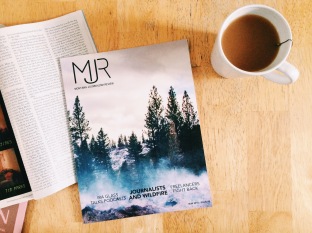
“Everyone who’s interested in journalism in the West must read this issue,” said Associate Professor Henriette Lowisch, who serves as MJR’s editor-in-chief. “It provides a fresh look at questions we media people obsess about, from wildfire coverage to free speech.”
Issue 45 is built around the theme “burn,” with a cover story analyzing what gets lost in often sensationalized coverage of the wildfires that are so much a part of the western landscape. Other features examine how newspapers cover anything from state politics to the new Cannabis beat. Cutting-edge scientists speak out on overlooked stories; freelancers get tips on how to make their work pay, and radio icon Ira Glass offers career advice.
Students on the staff of Montana Journalism Review receive a crash course into the world of producing a high quality magazine.
“Creating MJR is one of the most authentic experiences students can have while still in the classroom,” said Managing Editor Nicky Ouellet, a graduate student. “I’m really proud of what we’ve created, and the immense energy and dedication our staff poured into this issue.”
As other classes ramped up in September, some students of the capstone class that produces MJR were already reporting, writing and photographing on deadline. Others chased down outside contributors, who often had far more years of journalism experience than their newfound editors. For the first time, some of the stories were published on Medium.com, an alternative story platform that specializes in long-form work.
This year’s MJR team worked on improving the fact-checking and copy-editing system for increased accuracy and a more effective workflow. Corrections are now easy to find on the magazine’s newly designed website.
By Andrew Graham
On December 8th, graduate student Katie Riordan was recognized for her promise as an international correspondent when she received the Overseas Press Club Foundation Scholar Award. The recognition was accompanied by the chance to spend her summer break doing international reporting, through a fellowship at a foreign bureau.
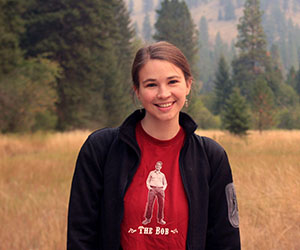
Bureaus run by the Associated Press, Reuters, Forbes, the Wall Street Journal or the Global Post are all possibilities for Riordan. Wherever she ends up, it won’t be her first time filing stories from foreign soil.
Riordan completed her undergraduate studies at the University of Colorado Boulder, where she majored in broadcast journalism. Post graduation, she did a few stints at community newspapers in New York City.
In 2012, she left the United States to take a job as an editor at an English language paper in Yemen, which borders Saudi Arabia. Riordan had traveled and lived abroad before, but says the move wasn’t a calculated decision. Her reasons for moving to Yemen reveal a deep wanderlust and interest in other cultures.
“You can read all about it but being there, living there and reporting there is the experience,” Riordan said.
After more than a year at the English language newspaper, Riordan left and began freelancing. Over the course of six months she wrote stories on women’s rights, refugees and migrants and a variety of human interest stories. Her work was published in the Christian Science Monitor, Al Jazeera, the Economist and the Middle East Eye, an online news organization based out of England.
Riordan continues to contribute to the Christian Science Monitor, with an article on Syrian refugees in Somaliland published just days before she received her award.
Freelancing was a challenge at first, but being on the ground in countries of international interest helped her. “It’s hard to build relationships with editors, but once you do and can demonstrate that you can produce work from your location things start to snowball,” she said.
Returning to the U.S., she came to the Environmental Science and Natural Resource Journalism Masters program to hone her reporting skills and develop a specialty in environmental reporting. While Riordan says she misses life abroad, she’s been enjoying her classes and has a story in the upcoming 2016 Montana Journalism Review about tensions between the Department of Defense and reporters in war zones.
Next semester Riordan hopes to supplement her journalism and environmental science coursework with classes in Arabic, in order to build on her language base and improve her eligibility for reporting from the Middle East.
But today, she’s excited at being recognized by the Overseas Press Club, and anticipates a productive summer abroad, wherever in the world it may take her.
“It’s a really prestigious organization, and I’m looking forward to getting back overseas to do some reporting on the ground,” Riordan said.
You can get an advanced read of Riordan’s upcoming story in the Montana Journalism Review here.
 Montana Journalism