
Good Work Wednesday: March 1, 2023

By Sage Sutcliffe

Top Montana News Stories

1. Cooperative Decomposition: Recycling In Its Truest Form (Annie Mealey / Field Notes – Montana Natural History Center)

Originally broadcast in March of 2022, this Field Notes piece for the Montana Natural History Center aired again this week on MTPR. Written in the Field Notes Writing Workshop, the piece is beautifully detailed, although the mental images of insect-ridden, bloated, decomposing animals may not be.

The author writes: “Next time you are out hiking and come across a dead animal, think about the cooperation needed to decompose the body, and how that animal’s death benefits countless other organisms. Nature has so much to teach us.”

2. BLM explores utility-scale solar in Montana (Amanda Eggert / Montana Free Press)

J-School alumna Amanda Eggert (’09) reports on the possibility for some of Montana’s eight million acres of BLM land to be developed for large solar projects. The project has sparked controversy among Montanans with competing ideas of how BLM land should be utilized.

3. Bill banning vaccinated blood donations would ‘decimate’ blood supply, opponents say (Nicole Girten / Daily Montanan)

“House Bill 645 would ban individuals who received the COVID-19 vaccine from donating blood, making it a misdemeanor with a $500 fine to donate or accept blood from vaccinated donors,” writes Girten. It’s a heavy topic, but Girten weaves the story (and, you guessed it: conflicting viewpoints) together for an easy read.

4. ‘Buffalo take care of us’: First Blackfeet buffalo hunt open to all was a success (Nora Mabie / Lee Enterprises)

Indigenous communities reporter Nora Mabie reports on a bison hunt raffle led by the Blackfeet Nation and Montana Fish, Wildlife and Parks.

“…The hunt represented new efforts to build trust with outside communities and organizations. It symbolized a new phase in the tribe’s bison management strategy and, above all, it affirmed the ways in which bison continue to help Native communities thrive,” writes Mabie.

Accompanying photos by J-School grad Thom Bridge illustrate the first raffle winner’s bison harvesting process.

Top Environment and Science News Stories

1. Chemical Concerns of the Ohio Train Disaster (Bobby Bascomb / Living on Earth)

The toxic train derailment that turned East Palestine, Ohio into an environmental disaster zone is still making headlines weeks later. To get the story, Bascomb speaks with an Ohioan reporter with Ideastream Public Media regarding the present and future impacts to East Palestinians and nearby residents. Bascomb also reached out to the train company at fault, Norfolk Southern, and a local resident for their comments.

2. Your Brain Could Be Controlling How Sick You Get—And How You Recover (Diana Kwon / Nature Magazine)

Diana Kwon’s lede makes this science-heavy story sound intriguing from the get-go: “Hundreds of scientists around the world are looking for ways to treat heart attacks. But few started where Hedva Haykin has: in the brain.”

Informed by science, the intrigue continues throughout Kwon’s carefully narrated story, which alludes to the possibility that optimism may keep you healthier.

Top Student/Alumni Story

1. UM student’s wolf parasite study getting national attention (Najifa Farhat / Montana Kaimin)

Before moving to the U.S. last August, Najifa Farhat worked as a journalist for two years on the environment and climate change beat in her home country of Bangladesh. She will graduate from UM’s environmental journalism master’s program in ’24. In her piece for the Montana Kaimin, Farhat interviews another UM student, whose research on wolves recently made national news.
Good Work Wednesday: February 22, 2023

By Sage Sutcliffe

Top Montana News Stories

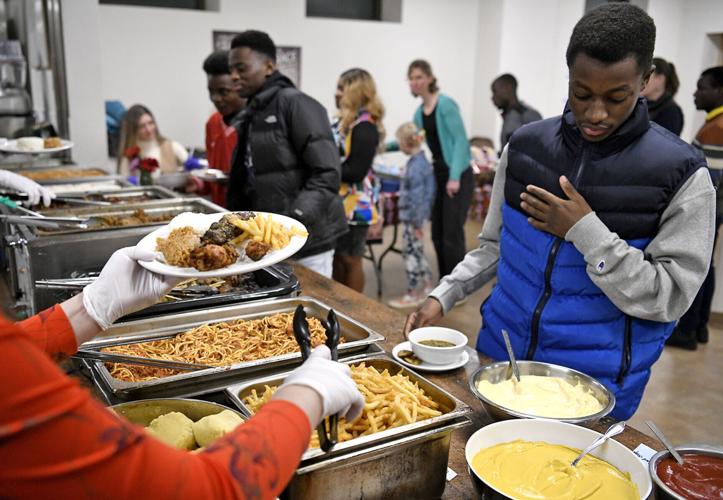
1. Congolese refugees gather in Missoula for ‘Welcome Dinner’ (David Erickson / Missoulian)

An event hosted by the International Refugee Committee and Soft Landing Missoula welcomed new Missoulians to town. J-School grad (’06) David Erickson leads with:

“Last Saturday was a busy and very special day for the many refugees from the Democratic Republic of Congo and other countries who now call Missoula home.

First, it was time to cook.”

Tom Bauer / Missoulian

2. Montana youths take climate case to trial in historical first (Megan Michelotti / Missoulian)

Sixteen young Montana plaintiffs are taking the state of Montana to court this June in Held et al. v. Montana. It will be the first trial of its kind.

“The case asserts that by supporting a fossil fuel-driven energy system, the state is violating its own ‘constitutional rights‘ to a clean and healthful environment…,” reports Michelotti.

3. Poll shows Westerners hold fast to conservation ideals (Laura Lundquist / Missoula Current)

“Westerners remain steadfast in wanting to conserve the land, water and wildlife that surround them, although concerns about overcrowding and water shortages reflected in a new eight-state poll are strengthening those desires,” writes J-School grad Laura Lundquist (’10).

Lundquist reports on the Conservation in the West Poll from the Colorado College State of the Rockies Project. Though the piece is data heavy, she translates the results effectively.

4. Bozeman Daily Chronicle journalists say company won’t budge on pay, work hours (Darrell Ehrlick / Daily Montanan)

Ehrlick reports on difficulties some Montana journalists face as employees of the Yellowstone News Guild and Lee Enterprises. “…The economic struggles told daily on the pages of the newspaper have also crept their way into the lives of the journalists writing those stories,” Ehrlick writes.

Top Environment and Science News Stories

1. Climate change may make it easier for mosquitoes to spread malaria (Dino Grandoni / The Washington Post)

Mosquito season is still several months away here in Montana. According to Georgetown University researchers, the disease-carrying pests are spreading into more northern latitudes and higher elevations as the climate warms. This is scary, because, “The deadliest impacts of climate change won’t just come from floods, droughts and other disasters. According to top U.N. climate scientists, some of the worst consequences will come from disease,” Grandoni writes.

2. ‘This is absurd’: Train cars that derailed in Ohio were labeled non-hazardous (John McCracken / Grist)

You’ve probably heard about the Norfolk Southern Railway train derailment in East Palestine, Ohio and the environmental disaster that ensued. McCracken’s reporting for Grist provides a clear rundown of the incident and the implications for residents and wildlife of East Palestine.

Top Alumni/Student Story

1. Senate committee advances bill to prohibit foreign adversaries from owning ag land in Montana (Keila Szpaller / Daily Montanan)

J-School grad (’03) Keila Szpaller is the Daily Montanan’s deputy editor and was previously the Missoulian’s city editor. In her story for the Daily Montanan, Szpaller keeps to the facts and reports in concise, clear graphs. We learn all we need to know about the story: there is a bill in Montana legislation that challenges ag land ownership, and the recent Chinese surveillance balloon debacle comes into play.

Good Work Wednesday: February 15, 2023

By Sage Sutcliffe

Top Montana News Stories

1. Why are there so many UFO sightings in Montana? (Edward F. O’Brien / Montana Public Radio)

We may be ‘big sky’ country, but why else might UFO sightings be so common in Montana? J-School grad Edward F. O’Brien (’94) explores this question in MTPR’s latest episode of The Big Why.

2. Push # for Spanish (Mardy Harding / Montana Free Press)

Moyce Immigrant Health Lab, or Proyecto SALUD, at Montana State University is fulfilling an important need. “The lab was created by assistant professor Dr. Sally Moyce and includes an interdisciplinary group of researchers working to address health disparities in the Latino community in Gallatin County, a population that has increased dramatically in recent years,” writes Harding for MTFP.

3. USDA projects farm income will fall in 2023 after two robust years (Adam Goldstein / Daily Montanan)

Goldstein’s strong lead says it all (but keep reading the piece to learn even more, of course!):

“After two strong years of growth, U.S. farm income is forecast to drop substantially in 2023 as commodity prices fall and expenses rise, the U.S. Department of Agriculture Economic Research Service reported Tuesday. And with food prices projected to rise into 2023, the nation’s producers will not be reaping the financial benefits.”

4. Missoula lands ’23, ’24 Pan-American Cyclocross races (Joshua Murdock / Missoulian)

The Pan-American Cyclocross Championships are coming to Missoula this coming November and again next year, reports Joshua Murdock for the Missoulian. Cyclocrossers from the whole Western Hemisphere will convene and compete in their sport, which “falls somewhere between mountain biking and road cycling,” Murdock writes.

Top Environment and Science News Stories

The top environment and science stories this week are both about thinning forests, but for two different climate change battles. Larsen reports for the Salt Lake Tribune about scientists’ take on a proposed idea to thin nearby forests to help fill the Great Salt Lake. Another Western story, Shepherd reports for High Country News about thinning forests to reduce wildfire fuel.

1. Thinning forests won’t help restore the Great Salt Lake, scientists say, and could even make things worse (Leia Larsen / The Salt Lake Tribune)

2. Does thinning work for wildfire prevention? (Emily Shepherd / High Country News)

Top Alumni/Student Story

1. Bills concerning transgender youth and local control surface in House (Alex Sakariassen and Arren Kimbel-Sannit / Montana Free Press)

In the January 25th ‘Good Work Wednesday’ post, we featured UM Alumni Alex Sakariassen’s (’08) MTFP story about the state toughening obscenity laws within public schools as a top Montana news story. As a follow up, Sakariassen and Kimbel-Sannit report again for MTFP and cover the latest in public school related legislature: HB 361, “which would change Montana law to explicitly state that misgendering a transgender student or calling them by their dead name — the name they were given at birth — is not considered a discriminatory practice.”

Senior Elinor Smith is also covering the issue for the UM Legislative News Service. Read her piece on these bills in the Hi-Line Today here.

Both stories use powerful quotes from testimonies supporting either side of the issue.