Until the 2015 spring semester, senior Kolby Kickingwoman hadn’t written a lot of long form in his time at the School of Journalism. He’d focused on shorter stories, most of them about sports. Six months later his first long form story tied for 17th place in the Feature Writing Competition of the prestigious Hearst Journalism Awards.
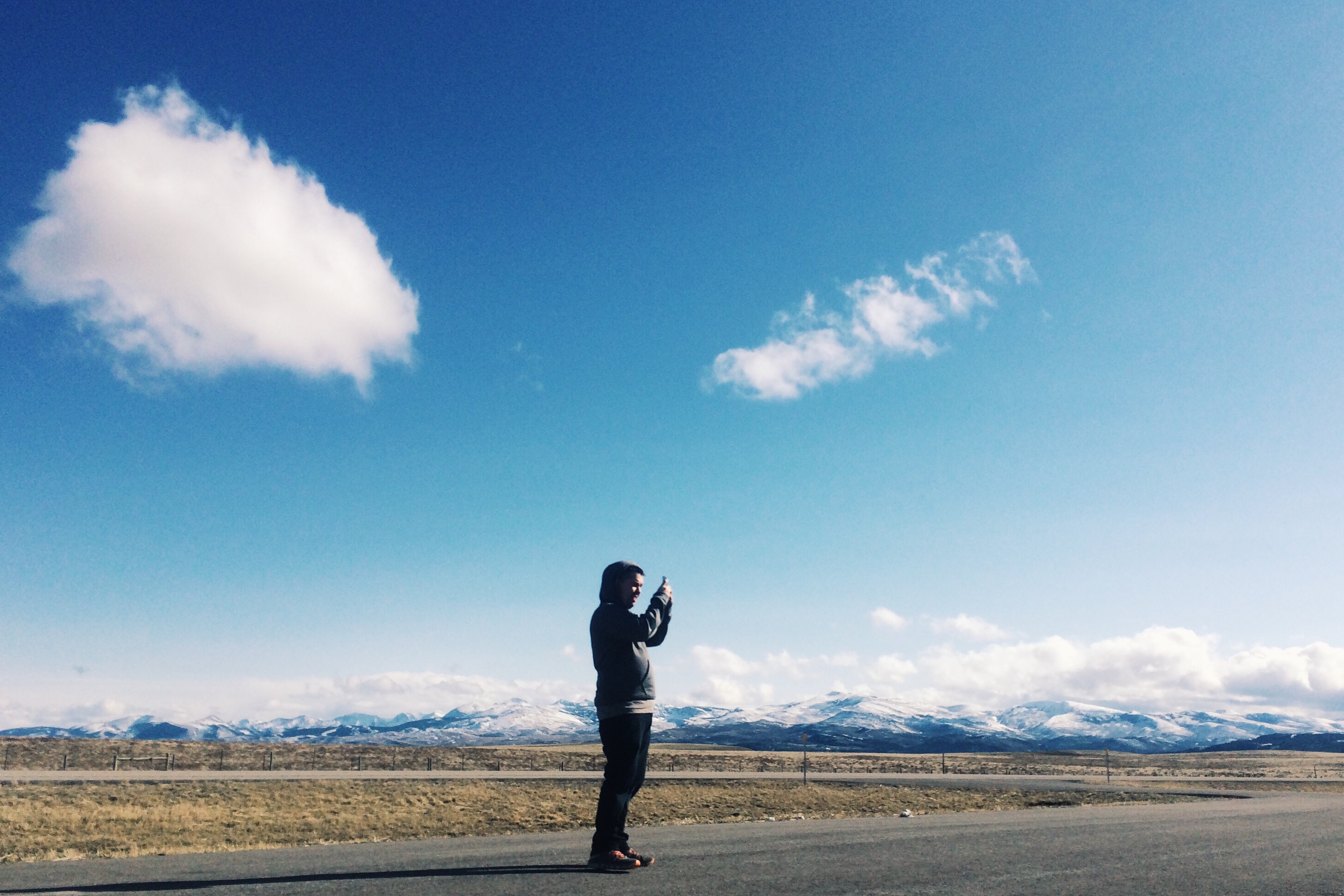
Kolby Kickingwoman stops to capture the view on the Blackfeet Indian Reservation, where he was reporting a story that placed 17th in the Hearst Journalism Awards. Photo by Celia Talbot Tobin.
The Hearst Awards are the most prestigious awards directed specifically towards journalism students. The story Kickingwoman wrote was for the Spring 2015 Native News project, a class that sends teams of journalism students – a writer paired with a photographer – out to each of Montana’s indian reservations.
Reporting from the Blackfeet Indian Reservation, Kickingwoman and his partner, photographer Celia Talbot Tobin, told the stories of tribe members navigating questions of sexual and gender identity. One storyline followed a transgender teen attending her first prom, another a gay man in his twenties.
“I had a lot of fun doing that story,” Kickingwoman said. He is pleased to have won an award for a piece where he found both the subject matter and the length of the writing to be a challenge. “It was kind of outside my comfort zone,” he said.
The story came together quickly. Kickingwoman and Tobin found their teenage subject while already in Browning, a city on the reservation. While spending time with another subject, they learned via Facebook of the transgender teen whose story would play such a big role in their final piece.
Tobin thinks Kickingwoman’s personality helped them get the access and intimacy that allows for good feature stories. She described Kickingwoman as easy going and sensitive to her needs as a photographer.
“He’s a really good people person, which came in handy a lot as I was trying to be invisible and photograph and film people. He is really, really good at being engaging with subjects, being interested in them,” Tobin said.
As a graduate student with a history of freelance photography, Tobin has more experience than most students, and enjoyed watching someone with a background in shorter pieces weave a compelling narrative of this length. “I think it’s a strong story and a really unique one that hasn’t been told before. He pushed himself a lot I think, outside his comfort zone,” Tobin said.
Kickingwoman grew up in Missoula, but his father is from Browning. It was rewarding to place in the Hearst awards, he said, and “to represent the Blackfeet nation and win an award about a story from Browning.
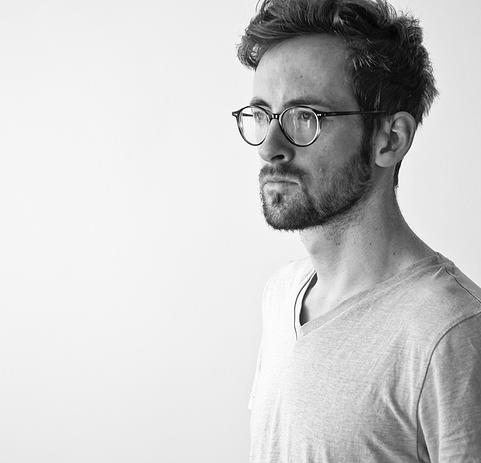
Shane McMillan is a native of western Montana and graduated from the School of Journalism in 2010, at which point he moved to Berlin on a Fulbright scholarship. He interned as a photographer with the Associated Press, and worked as an English translator for German film projects. It was this second gig that helped push him into a career as a freelancer, landing him a spot on the production crew of “Can’t Be Silent,” a documentary film about a group of refugee musicians in Germany.
Since first moving to Berlin McMillan has been working as a freelance photojournalist and filmmaker, with work published in the New York Times, the Guardian and PRI’s The World, among other places.
I asked McMillan if he had advice for any journalism students who might hope to make it as freelancers abroad. “Just, like, make it,” he said laughing. “Just work hard and do good work and keep in touch with people who you’ve done good work for.” McMillan focuses his work on human rights because it’s what he calls the thing he’s most likely to get in a bar fight about. “Try to make things that people want to see or care about,” he counsels.
McMillan says he highly values the many facets of his education at the School of Journalism, he says, believing it was one of the reasons he landed a job in documentary film making. “I could write, I could do TV, I could do radio and I could take photos,” he said.
A WITNESS IN PARIS
Friday, November 13th, McMillan was editing work in an apartment he says practically touched the Bataclan concert hall in Paris as the terrorist attacks began. He was in town for a photography festival, part of his work as studio manager for celebrated fine art photographer Nan Goldin.
As it became clear that they were not hearing fireworks but instead sustained gunfire, Goldin and McMillan tried to figure out what was going on and debated leaving the building. “I really didn’t want to go outside that much,” McMillan said, but eventually he followed Goldin down the stairs.
They walked into a triage center. Police officers had been breaking into courtyards along their block to set up casualty centers for the injured, many of whom were severely hurt. McMillan said he found out the next day that three people died in their courtyard alone.
The two photographers began shooting photos once they got outside, but police forced them to stop. McMillan was sent out into the street, while Goldin was made to return inside.
On the street, McMillan said, his “natural instinct to shoot” as a journalist quickly faded. “People were very opposed to me taking photographs or even having my camera there,” he said.
He decided they were right. McMillan said he didn’t feel like his photography could accurately portray the scene, and didn’t end up taking very many pictures on Friday. “I didn’t feel like photographing that night because I really just wanted to talk to people,” he said.
Instead, he received a text from Anne Bailey at Public Radio International’s The World program. A former adjunct professor and fellow graduate of the School of Journalism, Bailey asked McMillan if he was in Paris. He then started reporting for PRI via phone and text message, describing what he was seeing, which he called a surreal experience.
Far from providing a scoop, this proximity tested McMillan’s training as a journalist. He didn’t want to ask the trademark questions a breaking news journalist would, like asking people to describe their experiences and how they were feeling inside and outside the concert hall. “In that moment it was just too much of a violation of their need to process what just happened,” he said.
Instead he helped people. He asked simple questions and talked with those he thought were ready to do so. If someone was ready to talk, he said, you could see it in their face.
“That may or may not be what they would tell you to do in journalism school but I strongly believe that you have to come to situations like this as a person first,” McMillan says.
While answering my questions via video, and remembering Friday night, McMillan was visibly upset. However he said he was strangely calm at the time. Bailey, from PRI, helped a lot by talking him through the reporting via text.
McMillan described a man he spoke with who was looking for his girlfriend. The couple had been separated during the concert, and the man was unsure if she was alive or not. There was blood on the man, and by now, McMillan would like to know if she was all right. At the time, he said, it was very hard to know whether he should share that kind of story or not.
“It was a lot of really intense decisions made in a very quick turnaround,” McMillan says. He did not give the man’s story to media at the time.
“It’s tough to be there when people’s lives are changing in such a fundamental way, and to feel both a responsibility to them and to telling the story,” McMillan said. There’s a tension that he said he feels even more conscious of now after some time to reflect. “I was in this very strange position of being both a journalist and a bystander at the same time.”
At first he was being called by a lot of big media outlets, with whom he has now stopped talking, having tired of giving eyewitness accounts. He answered my questions from a hotel room in Geneva, Switzerland.
In return for what he called “a more personal slice” of his mind, I was asked to treat his story with respect and also to deliver the following message:
“I ask you to credit the University for what I’ve learned. Because I did learn a lot at school and I’ve learned a lot in life following that and I learned a lot this weekend.”
Much of what he does, McMillan said, “is based upon an education from a collection of people who are really amazing journalists and really amazing teachers, who forged me as a professional.”
McMillan will be working with the School of Journalism as their local facilitator and trainer in Berlin for a study abroad trip this summer. Students will be reporting stories from the influx of refugees to Germany and Europe. The documentary McMillan worked on will be showing at 6:30 pm on November 18th in The Payne Family Native American Center.
While the crowd gathered for a sold out event at The Roxy Theater turned their eyes towards the big screen, it was their ears that did the work. This was the first Missoula Podcast Festival, and those in attendance were partaking in the unique experience of group listening as a full theater absorbed Montana centric radio stories.
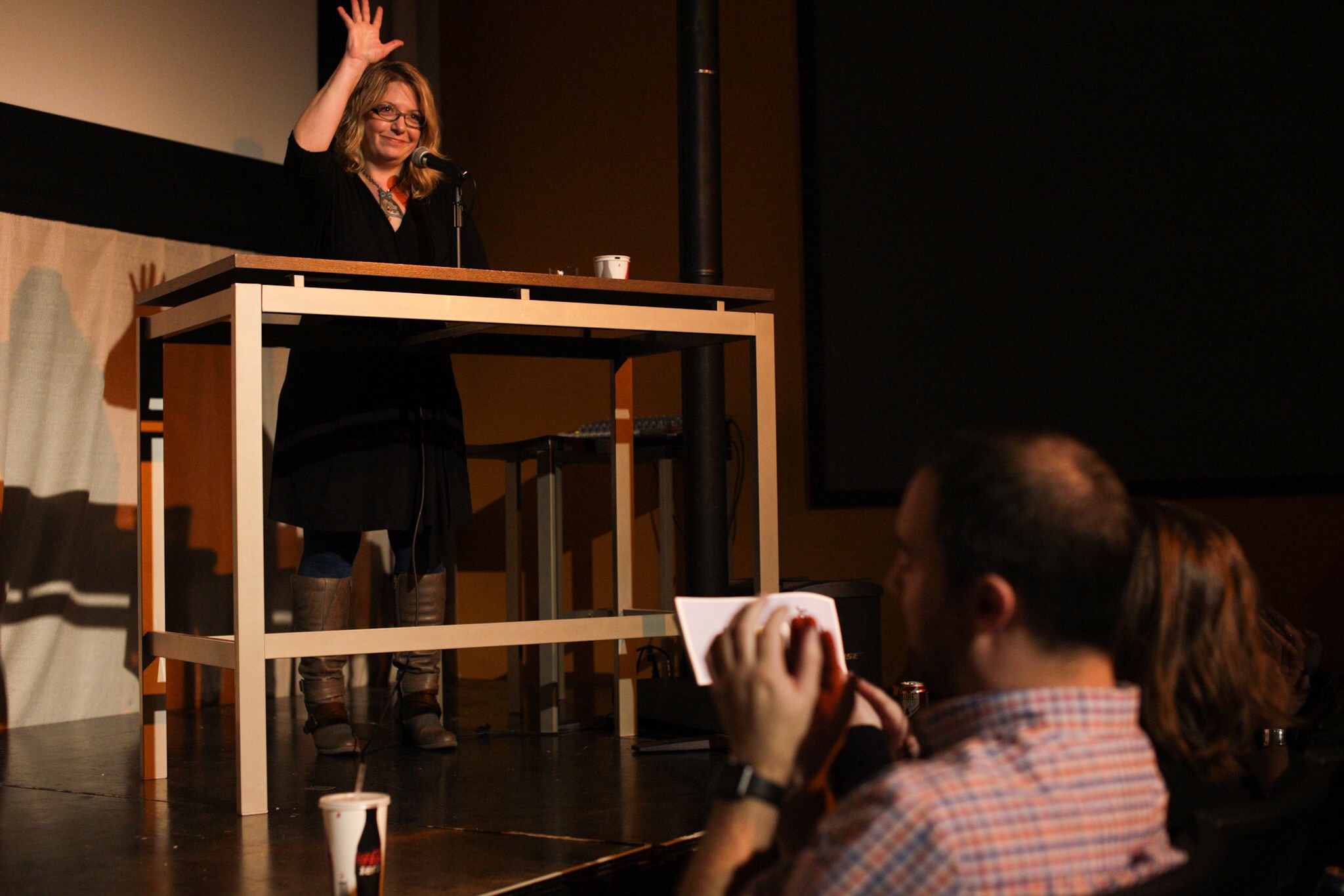
Jule Banville introduces the next set of stories to the audience. Photo by Evan Frost.
The podcasts, which ranged in length and subject matter, were independently produced by authors with connections to Missoula and curated by Jule Banville, an assistant professor at the School of Journalism.
“I’m excited that we’re podcasting, and about where this is going,” Banville said to open the show. Many of the stories were produced by past and present students of Banville, who teaches audio reporting and feature writing. Banville said she first conceived the idea of the podcast festival as a showcase for student work, but later expanded it to include other producers.
“It’s about the stories,” she said. “There are too few places for people who are doing cool radio stories.” Banville also hosts a podcast of her own online called Last Best Stories, where she posts both her own work and others.
The stories she chose ran from the heartbreaking, like the story of an avid outdoorsman who lost the use of his legs, to the lighthearted, like a piece about a small town 80s cover band with very big dreams. The voices of every day and unique Montanans were well represented, as were issues of race, sexuality, and environmental change.
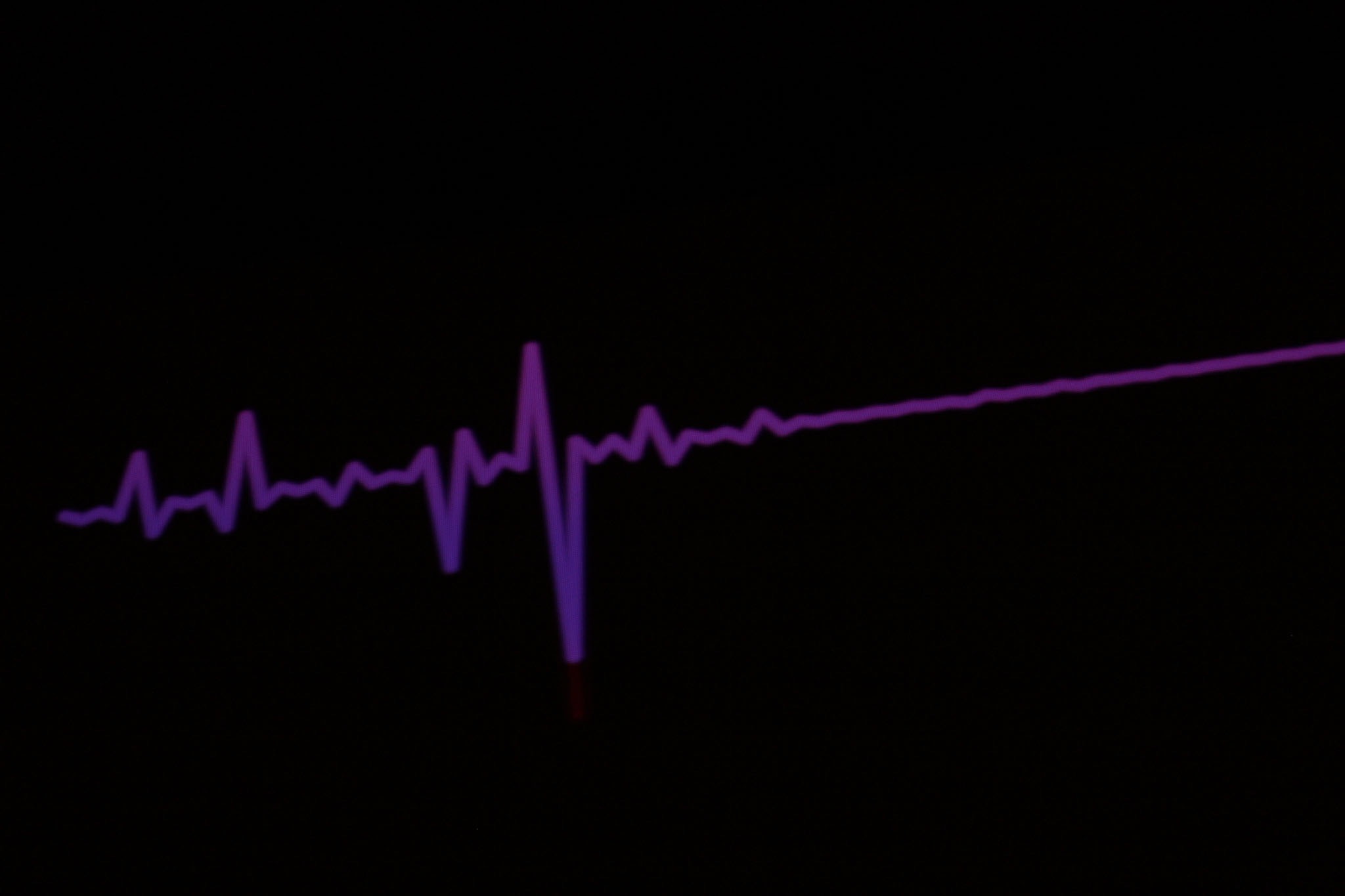
Creative visuals danced across a large screen, changing color and design with each story. Photo by Evan Frost.
In the theater on Thursday, an audio visualizer played on the big screen in ever changing colors. Between the story blocks producers talked about the art of creating podcasts. That was it for visuals however. The crowd mostly listened in silence, except when they gasped, laughed or sighed.

 Montana Journalism