
Designers on Social Media: Q&A with Pleaser Magazine Creative Director Sarah Dean Morales

By Kaylee Beck

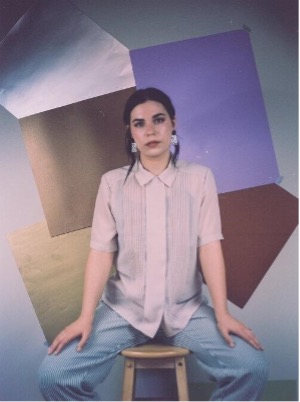
Sarah Dean Morales (she/her) is a multidisciplinary designer based in Kansas City and the creative director for Pleaser Magazine and is a graphic designer, illustrator, and photographer. She blends skills in painting, illustration, photography, and printmaking into her work, drawing on professional experience in print, architecture, and retail design. Her designs evoke nostalgia and warmth, inspired by music, storytelling, and diverse influences like mid-century modern design, gothic architecture, and outer space. You can see her work through her portfolio or Instagram.

Kaylee Beck, a University of Montana Media Arts student studying graphic design, interviewed Sarah Dean Morales about her usage of social media in regard to her career. What follows is a transcript of their conversation, edited slightly for clarity and brevity.
Q: Given Pleaser’s commitment to fostering a diverse and inclusive community within the music industry, how do you incorporate these values into your creative decisions for the magazine and your personal social media presence?

A: As you said, Pleaser’s main goal is to be inclusive and uplift those whose voices may have never been heard otherwise. With all of our creative decisions, we want to be able to exemplify that by not only choosing content that aligns with that vision, but how we present it. Our design team, being fans, are awesome at picking up nuances within the artists’ lyrics and bringing those to the forefront or making it a staple of the design. We always aim to look deeper into the artists we cover and bring a fresh perspective to their work.

I take the same approach personally as well. I love analyzing and studying lyrics and making it the focus of my design or even just a starting off point. I feel like this sets my work apart and shows that I care about the artists as people and not just a product. I think people resonate with that.

Q: As a fan-run magazine with a growing online following, how does journalism influence the creative direction of Pleaser Magazine and your social media strategies?

A: I think with Pleaser, we really try to have that brand personality of journalistic, yet fun and relatable. I think that’s why we can seamlessly adapt our content for socials without losing any of our identity. We do follow AP Style for stylistic considerations as well as the code of ethics for journalism, but we aim to be more positive in our reviews and features. We like to toe the line of being friendly and colloquial with professionalism in our voice, to instill trust in our work as well as us as individuals.

Q: Can you describe your target audience and clients for both your personal social media and Pleaser’s accounts? How do you tailor your creative approach to effectively reach and engage with these demographics?

A: My personal target audience would be potential clients! My creative approach doesn’t really change due to that, I just make things I would like to see and it seems to be resonating with people. I’ve got a lot of my freelance jobs from just putting my work out there and tagging the artists – I don’t have a grand plan for it, honestly.

Pleaser’s is other fangirls. We have more of a strategy in place by trying to creatively showcase our written pieces with engaging visuals. We try to not always use press photos or album covers – we love to take creative approaches with our content. A recent example was our Sabrina Carpenter Short n’ Sweet album review. Our Editorial Manager, Allyson Clayton, had the idea of comparing each song to a chocolate. We then had our illustrator, Shamma, draw a chocolate box and each of the chocolates for the visual portion, and the written review was formatted how a chocolate box would describe each flavor. This was popular and people enjoyed it because it was different, which helped with engagement.

Q: How do you balance the use of social media for promoting Pleaser Magazine with maintaining a personal brand and engaging with your own interests?

A: I feel like my interests and Pleaser’s brand identity bleed into each other, since I did develop the brand itself. I don’t feel the need to separate the two. I love promoting my Pleaser projects on my page because they are such a labor of love, I feel like I NEED to in a way.

Q: What are some of the biggest challenges you’ve faced in using social media to promote Pleaser Magazine, and how have you overcome them?

A: I think just planning out a schedule for socials can get hairy. Since there’s soooo many platforms and ways to engage, it gets overwhelming to plan for everything. And also jumping on trends – they can be so fickle – so trying to judge which ones are right for us and also timely. It’s been a lot of trial and error, but we’ve put together a dedicated socials team to plan out our schedule no more than 2 weeks in advance, and leave room for flexibility of content, as things are ever-changing. We have certain people dedicated to each app and that’s helped us feel less burnout when trying to be creative with each post.

Q: In your opinion, what is the future of social media in the music and creative industries? How do you see Pleaser Magazine adapting to these changes, and what are your hopes for social media with regard to your own career as a designer?

A: Oh gosh, I just hope in both spaces, we use it more as a sense of community rather than analytics. At least on the business side of things. I understand analytics is an easy way to measure success but I think prioritizing fan spaces and interactivity will have more longevity. I just hope social media keeps helping me get jobs within the industry!

Q: How has your personal brand evolved over time? What role has social media played in shaping your online identity, and what are your biggest challenges in maintaining a consistent aesthetic and voice across your websites, markets, and social media?

A: I think I used to be super clean and minimalistic with my designs, and now I experiment more with fun fonts and playing outside the box. I think when you think too much about your style, you’re hindering yourself. Just do what comes naturally to you and the style will take shape. Social media has helped by just being able to be exposed to a lot of different designer’s work that I probably wouldn’t have found otherwise and that’s pushed me to try new things. I love social media in that way, but it also can quickly turn into a comparison competition. I think though, the older I’ve gotten, I’ve calmed down a bit and realized the opportunities that are meant for me will come in time. I love being able to see all of my design community’s successes! I don’t think about maintaining anything specific, I honestly just do what comes naturally to me!

This Q&A is part of a series created by students in Courtney Cowgill’s Social Media and Audience Engagement course at the University of Montana School of Journalism. Students sought out people in media who are using social media for good to offer tips and insights into the ever-evolving landscape of social media.
Designers on Social Media: Q&A with Freelance Designer Abby Cracraft

By Kaylee Beck

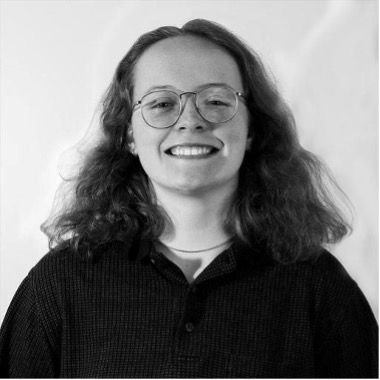
Abby Cracraft is a graphic and web designer based in Portland, Oregon, with a portfolio showcasing her work in merchandise, music, and sports. On a mission to help brands create meaningful experiences through thoughtful design choices, she leverages a multidisciplinary approach that includes computer science, digital design, and sales. Originally from Boulder, CO, Abby has lived in every time zone in the continental U.S. A musician, lifelong learner, and aspiring polyglot, she continues to refine her craft with empathy at its core.

Kaylee Beck, a University of Montana Media Arts student studying graphic design, interviewed Abby Cracraft about their usage of social media in regard to their career. What follows in a transcript of their conversation, edited slightly for clarity and brevity.

Q: How has your personal brand evolved over time? What role has social media played in shaping your online identity?

A: I think that my brand is something that self-admittedly has only come to me recently. I have felt that I have always wanted to be authentic online and share what I create in a way that I would want to watch if I were the viewer and I only discovered it by creating content/designs for myself and clients. I started to be drawn towards a specific aesthetic consistently. Like many people who grew up on the internet and with a screen in their face from a young age, I think I have learned how much it can affect your self-image. Being able to go through the transformative middle to high-school years online allowed me to now be able to deconstruct how impactful it is to who I am as a person and realize I would prefer to be authentic than just posting for engagement and dopamine.

Q: What are your biggest challenges in maintaining a consistent aesthetic and voice across your portfolio, social media, and style of design?

A: I think that maintaining a consistent aesthetic and voice shouldn’t be difficult if you are speaking from your own experience. I try my best not to compare my end result with others because I recognize that the way we got there was different. I don’t think that there is anything wrong with trying out new styles or new ways of doing things – that is the fun part of social media and design! I think the casual nature that social media has been getting back to with photo dumps reminds me to not take it too seriously! Make stuff that makes you happy and others that like it will find you!

Q: How do you manage the pressure to constantly create new content and engage with your audience on social media?

A: I am both lucky and unlucky to say that creating social media content is not my full-time job or even a part-time job. I do it when I want and when I feel like I have the energy to do so. This allows me to not have to put pressure on myself to create when the tank is empty. In the past, I have created content in different aspects (I have a YouTube channel dedicated to playing guitar that I

uploaded on consistently for years) and have felt that once you get into the flow of creating and sharing it becomes second nature. I just have an underlying fear of burning out in graphic design since it is my true passion so I refuse to put too much stress on myself in it.

Q: Can you describe your target audience and clients you try to reach? How do you tailor your creative approach to effectively reach and engage with these demographics?

A: My target audience would be music lovers who notice the little things in their favorite band’s album cover. I try my best to be detail-oriented in the work I create and try to improve on every aspect whether that’s the filming, the editing, or the content itself. Being able to capture a certain demographic can be hard, but I have been lucky to have captured an audience that has found me through working with their favorite musicians. For someone to see a post from a musician they follow, like the design enough to find the person who designed it, and then follow them, means that it almost weeds out the negative people.

Q: What are some of the biggest challenges you’ve faced in using social media to promote yourself as a designer, and how have you overcome them?

A: My biggest challenge is consistency on social media as a designer. I am constantly working with clients on top of holding full-time non-graphic design jobs, and so to add on posting content and filming things that may not return monetarily is difficult. To push through this depends on discipline and starting to form a habit around content creation. In the past, I have had different ventures in social media that required daily commitment, whether that was posting guitar riffs on YouTube or meme posts when I was in middle school. I have learned from those experiences that consistency is what can grow an account. I never focused overtly on quality, but I think as a graphic designer, you tend to always be looking for a higher quality aesthetic due to the artistic creative side. I think if I was to be able to get out of my own head and create more, it would lead to a larger follower count, but I have yet to see if that equates to a larger client base or not.

This Q&A is part of a series created by students in Courtney Cowgill’s Social Media and Audience Engagement course at the University of Montana School of Journalism. Students sought out people in media who are doing social media for good to offer tips and insights into the ever-evolving landscape of social media.

Social Media Best Practices: Q&A with Artist Kate Loble

By Eliza Carey

Kate Loble is a 22-year-old Montana-born artist who specializes in crochet and posts regularly on her business Instagram account promoting her work, which includes anything from stylish sweaters to silly hats. Her personal touch shines through each unique piece.

Her business name is GEEB, a childhood nickname that reminds her of wonder. Kate grew up in Helena, Montana practicing theater performance art, found a love for ceramics and utilizing her hands in high school. She then attempted to go to school for theater, but it fell through because of the pandemic. She would then spend the next three years with enough downtime to take up the hobby that would change her life: Crochet. She crocheted every day for a year and a half and then in the summer of 2023, her art really started to take off when she started making reels every day, reaching 78.1K views, and counting, on her most popular video. She is now enrolled at Cornish College of the Arts in Seattle, Washington.

Eliza Carey, a University of Montana journalism student, interviewed Loble about social media recently in a study of best practices on social media. What follows in a transcript of their conversation, edited slightly for clarity and brevity.

Q: What does your process look like for promoting your work on social media?

A: It’s mostly filming. Honestly, my process isn’t that good, it’s very emotional. Like, I’ll start filming, and I’m just awkwardly talking about the piece or what I’m doing for way too long, and it’s like, people just want to see me do it. So then I’m cutting down the video to the very end. And that’s what I want to do, I want to film the final steps of my process, like maybe a little bit of the creative process, but mostly talking about the piece once it’s finished and kinda show that finished product to my audience. I also just work faster when I don’t have to record everything.” Q: What tactics have you seen work best?

A: Reels, obviously, like when I’m ‘making content,’ I’ll make a reel. I’ve done pretty well on TikTok, too, and the key is personality. Some people are attracted to more professionalism, but most people just want to get to know you and see your personality. I mean, one of my videos with the most views is literally just me being goofy and taking the audience along with me while I make a piece.

Q: What is the biggest struggle you have run into with sharing your work on social media?

A: It’s a whole other art form, it’s like a whole other skill. It takes graphic design, modeling, marketing, video editing, and I want to really learn a new skill to help promote my stuff, but the challenge there is that it would take time away from actually creating my art, so it’s kind of a difficult thing.

Q: What is your main goal when you post, and how successful have your strategies been?

A: If I had a more exact goal, I would be posting more effectively, but honestly my goal is just to inspire and maybe eventually be able to sell from it. I’ve never gotten any money from social media as an outlet, I’ve only made money from direct selling, whether that’s at the maker’s market or for a friend. I just want to focus on documenting the process of what I do. At the end of the day, I think my strategies have been successful because in person I get a lot of good feedback about what I’m doing, like, my friends think it’s cool and that feels good. Actually, one of my first days of school at Cornish, I met someone who recognized me from my Instagram account. It was shocking, but it made me happy. People know me by my art, like an extension of my persona, and it’s very validating and refreshing.

Q: What does your future look like with using social media to your benefit?

A: The video editing part of it all has been super inspirational for me. I want to get into video production, filming, editing, design and photo. I think my desire to learn more about those things has truly come from just making my own videos for my art page, and just the current space of social media makes me want to document my work. I don’t see this as long term, I want something bigger to come from it, but it’s helpful to know how to run your own shit, discipline yourself, it’s important for any art field.

This Q&A is part of a series created by students in Courtney Cowgill’s Social Media and Audience Engagement course at the University of Montana School of Journalism. Students sought out creatives who are doing using media for good to offer tips and insights into the ever-evolving landscape of social media.