
Social Media Best Practices: Q&A with University of Montana’s Emma Dorman

By Melissa Dickson

Emma Dorman is the University of Montana’s first social media manager under the umbrella of Creative Services for UM’s Marketing Communications, Experience and Engagement office. Dorman is originally from Stevensville, MT and graduated the University of Montana with a bachelor’s in communications, and a minor in media arts. She has overseen all the social media accounts for the university since May 2022, managing a Facebook account with 134,000 followers and an Instagram account with over 45,000 followers.

UM Journalism student Melissa Dickson recently interviewed Dorman about her work on social media and below is a transcript of their conversation, edited for clarity and accuracy.

Q: How do you build trust with your audience in terms of keeping their attention and engagement?

A: We build trust through authenticity and encouraging user generated content. UM’s brand voice is playful, and my interns regularly assist with ensuring that captions will resonate with college students. I’m always encouraging our community to tag us in their UM adventures on social so we can share to our stories. When people share on social media about their experiences within the community – that builds more engagement and reinforces strength within the community. We also engage our audiences by focusing on content that appeals to each platform. For example, on Facebook our largest audience is alumni. So, we use more photo content and might use a longer and informational caption. While on Instagram, it’s mostly current students and young alumni so we user shorter captions and lean more into trends for content ideas.

Q: What are some strategies that you have used in order to tell a story about what you are marketing? Do you think they are working?

A: We look at who could find value within a story package (alumni, potential students, donors, student families, current students, MT community and more)! Then we decide how it should be disseminated and which platforms to utilize to reach our desired audience. Often that’s a news tip inviting the public to an event, that’s then shared to social with a link to the full story. Then we have promotional graphics created that are shared with campus partners to post on their own channels. Next, we discuss how the event will be covered day of. Bigger events might have a reel, a photo “dump” and multiple stories to accompany it. I try to have 1 reel for every 3 photo posts but totally depends on the bandwidth of our team. Lastly, we consider which accounts are posting which content. If President Bodnar played a large part in this story, then we save a few photos for his social. Or if it’s an admissions event, maybe it becomes a collab post between that account and UM’s. Social media plans are constantly changing and not every packaged story performs well. We can spend months creating an in-depth content package with a high-quality reel, creative captions and a campus event and it still doesn’t perform well. Totally depends on the topic but for the most part, our audience wants to see campus vibrancy, sports and events. Anything else can fall a little flat. Sometimes that means we don’t post about that topic again but usually we consider how we can change the narrative for next time.

Q: How do you gauge what content is most appealing for your audience, making it relevant?

A: I pay attention to our engagement rates. Calculated by all interactions (likes, comments, shares, saves, etc.) divided by total number of people that post reached. Our highest-performing content is always evergreen campus vibrancy like reels of the M trail, football wins (especially when we beat the Cats), and UM events/traditions like Homecoming, Foresters Ball, graduation and the pumpkin on main hall. I’m constantly watching our analytics to see how different content performs. Recently we noticed that our reels with 1 video clip performed significantly better than reels with a montage of clips. So, we’re currently experimenting with that! Social media is constantly changing so it’s important to stay on top of what’s trending as well as new platform features – like the ability to post 20 photos on IG.

Q: What would you describe is the “product” that are trying to sell your audience through posts or ads online? 

A: I feel like I’m selling an amazing college experience, a quality education and a community you have access to for the rest of your life! One thing I’ve heard over and over again is that prospective students aren’t looking for degree programs on social media, that’s what umt.edu is for. If they’re looking at our profiles, it’s purely to understand our vibe and culture, which is why most of our content on social media is event focused. Having attended UM, I love seeing how far we’ve grown as a campus. UM is definitely in its glow up era. It’s an exciting and fun time to be a student here, so sharing it on social media is very rewarding. 

Q: What techniques do you use to foster a strong community around the brand? 

A: Highlighting the events around Missoula that foster a strong community like Paint Missoula Maroon – now locals look forward to the new sign design and welcoming students back to town so we always share that campaign on social. A few times a year I ask our followers to send in their own photos for various post ideas and that organic and genuine content makes the brand feel more authentic and solidifies community buy in. Content that celebrates UM is a great opportunity for people to show their support by sharing and commenting, and people love to flex when their community is succeeding. I love using a call to action question in our captions to engage our community to comment. Showing that we still have so many people willing to comment positive things about UM or share a fond memory proves to our current students how strong our community is and reinforces them to comment as well. A few examples I have used recently:

  • “Comment your favorite Homecoming memory!”
  • “What advice do you have for the incoming class of 2028?”
  • “What student group would you recommend to a friend?”

This Q&A is part of a series created by students in Courtney Cowgill’s Social Media and Audience Engagement course at the University of Montana School of Journalism. Students sought out creatives who are doing using media for good to offer tips and insights into the ever-evolving landscape of social media.
Designers on Social Media: Q&A with and Designer and Small Business Owner Jennifer Enciso

By Kaylee Beck

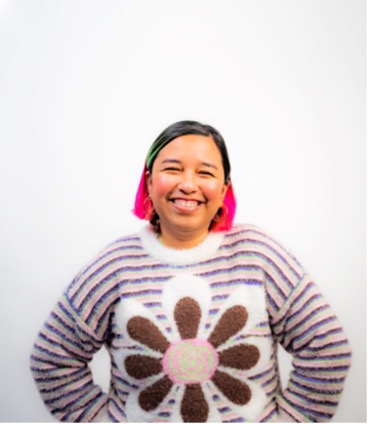
Jennifer Enciso is a graphic designer and small business owner creating vibrant, eye-catching merchandise. With a passion for art and design, Jennifer has developed a colorful, unique style inspired by her love of books and childhood imagination. She specializes in working with musicians and bands and brings their vision to life with merchandise that reflects their sound and style. You can find her work and store it through her website or her Instagram.

Kaylee Beck, a University of Montana Media Arts student studying graphic design, interviewed Enciso recently about their usage of social media in regard to their career. What follows is a transcript of their conversation, edited slightly for clarity and brevity.

Q: Given the competitive nature of the fan merchandise market, how do you use social media to differentiate your brand and connect with your target audience?

A: I have this motto I made that I go by “Make really cool merch”. When I see bands tour merch and I don’t think it’s really good, I tell myself what would I do to make it better. I really don’t look at others’ social media accounts. I just try to post once a day of what market is coming, new merch, and even pictures of all the inventory that I have. I connect really well with my audience because I’m also part of it. When I design stuff it’s usually because I like it, I’m not really focusing on a certain audience. When I design something it’s because I’m either really obsessed with it at the moment. I like to design stuff that I would want for myself if I saw it. Even at markets people would come up to me and say “Wow you really nailed your audience”, but in reality, I am part of my audience.

Q: What role does social media play in your product development process? Do you gather feedback from your followers to inform your design choices? Do you feel there is a difference in what you want to make/design compared to what you think will sell or do well on social media?

A: For me social media plays a huge role when making products because most of the things I make are related to pop culture or music I’m into. I try my best to be up to date on what people are listening to or even when artist go on tour. I’m heavily inspired to make better merch whenever I see an artist I like to go on tour. There are moments where I do ask my followers when I’m debating on the color of the tees or artists people want to see me design merch for so I make a poll to help me decide. When I design something it’s usually because I want to make it and I’m obsessed with the idea. There are times where I think “this would sell really good right now” but often times it doesn’t sell as much asIi would have expected. It’s always the designs that you make that you think less of or make really quick overnight that become best sellers.

Q: How do you balance the demands of running a small business with maintaining a strong social media presence?

A: Sometimes I’m not sure how I balance anything at all because I’m all over the place. I don’t have a schedule or a specific day to work on stuff for the month. I just set goals for each week, if I have a market or I need to create new designs for upcoming collections. There are moments I do get overwhelmed since I’m doing the designing and the whole production of making the products, from making the buttons to screen printing the shirts. As for social media I just do my best keeping up with trends and designing what I love the most.

Q: How has your personal brand evolved over time? What role has social media played in shaping your online identity?

A: I started my brand during the pandemic about four years ago, which surprisingly hasn’t changed much but it’s been pretty consistent so far. Also around last year I started to include other designs that don’t involve music like sonny angels and films i’ve been watching that I make merch around. So, I can say that has directed me to another field of interest.

If I were to think about how social media has shaped my online identity, it is that its helped reach my audience and even potential clients through tik tok and instagram. Posting on social media about my process and just being myself in front of the camera has allowed me to project my image of being a latina who designs cute merch,which I’m really proud of and I hope to inspire others as well with graphic design. In other words, I think social media has had a great impact on my career and my online identity, which I always tell other designers to keep posting.

Q: What are your biggest challenges in maintaining a consistent aesthetic and voice across your websites, markets, and social media?

A: I’m not sure if I have any challenges in keeping a consistent aesthetic. I end up just sticking to the colors I gravitate the most or things I love. Somehow everything ends up looking like they pair up with each other without even trying. So just go with your guts and you’ll be fine.

Q: How do you manage the pressure to constantly create new content and engage with your audience on social media?

A: There’s not too much pressure when creating content at times because I usually just make the designs whenever I want to or whatever I’m feeling at the moment. The only time I do feel pressure is when I have markets and need something new released.

For me I still find it hard to engage with the audience on social media because I have one account and I use it for my own portfolio for clients to work with but it’s also my shop which can get a little confusing at times. There are moments where I want feedback from the designers perspective to critique my designs and work, but then I want it from the consumers point on what they would to see sometimes. So im still trying to figure out that part of managing my social media presence

This Q&A is part of a series created by students in Courtney Cowgill’s Social Media and Audience Engagement course at the University of Montana School of Journalism. Students sought out people in media who are doing social media for good to offer tips and insights into the ever-evolving landscape of social media.

Designers on Social Media: Q&A with Pleaser Magazine Creative Director Sarah Dean Morales

By Kaylee Beck

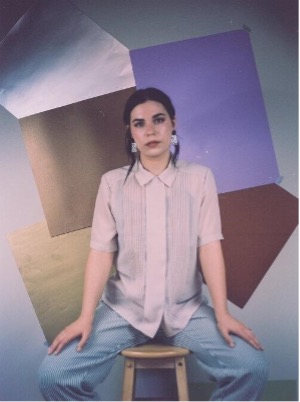
Sarah Dean Morales (she/her) is a multidisciplinary designer based in Kansas City and the creative director for Pleaser Magazine and is a graphic designer, illustrator, and photographer. She blends skills in painting, illustration, photography, and printmaking into her work, drawing on professional experience in print, architecture, and retail design. Her designs evoke nostalgia and warmth, inspired by music, storytelling, and diverse influences like mid-century modern design, gothic architecture, and outer space. You can see her work through her portfolio or Instagram.

Kaylee Beck, a University of Montana Media Arts student studying graphic design, interviewed Sarah Dean Morales about her usage of social media in regard to her career. What follows is a transcript of their conversation, edited slightly for clarity and brevity.

Q: Given Pleaser’s commitment to fostering a diverse and inclusive community within the music industry, how do you incorporate these values into your creative decisions for the magazine and your personal social media presence?

A: As you said, Pleaser’s main goal is to be inclusive and uplift those whose voices may have never been heard otherwise. With all of our creative decisions, we want to be able to exemplify that by not only choosing content that aligns with that vision, but how we present it. Our design team, being fans, are awesome at picking up nuances within the artists’ lyrics and bringing those to the forefront or making it a staple of the design. We always aim to look deeper into the artists we cover and bring a fresh perspective to their work.

I take the same approach personally as well. I love analyzing and studying lyrics and making it the focus of my design or even just a starting off point. I feel like this sets my work apart and shows that I care about the artists as people and not just a product. I think people resonate with that.

Q: As a fan-run magazine with a growing online following, how does journalism influence the creative direction of Pleaser Magazine and your social media strategies?

A: I think with Pleaser, we really try to have that brand personality of journalistic, yet fun and relatable. I think that’s why we can seamlessly adapt our content for socials without losing any of our identity. We do follow AP Style for stylistic considerations as well as the code of ethics for journalism, but we aim to be more positive in our reviews and features. We like to toe the line of being friendly and colloquial with professionalism in our voice, to instill trust in our work as well as us as individuals.

Q: Can you describe your target audience and clients for both your personal social media and Pleaser’s accounts? How do you tailor your creative approach to effectively reach and engage with these demographics?

A: My personal target audience would be potential clients! My creative approach doesn’t really change due to that, I just make things I would like to see and it seems to be resonating with people. I’ve got a lot of my freelance jobs from just putting my work out there and tagging the artists – I don’t have a grand plan for it, honestly.

Pleaser’s is other fangirls. We have more of a strategy in place by trying to creatively showcase our written pieces with engaging visuals. We try to not always use press photos or album covers – we love to take creative approaches with our content. A recent example was our Sabrina Carpenter Short n’ Sweet album review. Our Editorial Manager, Allyson Clayton, had the idea of comparing each song to a chocolate. We then had our illustrator, Shamma, draw a chocolate box and each of the chocolates for the visual portion, and the written review was formatted how a chocolate box would describe each flavor. This was popular and people enjoyed it because it was different, which helped with engagement.

Q: How do you balance the use of social media for promoting Pleaser Magazine with maintaining a personal brand and engaging with your own interests?

A: I feel like my interests and Pleaser’s brand identity bleed into each other, since I did develop the brand itself. I don’t feel the need to separate the two. I love promoting my Pleaser projects on my page because they are such a labor of love, I feel like I NEED to in a way.

Q: What are some of the biggest challenges you’ve faced in using social media to promote Pleaser Magazine, and how have you overcome them?

A: I think just planning out a schedule for socials can get hairy. Since there’s soooo many platforms and ways to engage, it gets overwhelming to plan for everything. And also jumping on trends – they can be so fickle – so trying to judge which ones are right for us and also timely. It’s been a lot of trial and error, but we’ve put together a dedicated socials team to plan out our schedule no more than 2 weeks in advance, and leave room for flexibility of content, as things are ever-changing. We have certain people dedicated to each app and that’s helped us feel less burnout when trying to be creative with each post.

Q: In your opinion, what is the future of social media in the music and creative industries? How do you see Pleaser Magazine adapting to these changes, and what are your hopes for social media with regard to your own career as a designer?

A: Oh gosh, I just hope in both spaces, we use it more as a sense of community rather than analytics. At least on the business side of things. I understand analytics is an easy way to measure success but I think prioritizing fan spaces and interactivity will have more longevity. I just hope social media keeps helping me get jobs within the industry!

Q: How has your personal brand evolved over time? What role has social media played in shaping your online identity, and what are your biggest challenges in maintaining a consistent aesthetic and voice across your websites, markets, and social media?

A: I think I used to be super clean and minimalistic with my designs, and now I experiment more with fun fonts and playing outside the box. I think when you think too much about your style, you’re hindering yourself. Just do what comes naturally to you and the style will take shape. Social media has helped by just being able to be exposed to a lot of different designer’s work that I probably wouldn’t have found otherwise and that’s pushed me to try new things. I love social media in that way, but it also can quickly turn into a comparison competition. I think though, the older I’ve gotten, I’ve calmed down a bit and realized the opportunities that are meant for me will come in time. I love being able to see all of my design community’s successes! I don’t think about maintaining anything specific, I honestly just do what comes naturally to me!

This Q&A is part of a series created by students in Courtney Cowgill’s Social Media and Audience Engagement course at the University of Montana School of Journalism. Students sought out people in media who are using social media for good to offer tips and insights into the ever-evolving landscape of social media.