Journalists on Social Media: Q&A with Katie Rohman, Managing Editor at the Duluth News Tribune

By Cara Shepard

Katie Rohman is the current managing editor at the Duluth News Tribune, in Duluth, Minnesota. Before beginning her journalism career, Rohman studied mass communications and print journalism at Minnesota State University Moorhead. Throughout her career she has worked for several Minnesota news organizations including Park Rapids Enterprise and the Austin Daily Herald, along with organizations in North Dakota, Nebraska and Michigan. Rohman has been with Duluth News Tribune since 2019. Her experience includes reporting, website content management, social networking, photography and staff management.

In a time where social media is becoming important for not only reporting, but also spreading information and connecting with communities, Rohman has some tips on how to start the social media process and how to remain professional on a relatively informal platform. Rohman recently answered questions about all of this from University of Montana student Cara Shepard over email. Below is a transcript of their conversation, edited for clarity and length.

Continue reading “Journalists on Social Media: Q&A with Katie Rohman, Managing Editor at the Duluth News Tribune”

Journalists on Social Media: Q&A with Denver Post Digital Strategist Tynin Fries

By Abigail Cook

Every day looks different when you are the digital strategist for a publication that boasts 123,000 followers on Instagram, 430,000 likes on Facebook and 452,300 followers on Twitter.  

Tynin Fries works on everything from the Denver Post’s website, social media platforms, newsletters, and other engagement efforts.

Fries recently answered a few questions from University of Montana student Abigail Cook over email about her work. Below is a transcript of their email conversation.

Q: What does a typical day at work look like for you?

A: It changes every day! Depending on the news, my day can be really busy with breaking news or be slower, with time to work on longer projects or big-picture goals. 

Q: What are some important factors your team considers when posting something on social media? Do you set goals for social media posts, like advertising for full stories or interactions on the platform?

A: We consider whether a story fits into a few categories: high mission or low mission, high audience or low audience. Those high mission, high audience stories are the key to social success. Yes, we have goals that we try to reach each month for referrals and engagement. 

Q: Does the Denver Post have strict guidelines and consequences to unprofessional or biased behavior on social media?

A: You can read about this in our union contract but ours are pretty industry standard. 

Editor’s note: The Post has no specific policy regarding ethics on social media, but their online behavior applies to a general policy that every journalist at the Post follows, covering everything from fairness throughout news coverage to the journalists’ personal lives.

Q: What strategies are used to grow and maintain your audience?

A: We like to meet our audience where they are and also listen to them. Are we providing the kind of stories they want? How do we do better? 

Q: How different is social media-based journalism from the classic print journalism that most people assume of the industry?

A: Very different skill sets but social media works hand-in-hand with print or digital news. 

Abigail Cook is a student in the UM School of Journalism’s Social Media and Engagement class, which conducted Q&As this semester with more than 20 journalists as part of a research project on best practices for journalists on social media.

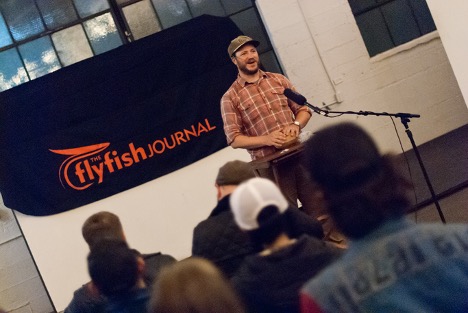
Journalists on Social Media: Q&A with Jason Rolfe of The Fly Fish Journal

By Joseph Evans

Jason Rolfe is an editor for The Fly Fish Journal, a publication based in Bellingham, Washington that covers the world of fly fishing. Rolfe has been a freelance writer and been involved in the “The Fly Tapes” podcast.

Rolfe recently spoke to University of Montana journalism student Joseph Evans about how he works with social media. An edited transcript of their conversation is below.

Q: How has social media helped or hurt the promotion of The Fly Fish Journal?

A: I think as far as “promotion” is concerned, it has likely helped. Social media is a simple way to reach people, and especially on the image-based social media apps (like IG), it plays to one of our strengths (photography), which people turn to TFFJ for.

Q: How do you keep social media posts separate from published? What’s your strategy?

A: I think our basic SM strategy relies on a few different kinds of posts. Some are just general flyfishing stoke/culture posts, but obviously with a nod toward the TFFJ aesthetic. Some are posts promoting our content–a new piece of work online or in print (we make two written pieces available at our website per issue), or a new film that we’ve produced. And the third category is typically conservation-related, because you can’t really work in the flyfish space without having a focus on conservation–it’s just not ethically sound. 

Q: Who is the voice of these captions for posts on social media?

A: Posting is typically done by Copi Vojta, our photo editor. When he writes captions, sometimes they are in his voice — a sort of irreverent one in some respects. At other times, if necessary, he and I will work together to create a caption if we feel that wording is important.

Q: What has been TFFJ’s favorite social media platform to promote on and why?

A: Probably IG, for the reason noted above. I think a key draw of TFFJ is the imagery–we find and publish the best–and so it would make sense for us to really lean into an image-based SM platform.

Q: Has social media made the work of your publication more difficult? If so, why?

A: I don’t think so. Though, of course, we don’t have an overly heavy social media presence either. With that being said, our marketing director does keep up with best practices on various platforms and we try to incorporate those best practices into our posting and engagement where we can.

Joseph Evans is a student in the UM School of Journalism’s Social Media and Engagement class, which conducted Q&As this semester with more than 20 journalists as part of a research project on best practices for journalists on social media.