Radio enthusiasts tune in to Missoula’s first podcast festival

While the crowd gathered for a sold out event at The Roxy Theater turned their eyes towards the big screen, it was their ears that did the work. This was the first Missoula Podcast Festival, and those in attendance were partaking in the unique experience of group listening as a full theater absorbed Montana centric radio stories.
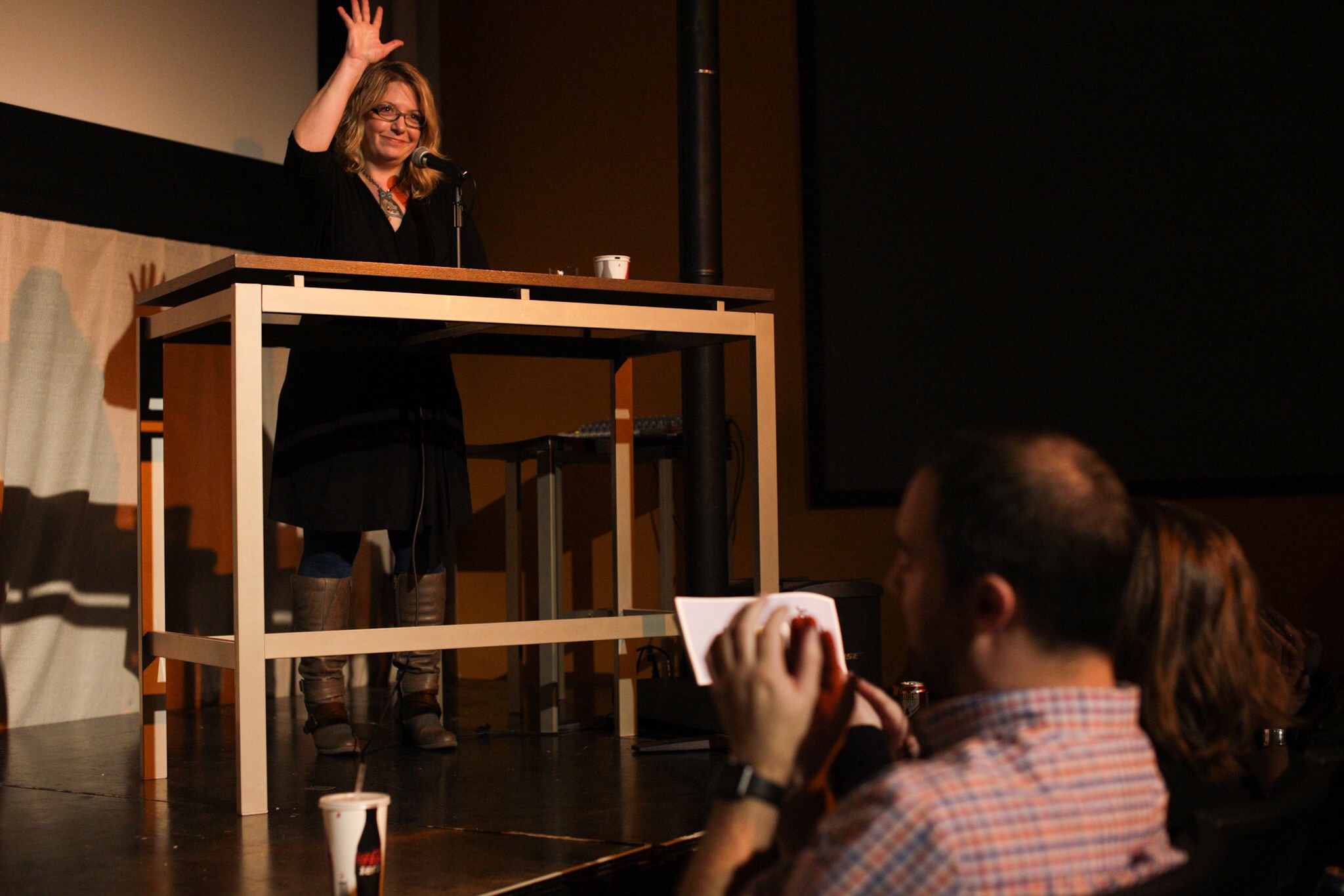
Jule Banivlle stands on stage at the festival and sets up the next group of stories.
Jule Banville introduces the next set of stories to the audience. Photo by Evan Frost.

The podcasts, which ranged in length and subject matter, were independently produced by authors with connections to Missoula and curated by Jule Banville, an assistant professor at the School of Journalism.

“I’m excited that we’re podcasting, and about where this is going,” Banville said to open the show. Many of the stories were produced by past and present students of Banville, who teaches audio reporting and feature writing. Banville said she first conceived the idea of the podcast festival as a showcase for student work, but later expanded it to include other producers.

“It’s about the stories,” she said. “There are too few places for people who are doing cool radio stories.” Banville also hosts a podcast of her own online called Last Best Stories, where she posts both her own work and others.

The stories she chose ran from the heartbreaking, like the story of an avid outdoorsman who lost the use of his legs, to the lighthearted, like a piece about a small town 80s cover band with very big dreams. The voices of every day and unique Montanans were well represented, as were issues of race, sexuality, and environmental change.
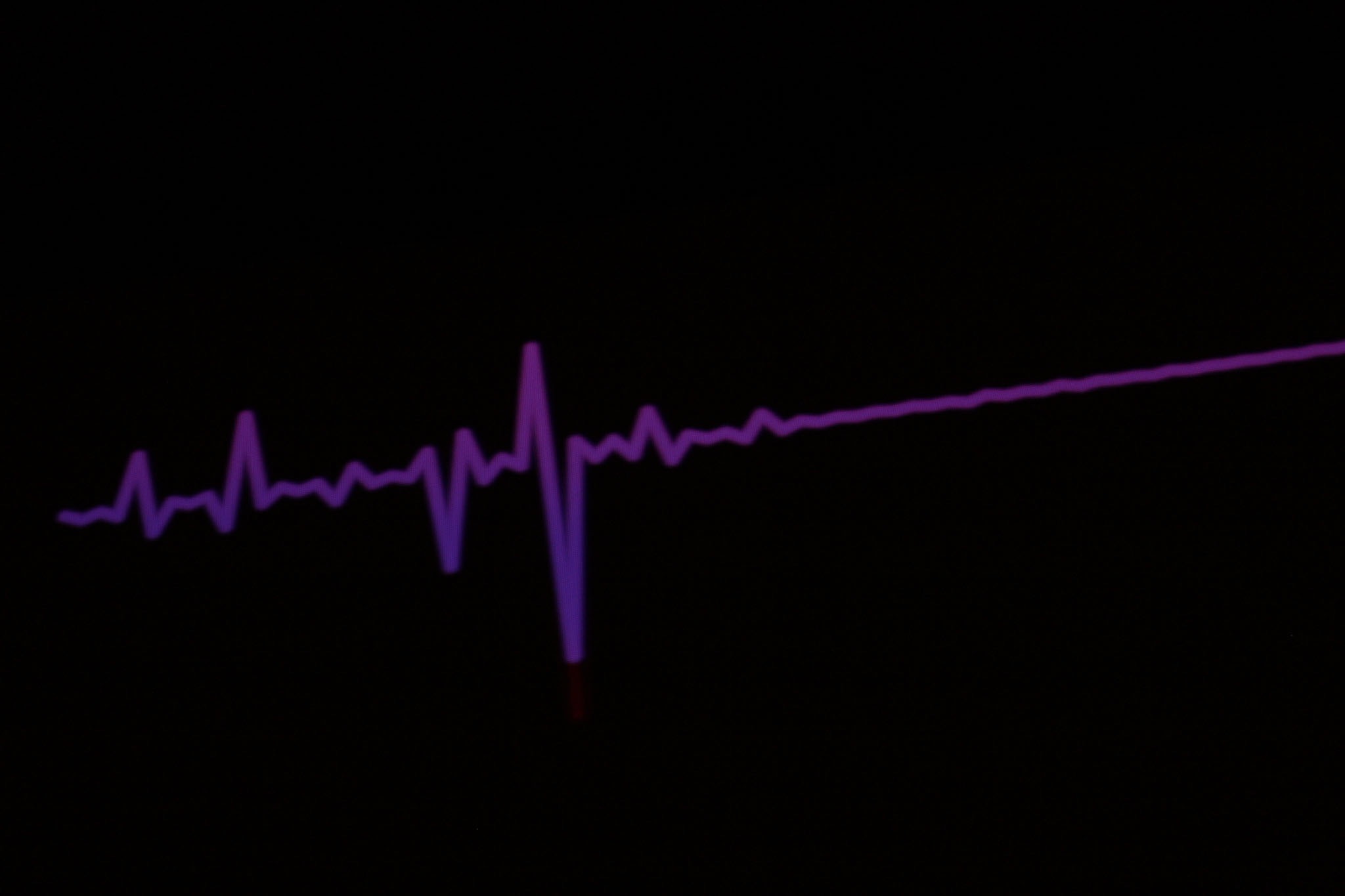
Creative visuals danced across a large screen, changing color and design with each story.
Creative visuals danced across a large screen, changing color and design with each story. Photo by Evan Frost.

In the theater on Thursday, an audio visualizer played on the big screen in ever changing colors. Between the story blocks producers talked about the art of creating podcasts. That was it for visuals however. The crowd mostly listened in silence, except when they gasped, laughed or sighed.

By Andrew Graham
Behind the scenes with broadcast students

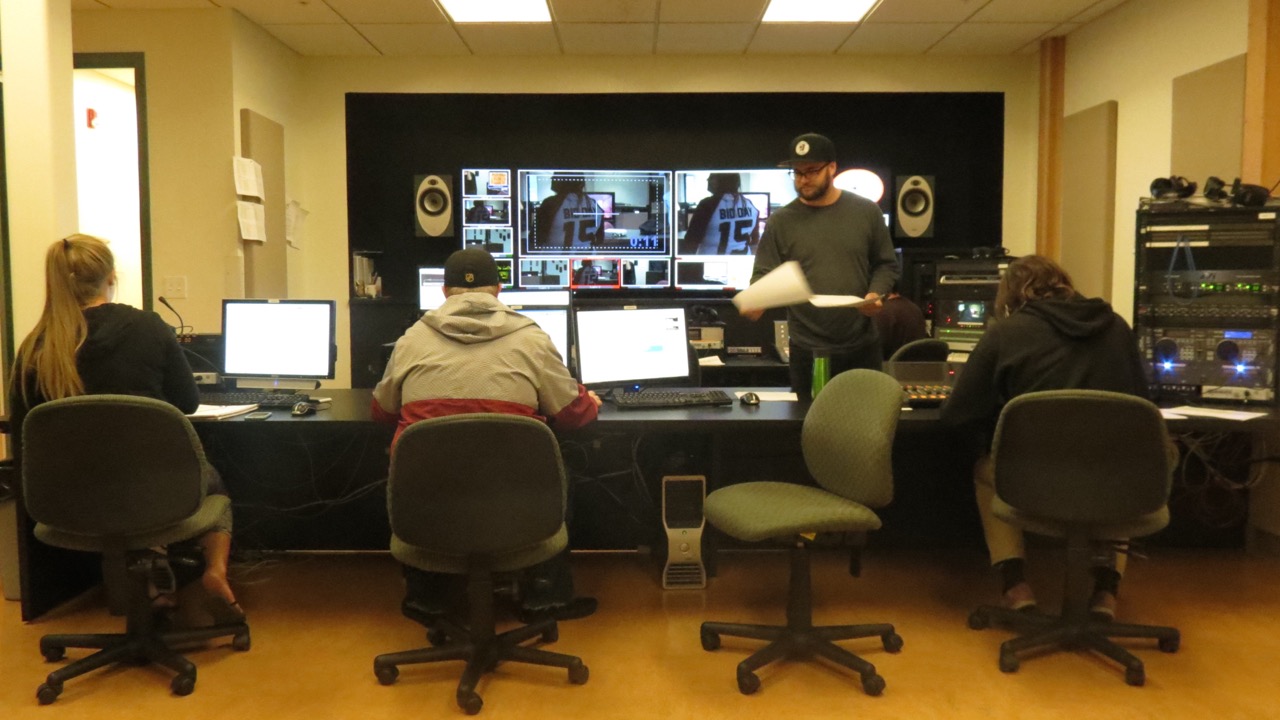
Seven journalism students face a bank of screens, and with only a few minutes to go before recording starts, the atmosphere is busy and tense. This is the control room of UM News, a weekly news segment staffed by senior broadcast journalism students.

photo of j-school broadcast students working on video production on their screens.

Though the students are producing their broadcast in the Don Oliver Television Studios on the first floor of the journalism building, the segment airs each week on KPAX-TV and ABC Montana.

“Are we almost ready to go?” Sean Robb asks his colleagues, who are busy cueing instruments. Robb, who is from California and will graduate next spring, is working as a producer today. Other days he is chasing stories as a reporter, in front of the camera as an anchor, or behind it as a cameraman.

“It’s really good experience to do something over and over each week,” Robb says, adding that the practice makes him more efficient at reporting and producing. The pressure to produce in UM News is intense, he says, in a way that reflects the working world of a broadcast journalist.

Associate Professor Ray Ekness, a former broadcast journalist himself, agrees that the program simulates the pressures of the working world. Students do get the buffer of two dry runs before they record the broadcast that will air on television, which is a safety net for the learning students he said. The semester in UM News includes a broadcast filmed without dry runs as well.

Silence descends on the control room as the team keys in the cameras. Today’s director is Joe Hodgson, a senior from Great Falls, Montana who spent his summer interning at Comcast Sports in San Francisco. “Go ahead and pan to the right ever so slightly,” he directs his cameraman, watching on the screens in front of him.

On Friday, the students will meet with professionals from KPAX-TV and ABC Montana for a review of the week’s broadcast. They’ll learn the tricks of the trade and how to streamline their next show.

“Go ahead and roll thunder, full sound!” Hodgson orders, and the broadcast is under way.

J-School student balances classes and full-time broadcasting job

When classes end each afternoon for Ariana Lake, age 21, her day as a budding broadcast journalist is only just beginning. Since the beginning of the semester, Ariana has been balancing a full course load at school with a 40 hour a week job as news anchor and producer at the television station KAJ, Channel 18. Leaving campus early-afternoon, Lake races to the studio each day to get her 5 o’clock broadcast ready. She broadcasts at 5:30 p.m. and again at 10 p.m. Mondays through Fridays.

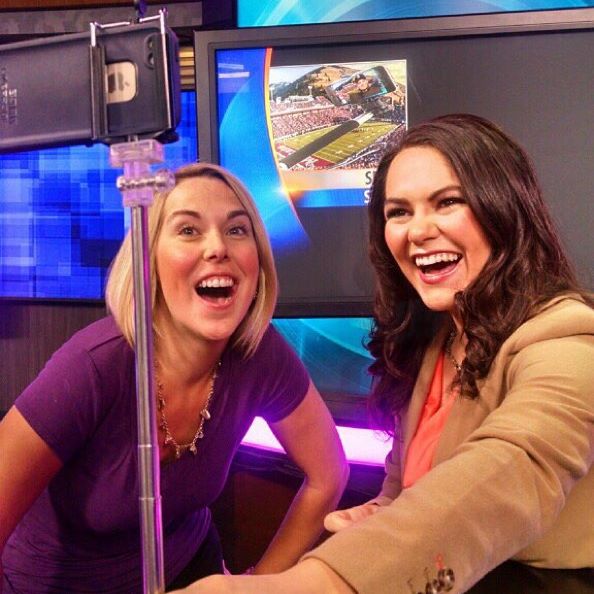
Chief Meteorologist Erin Yost (left) and Ariana Lake (right)  on set before their 5:30 show on selfie sticks at Griz games.
Chief Meteorologist Erin Yost (left) and Ariana Lake (right) on set before their 5:30 show on selfie sticks at Griz games.

KAJ serves the Flathead Valley area, and the stories Lake produces are reported by two correspondents, both her senior in age. They pitch her the day’s stories in the morning, which Lake helps review via either email, text or phone call while she goes about her school day. Although her market is the Flathead, her broadcast is produced at the KPAX studio in Missoula. KPAX and KAJ are sister stations and CBS Affiliates.

Journalism Professor Ray Ekness said it’s rare to have a student anchoring their own show Monday through Friday this early in their career. Despite her youth, Ekness said that on her show “she comes across as very mature, very knowledgeable about everything that’s going on.”

Lake was hired as a part time reporter for KPAX last year. When she saw the anchor and producer job open up in August, she wasn’t going to bother applying, certain she didn’t have enough experience. Then, after receiving some encouragement from a co-worker and her parents, she decided to go for it. She was hired within a few weeks.

For Lake, working at KAJ is a great chance to develop her broadcast skills in a supportive environment. “I’m not doing it completely on my own but it’s my show,” Lake said, “responsibility falls completely on me.”

She says that getting in the 5 o’clock broadcast, which has to be taped by 4 p.m., is a challenge. Some days she reaches the studio at 1:45 p.m., leaving her less than three hours to meet her deadline. Still, it’s a challenge Lake says she welcomes: “If you’re passionate about what you’re doing it’s not that hard,” she said.

After her second broadcast wraps around 10 p.m., Lake finally heads home, where she usually does around two hours of homework.

To see what Ariana Lake’s been producing, you can follow her on twitter: @ariana_lake or check out her broadcasts online at KAJ’s website. 

By Andrew Graham